

Chinese travellers want three Es in 2025: events like the history-making Taylor Swift Eras tour, eco-tourism and a helping hand for elderly tourists.
The destinations that get the recipe right can expect to enjoy a surge in visitors from the country, said Jane Sun, chief executive of Trip.com, one of the world's biggest travel companies. Its parent company also owns Skyscanner.
She spoke to The National at the World Economic Forum in Davos about what she expects to happen in the travel sector this year and beyond. Despite fears of stagnant growth in China and a cost of living pinch, Chinese outbound travel is likely to exceed 130 million passengers in 2025. Some estimates say it could reach or exceed the high of 155 million, recorded in 2019 before the Covid-19 pandemic.
"We're very excited to see the new trends, which we call the three Es: the first E is events plus travel - young people are very interested in a Taylor Swift concert, F1, Olympic Games - we call this plus-travel," Ms Sun said. "The second is eco-friendly – people are very interested to join those with green travel initiatives."
These include the availability of electric cars, now the norm in China, and hotels with low emissions and green credentials. The third E is elderly friendly travel, which global destinations need to understand better, Ms Sun said.
"In China, the retirement age is quite low - anywhere between 50 and 60. And this is the generation that made very good money," she added. "Now they are healthy, they are energetic, they are ready to travel around the world. Any company that offers a good package that is elderly friendly will benefit."
Lure of the Middle East
Destinations in the Middle East are among the most appealing for Chinese travellers, owing to low crime rates and visas that are simple to obtain. Staff at hotels from Egypt and Jordan to the Emirates who have Mandarin language skills do much to make visitors feel at ease.
Despite the conflicts in Gaza, Lebanon and Syria, the region remains a strong draw for the world's largest travelling public. Flights from Beijing to Dubai cost as little as $380 and are often far cheaper than domestic trips in China, including to the tropical island of Hainan. More than 450,000 Chinese visited Dubai in the first nine months of 2024.
"The Middle East is very interesting for lots of people in China. They offer free visas or visa upon arrival - and Middle East airlines are doing very well," Ms Sun said. "The airports are beautifully built, it offers great history and very friendly people, so we bring lots of customers to the Middle East."
Destinations such as Dubai, the seventh most visited city in the world in 2024 due to the arrival of 18.2 million tourists, Abu Dhabi and Doha have surpassed European cities when it comes to visa access. "Dubai and Abu Dhabi, it's very easy to access these cities," Ms Sun said. "Doha is also very easy and Saudi Arabia is also opening up. And Singapore, Malaysia and Thailand also offer free visas."
Easy visas
Ms Sun added that some countries that do not offer free visas have benefitted from shortening the application process, including Australia, New Zealand, the UK and Switzerland. She noted that the EU continues to "take too long ... to apply for visa".
At a time of conflict in Ukraine and the Middle East, and the threat of a trade war with China from Donald Trump's new administration in the US, travel remains the strongest way to break down barriers, Ms Sun added.
"I would like to see people use travel as a bridge to enhance international exchange and promote global peace," she said. "Our mission is that when we send people far away, we are bringing the world closer."
Davos 2025: in pictures
-
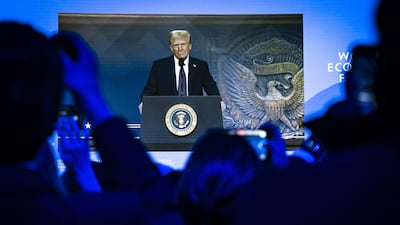
US President Donald Trump is shown on screen as he addresses a plenary session remotely in Davos, Switzerland. EPA -
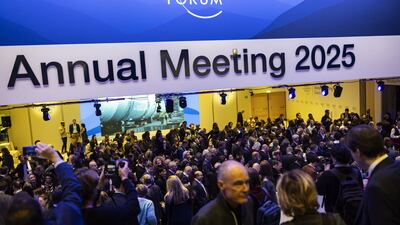
Participants queue to enter the Congress Hall. EPA -
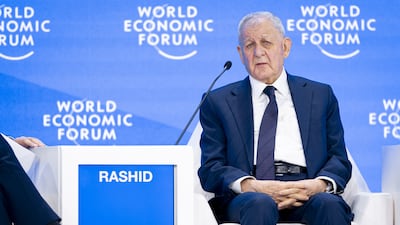
Iraqi President Abdul Latif Rashid. EPA -
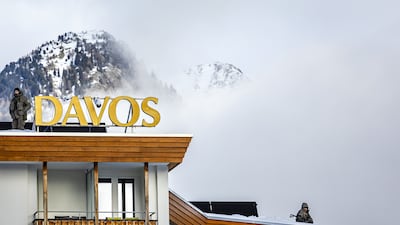
Special police stationed on the roof of the Congress Hotel in Davos. EPA -

Former UK prime minister Tony Blair and Syrian Foreign Minister Asaad Al Shibani at the Annual Meeting of World Economic Forum in Davos. AP -
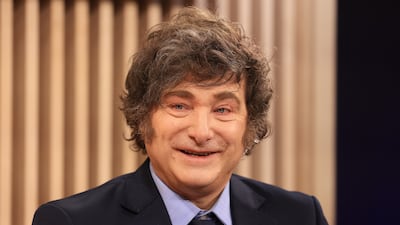
Javier Milei, Argentina's President, during an interview at Bloomberg House at the event. Bloomberg -
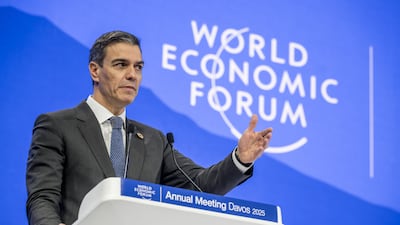
Spain's Prime Minister Pedro Sanchez on the podium. AFP -
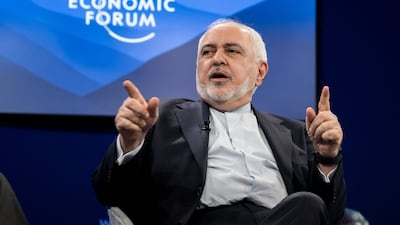
Iran's Vice President for Strategic Affairs Mohammad Zarif addresses the audience. AFP -
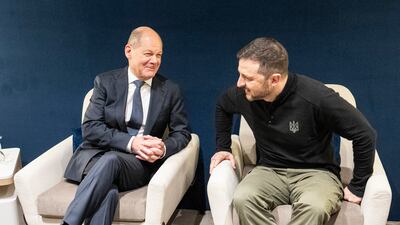
German Chancellor Olaf Scholz, left, and Ukrainian President Volodymyr Zelenskyy. Getty Images -
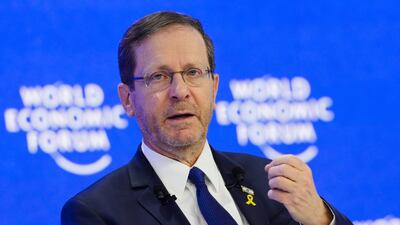
Israel's President Isaac Herzog at the annual meeting in Davos. AP -
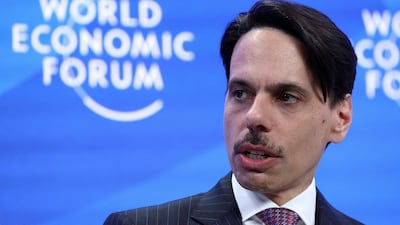
Saudi Arabia's Minister of Foreign Affairs Prince Faisal bin Farhan, during the 55th annual meeting of the World Economic Forum in Davos. Reuters -

The Prime Minister and Foreign Minister of Qatar, Sheikh Mohammed bin Abdulrahman, attends the Annual Meeting of the World Economic Forum in Davos. Reuters -
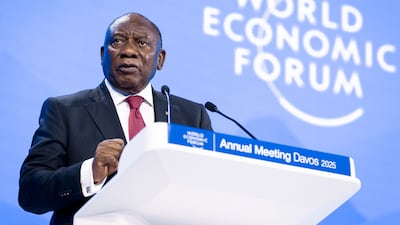
President of South Africa Cyril Ramaphosa speaks at a plenary session. EPA -
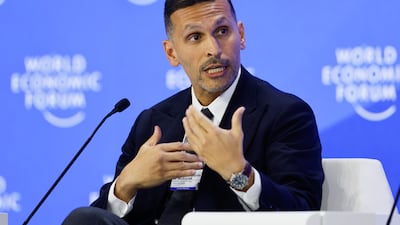
Khaldoon Al Mubarak, chief executive of Mubadala Investment Co, during a panel session in Davos. Bloomberg -
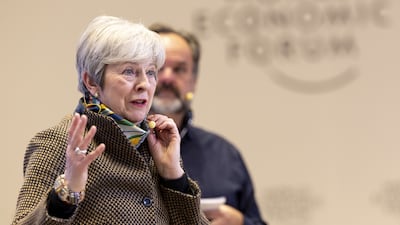
Former British prime minister Theresa May at the 55th annual World Economic Forum. EPA -
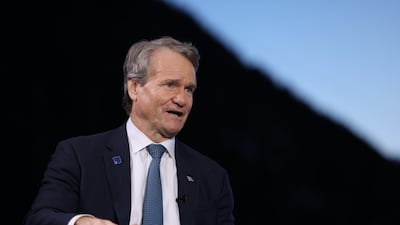
Brian Moynihan, chief executive officer of Bank of America Corp, at the forum. Bloomberg -

Ruth Porat, chief financial officer of Alphabet Inc, at Bloomberg House. Bloomberg -
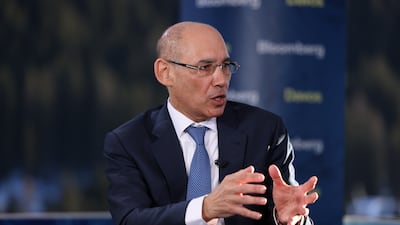
Amir Yaron, governor of Israel's central bank, at the WEF in Davos. Bloomberg -
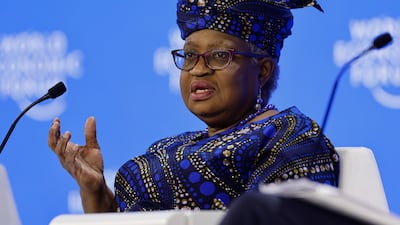
Ngozi Okonjo-Iweala, director general of the World Trade Organisation in Davos. Bloomberg -
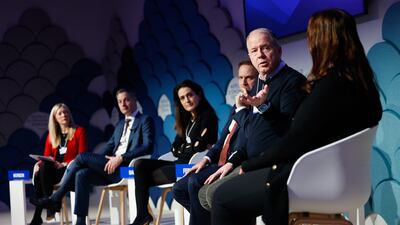
From left, Rachel Morison, editor at Bloomberg News, Belgium's Prime Minister Alexander De Croo, Ester Baiget, chief executive of Novozymes, Marc Ferracci, France's Industry and Energy Minister, Martin Lundstedt, chief executive of Volvo, and Anna Borg, chief executive of Vattenfall AB, during a panel session at the World Economic Forum. Bloomberg -
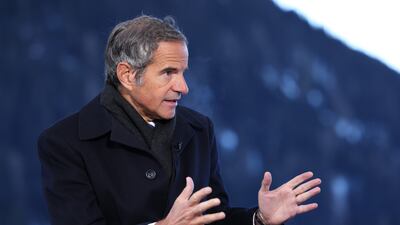
Rafael Grossi, director general of International Atomic Energy Agency, speaks at the WEF. Bloomberg -
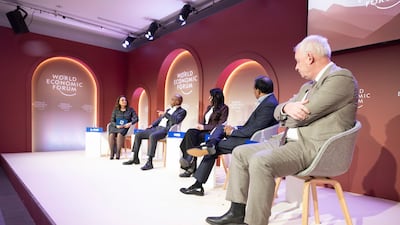
Mina Al-Oraibi, editor-in-chief of The National, left, Mohamed Kande, global chairman of PwC, second left, Ravi Kumar S, chief executive of Cognizant, second right, and Luc Triangle, general secretary of the International Trade Union Confederation, right, during the panel session titled, Who Benefits from Augmentation? Photo: WEF -

Filippo Grandi, UN High Commissioner for Refugees, speaks during the Refugees and Their Olympian Spirit session. Photo: WEF -
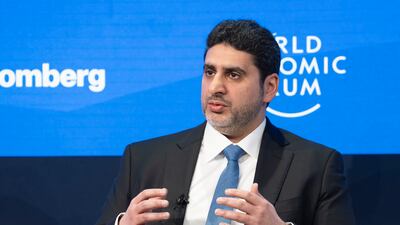
Bandar Bin Mohammed Al Thani, Governor of the Qatar Central Bank, during the session called Banks: Change on All Fronts? Photo: WEF -
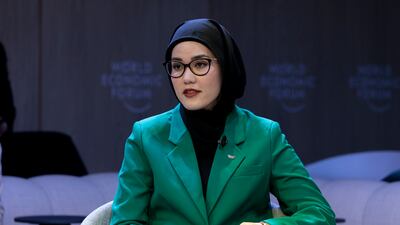
Masomah Ali Zada, chef de mission of the Refugee Olympic Team, France, speaks during the Refugees and Their Olympian Spirit session. Photo: WEF -
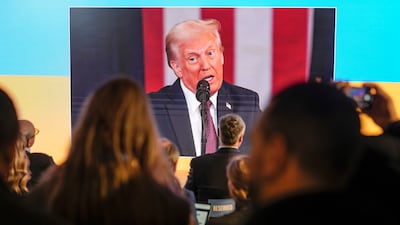
Watching the inauguration of Donald Trump as US President on screens, at the Ukraine House, during the World Economic Forum in Davos. AP -

Waleed Al Muhairi, deputy group chief executive of Mubadala Investment Company, during a Bloomberg Television interview before the WEF. Bloomberg



