People dance to celebrate International Dance Day at the Heroes' Square in Budapest, Hungary. Reuters

Global life expectancy set to increase by almost five years by 2050


Gillian Duncan
  • English
  • Arabic

Global life expectancy is set to increase by almost five years by 2050, according to a new forecast.

The average lifespan is predicted to rise from 73.6 years in 2022 to 78.1 years in 2050.

But there are significant differences between men and women.

The average life expectancy for women will rise from 76.2 years in 2022 to 80.5 years in 2050, and for men from 71.1 years to 76 years, according to the Global Burden of Disease Study (GBD) 2021.

However, people are also expected to spend more years in poor health, with a smaller increase in the time people will live well. The data shows global healthy life expectancy will increase from 64.8 years in 2022 to 67.4 years in 2050 – an increase of only 2.6 years.

It predicts the continuing shift from non-communicable diseases (NCDs) – such as cardiovascular diseases, cancer, and diabetes – and exposure to NCD-associated risk factors – such as obesity, high blood pressure, unhealthy diet, and smoking – will have the greatest effect on the impact of health issues for the next generation.

The five leading causes of disease in 2050 are predicted to be ischemic heart disease, stroke, diabetes, chronic obstructive pulmonary disease and neonatal disorders.

In the US, average life expectancy for women will rise from 80 years from 2021 to 82.4 in 2050, and from 74.3 years to 78.4 years for men.

In the UK, it will rise from 82.4 years to 85 in 2050, and from 78.2 years to 82.1 for men.

In the UAE, it will rise from 71.5 years to 73.2 for women, and from 77.5 years to 81.6 for men.

Elderly and middle-aged people exercise with wooden dumbbells during a health promotion event to mark Japan's "Respect for the Aged Day". Reuters

In Saudi Arabia, it will rise from 75.1 years to 78.3 for women, and from 71.8 years to 75.2 for men.

In Bahrain, it will rise from 75.1 years to 80 for women, and from 72.2 years to 79 for men.

In Oman, it will rise from 76.3 years to 82.6 for women, and from 70.5 years to 77.6 for men.

It comes as public health measures have prevented, and improved survival rates from, cardiovascular diseases, Covid-19, and a range of communicable (diseases that spread from one person to another), maternal, neonatal, and nutritional diseases (CMNNs), according to the report.

Dr Chris Murray, chairman of health metrics sciences at the University of Washington in the US, and director of the Institute for Health Metrics and Evaluation (IHME), said: “In addition to an increase in life expectancy overall, we have found that the disparity in life expectancy across geographies will lessen.

“This is an indicator that while health inequalities between the highest and lowest income regions will remain, the gaps are shrinking, with the biggest increases anticipated in sub-Saharan Africa.”

Although global life expectancy is forecast to increase from 2022 to 2050, the improvement is at a slower pace than in the three decades preceding the Covid-19 pandemic, the study found.

The findings build upon the results of the GBD 2021 risk factors study, also released on Thursday in The Lancet.

The research found that the total number of years lost due to poor health, and early death attributable to metabolic risk factors such as high blood pressure, high blood sugar, and high BMI, has increased by almost 50 per cent (49.4 per cent) since 2000.

The analysis based its estimates on 88 risk factors and their associated health outcomes for 204 countries and territories from 1990 to 2021.

World population hits 8 billion – in pictures

  • Houses cover a hillside in the Petare neighbourhood of Caracas, Venezuela. The world's population hit an estimated eight billion people on November 15, according to the United Nations. AP
    Houses cover a hillside in the Petare neighbourhood of Caracas, Venezuela. The world's population hit an estimated eight billion people on November 15, according to the United Nations. AP
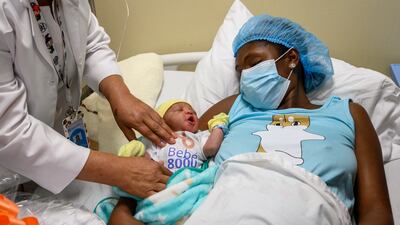
  • Damaris Ferrera with her baby at Damian Ferrera Altagracia Hospital – in Santo Domingo, Dominican Republic – which symbolically named him the eight billionth inhabitant of the world. AP
    Damaris Ferrera with her baby at Damian Ferrera Altagracia Hospital – in Santo Domingo, Dominican Republic – which symbolically named him the eight billionth inhabitant of the world. AP
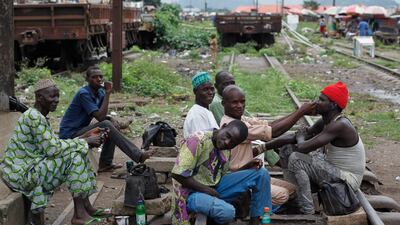
  • Barbers on an abandoned train track in Abeokuta, about 70km outside Lagos, Nigeria. More than half of the projected increase in the global population up to 2050 will be concentrated in eight countries: the Democratic Republic of Congo, Egypt, Ethiopia, India, Nigeria, Pakistan, the Philippines and Tanzania. EPA
    Barbers on an abandoned train track in Abeokuta, about 70km outside Lagos, Nigeria. More than half of the projected increase in the global population up to 2050 will be concentrated in eight countries: the Democratic Republic of Congo, Egypt, Ethiopia, India, Nigeria, Pakistan, the Philippines and Tanzania. EPA
  • Newborn babies at Hotel Dieu hospital in Beirut, Lebanon, as the world population surges past eight billion. Reuters
    Newborn babies at Hotel Dieu hospital in Beirut, Lebanon, as the world population surges past eight billion. Reuters
  • Crowds on Takeshita Street in Tokyo, considered to be the world's most populous metropolitan area. AFP
    Crowds on Takeshita Street in Tokyo, considered to be the world's most populous metropolitan area. AFP
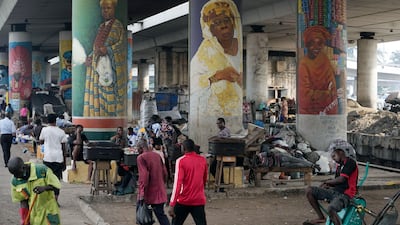
  • Nigeria is a significant contributor to world population growth. Countries in sub-Saharan Africa are expected to contribute more than half of the increase anticipated up to 2050, according to the UN. AP
    Nigeria is a significant contributor to world population growth. Countries in sub-Saharan Africa are expected to contribute more than half of the increase anticipated up to 2050, according to the UN. AP
  • A packed Ipanema beach in Rio de Janeiro, Brazil. AP
    A packed Ipanema beach in Rio de Janeiro, Brazil. AP
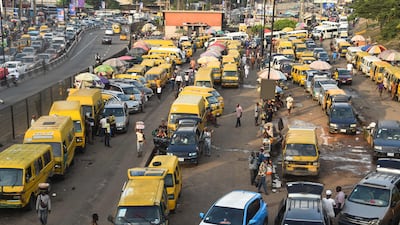
  • Traffic chaos at Ojodu-Berger bus station in Lagos, Nigeria's commercial capital, which has a population of about 15 million. AFP
    Traffic chaos at Ojodu-Berger bus station in Lagos, Nigeria's commercial capital, which has a population of about 15 million. AFP
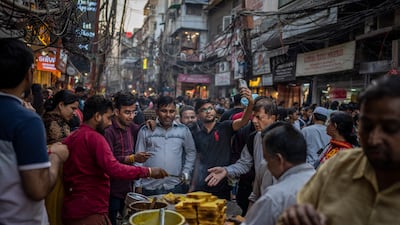
  • A crowded market in Jalandhar, India. AFP
    A crowded market in Jalandhar, India. AFP
  • A family taking pictures at the Temple of Heaven in Beijing. AP
    A family taking pictures at the Temple of Heaven in Beijing. AP
  • Commuters waiting for buses in Manila, Philippines, where the city's 12 million population swells by three million during working hours. AFP
    Commuters waiting for buses in Manila, Philippines, where the city's 12 million population swells by three million during working hours. AFP
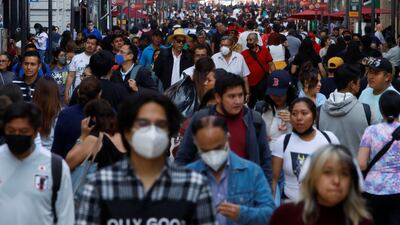
  • Mexico City is home to more than 20 million people. Reuters
    Mexico City is home to more than 20 million people. Reuters
  • Times Square in Manhattan. About nine million people live in New York's five boroughs. Reuters
    Times Square in Manhattan. About nine million people live in New York's five boroughs. Reuters
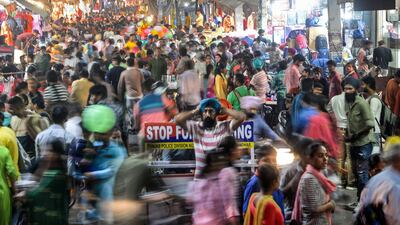
  • A busy market in New Delhi, India, part of an urban area where the population is estimated to be 32 million. AP
    A busy market in New Delhi, India, part of an urban area where the population is estimated to be 32 million. AP
  • Commuters at a train station in Hong Kong. AFP
    Commuters at a train station in Hong Kong. AFP
  • Indian commuters get off trains at the Church Gate railway station in Mumbai, India. AP
    Indian commuters get off trains at the Church Gate railway station in Mumbai, India. AP
  • A subway station in Seoul. The South Korean capital has a population approaching 10 million. AFP
    A subway station in Seoul. The South Korean capital has a population approaching 10 million. AFP

Particulate matter air pollution, smoking, and low birthweight and short gestation were also among the largest contributors to lost years of healthy life due to poor health and early death in 2021, with considerable variation across ages, sexes and locations.

The study found that substantial progress was made between 2000 and 2021 in reducing disease attributable to risk factors linked to maternal and child health, unsafe water, sanitation, and handwashing, as well as household air pollution from cooking with solid fuels.

Dr Emmanuela Gakidou, professor of health metrics sciences at the IHME, said: “Risk factors that currently lead to ill health, such as obesity and other components of metabolic syndrome, exposure to ambient particulate matter air pollution, and tobacco use, must be addressed via a combination of global health policy efforts and exposure reduction to mitigate health risks and improve population health.”

Dr Murray said: “There is immense opportunity ahead for us to influence the future of global health by getting ahead of these rising metabolic and dietary risk factors, particularly those related to behavioural and lifestyle factors like high blood sugar, high body mass index, and high blood pressure.”


Ten tax points to be aware of in 2026

1. Domestic VAT refund amendments: request your refund within five years

If a business does not apply for the refund on time, they lose their credit.

2. E-invoicing in the UAE

Businesses should continue preparing for the implementation of e-invoicing in the UAE, with 2026 a preparation and transition period ahead of phased mandatory adoption. 

3. More tax audits

Tax authorities are increasingly using data already available across multiple filings to identify audit risks. 

4. More beneficial VAT and excise tax penalty regime

Tax disputes are expected to become more frequent and more structured, with clearer administrative objection and appeal processes. The UAE has adopted a new penalty regime for VAT and excise disputes, which now mirrors the penalty regime for corporate tax.

5. Greater emphasis on statutory audit

There is a greater need for the accuracy of financial statements. The International Financial Reporting Standards standards need to be strictly adhered to and, as a result, the quality of the audits will need to increase.

6. Further transfer pricing enforcement

Transfer pricing enforcement, which refers to the practice of establishing prices for internal transactions between related entities, is expected to broaden in scope. The UAE will shortly open the possibility to negotiate advance pricing agreements, or essentially rulings for transfer pricing purposes. 

7. Limited time periods for audits

Recent amendments also introduce a default five-year limitation period for tax audits and assessments, subject to specific statutory exceptions. While the standard audit and assessment period is five years, this may be extended to up to 15 years in cases involving fraud or tax evasion. 

8. Pillar 2 implementation 

Many multinational groups will begin to feel the practical effect of the Domestic Minimum Top-Up Tax (DMTT), the UAE's implementation of the OECD’s global minimum tax under Pillar 2. While the rules apply for financial years starting on or after January 1, 2025, it is 2026 that marks the transition to an operational phase.

9. Reduced compliance obligations for imported goods and services

Businesses that apply the reverse-charge mechanism for VAT purposes in the UAE may benefit from reduced compliance obligations. 

10. Substance and CbC reporting focus

Tax authorities are expected to continue strengthening the enforcement of economic substance and Country-by-Country (CbC) reporting frameworks. In the UAE, these regimes are increasingly being used as risk-assessment tools, providing tax authorities with a comprehensive view of multinational groups’ global footprints and enabling them to assess whether profits are aligned with real economic activity. 

Contributed by Thomas Vanhee and Hend Rashwan, Aurifer

Courses%20at%20Istituto%20Marangoni%2C%20Dubai
%3Cp%3E%3Cstrong%3EUndergraduate%20courses%3C%2Fstrong%3E%3Cbr%3EInterior%20Design%3B%20Product%20Design%3B%20Visual%20Design%3B%20Fashion%20Design%20%26amp%3B%20Accessories%3B%20Fashion%20Styling%20%26amp%3B%20Creative%20Direction%3B%20Fashion%20Business%3B%20Foundation%20in%20Fashion%3B%20Foundation%20in%20Design%3Cbr%3E%3Cstrong%3EProfessional%20courses%3C%2Fstrong%3E%3Cbr%3EFashion%20e-Commerce%20%26amp%3B%20Digital%20Marketing%3B%20Fashion%20Entrepreneurship%3B%20Fashion%20Luxury%20Retail%20and%20Visual%20Merchandising%3Cbr%3E%3Cstrong%3EShort%20courses%3C%2Fstrong%3E%3Cbr%3EFashion%20design%3B%20Fashion%20Image%20%26amp%3B%20Styling%3B%20Fashion%20Trend%20Forecasting%3B%20Interior%20Design%3B%20Digital%20Art%20in%20Fashion%3Cbr%3EMore%20information%20is%20at%20%3Ca%20href%3D%22https%3A%2F%2Fwww.istitutomarangoni.com%2Fen%3Futm_source%3DLocal%26utm_medium%3Dorganic%26utm_campaign%3Dgmb%26utm_content%3Ddubai%22%20target%3D%22_self%22%3Ewww.istitutomarangoni.com%3C%2Fa%3E%3C%2Fp%3E%0A
RESULTS
%3Cp%3E%3Cstrong%3E6pm%3A%20Baniyas%20%E2%80%93%20Group%202%20(PA)%20Dh97%2C500%20(Dirt)%201%2C400m%3C%2Fstrong%3E%3Cbr%3EWinner%3A%20AF%20Alajaj%2C%20Tadhg%20O%E2%80%99Shea%20(jockey)%2C%20Ernst%20Oertel%20(trainer)%3C%2Fp%3E%0A%3Cp%3E%3Cstrong%3E6.35pm%3A%20The%20Pointe%20%E2%80%93%20Maiden%20(TB)%20Dh82%2C500%20(D)%201%2C200m%3C%2Fstrong%3E%3Cbr%3EWinner%3A%20Awasef%2C%20Pat%20Dobbs%2C%20Doug%20Watson%3C%2Fp%3E%0A%3Cp%3E%3Cstrong%3E7.10pm%3A%20Palm%20West%20Beach%20%E2%80%93%20Maiden%20(TB)%20Dh82%2C500%20(D)%201%2C400m%3C%2Fstrong%3E%3Cbr%3EWinner%3A%20Long%20Kiss%2C%20Jose%20da%20Silva%2C%20Antonio%20Cintra%3C%2Fp%3E%0A%3Cp%3E%3Cstrong%3E7.45pm%3A%20The%20View%20at%20the%20Palm%20%E2%80%93%20Handicap%20(TB)%20Dh87%2C500%20(D)%201%2C200m%3C%2Fstrong%3E%3Cbr%3EWinner%3A%20Ranaan%2C%20Tadhg%20O%E2%80%99Shea%2C%20Bhupat%20Seemar%3C%2Fp%3E%0A%3Cp%3E%3Cstrong%3E8.20pm%3A%20Nakheel%20%E2%80%93%20Handicap%20(TB)%20Dh105%2C000%20(D)%201%2C400m%3C%2Fstrong%3E%3Cbr%3EWinner%3A%20Raaeb%2C%20Antonio%20Fresu%2C%20Musabah%20Al%20Muhairi%3C%2Fp%3E%0A%3Cp%3E%3Cstrong%3E8.55pm%3A%20The%20Club%20%E2%80%93%20Handicap%20(TB)%20Dh95%2C000%20(D)%201%2C900m%3C%2Fstrong%3E%3Cbr%3EWinner%3A%20Qareeb%2C%20Sam%20Hitchcock%2C%20Doug%20Watson%3C%2Fp%3E%0A%3Cp%3E%3Cstrong%3E9.30pm%3A%20Palm%20Beach%20Towers%20%E2%80%93%20Handicap%20(TB)%20Dh87%2C500%20(D)%201%2C600m%3C%2Fstrong%3E%3Cbr%3EWinner%3A%20Falsehood%2C%20Adrie%20de%20Vries%2C%20Musabah%20Al%20Muhairi%3C%2Fp%3E%0A

Villains
Queens of the Stone Age
Matador

The Year Earth Changed

Directed by:Tom Beard

Narrated by: Sir David Attenborough

Stars: 4

Updated: May 17, 2024, 2:23 PM