


Another war in Lebanon would “plunge the country into the dark ages”, caretaker Economy Minister Amin Salam told The National as cross-border exchanges stoke fears of a full-blown conflict with Israel.
Mr Salam was speaking after a cabinet meeting on Thursday to discuss Israel's heavy bombardment of the Gaza Strip, which he described as a “massacre”, in response to a deadly attack by Palestinian militant group Hamas.
The recent attacks along the southern border by Hezbollah, a powerful Iran-backed Lebanese militia and political party that supports Hamas, have fuelled fears that Lebanon may become a new front.
Israel has so far responded with shelling and air strikes that killed three Hezbollah members.
Mr Salam said there was consensus that the Lebanese state would have to retaliate in the event of a full-scale Israeli attack.
“We will not accept any invasion of Lebanon nor will we tolerate the possibility of Lebanon facing a fate and slaughter akin to that witnessed in Palestine,” he said.
Israel launched an invasion of Lebanon after Hezbollah attacks in 2006, leading to a month-long war that devastated civilian infrastructure and claimed more than 1,200 lives in Lebanon and at least 160 in Israel.
Mr Salam said a new escalation would come at a time when Lebanon is “already very vulnerable”, a reference to the acute economic crisis the country has been grappling with for four years, marked by shortages of fuel, medicines and basic goods.
“We cannot afford a war. We have bad infrastructure, no national reserves of food and medication,” Mr Salam said.
“We will pay a very heavy price, even with a small escalation in the south of the country.”
The 2006 conflict between Israel and Hezbollah – in pictures
-

A Lebanese boy on a car destroyed during the conflict between Israel and Hezbollah in a Beirut suburb in September 2006. All photos: Reuters -

A Hezbollah gunman in a Beirut suburb, July 17, 2006 -

A man passes a destroyed building in the southern suburbs of Beirut, August 10, 2006 -

Lebanese residents in the rubble of their homes after returning to Beirut's southern suburbs, August 16, 2006 -

Residents watch an excavator remove rubble from damaged apartment blocks in a south Beirut suburb, September 1, 2006 -

A Lebanese woman outside her destroyed apartment in south Beirut, July 2006. Israeli jets bombed the area late the night before -

A fire at Beirut international Airport after Israeli air strikes, July 14, 2006 -

A Greek soldier stands guard as Greek citizens board the Greek frigate 'Psara' during an evacuation operation in Beirut port, July 18, 2006 -

A girl calls her mother to board a bus taking civilians from Beirut during an evacuation operation, July 18, 2006


Consensus on security
Mr Salam said that although there was agreement among cabinet members, including Hezbollah-affiliated ministers, against going to war, the government had a duty to defend the nation's borders and would consider taking action if the Israeli aggression escalated to a critical point.
“There is a consensus that Lebanon will not permit Israeli attacks and sit there watching. Nobody in Lebanon, be it the military, militias, or political parties, will accept such a scenario,” he said.
His comment suggested that the army might fight alongside Hezbollah in a new confrontation with Israel, unlike in 2006 when the fighting was between Hezbollah and Israel.
“The times are very different from 2006, with different challenges and stakes. What we're facing today threatens the very existence of Lebanon,” he said.
Lebanon's sectarian political landscape is broadly divided into pro and anti-Hezbollah camps.
But Mr Salam said the tension which usually shapes the public debate was not reflected in the cabinet's discussions on Thursday.
“All the political parties, including Hezbollah, are looking in the same direction,” he said.
The Shiite group has formidable military capability and is said to wield more power than the state itself.
Regarding the government's ability to control the militia's actions in the south, which many observers have describe as non-existent, Mr Salam said “Hezbollah is part of the government, and [their ministers] participated in the discussion, hearing all concerns relevant to their portfolios”.
He declined to comment on the actions of Hezbollah's ally Hamas.
“When I look at Palestine today, I see a dire humanitarian crisis,” he said. “I don’t like to interfere in the politics of parties that are not Lebanese parties”.
-
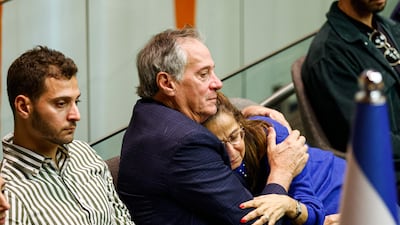
At UN headquarters in New York City, Rachel Zeitchik, right, and Jay Zeitchik attend an event for families of Israelis kidnapped by Hamas. AFP -
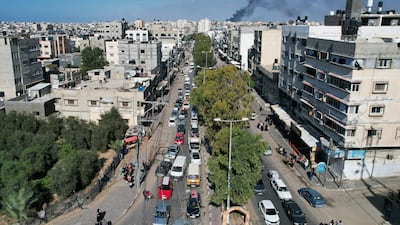
Palestinians flee from northern Gaza towards the south after the Israeli army demanded the population of more than a million people leave before a ground invasion. AP -

Demonstrators at a rally in support of Palestine face a counter-demonstration in support of Israel near Times Square in New York. EPA -
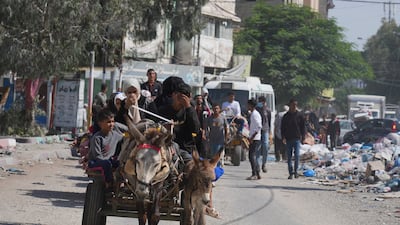
Palestinians flee from northern Gaza to the south after the Israeli army issued an evacuation warning. AP -
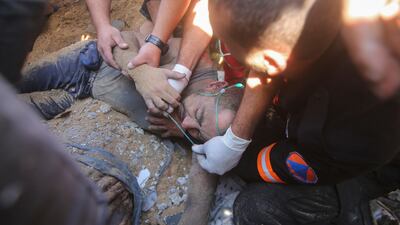
An injured man is rescued from the rubble of a building following an Israeli airstrike in Rafah, Gaza Strip. AP -
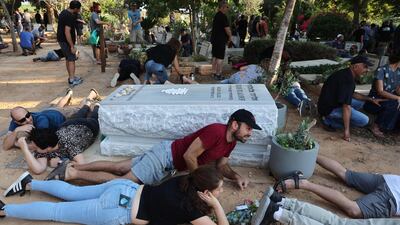
Mourners take cover as sirens sound during the funeral of Tom Godo, killed during the attack by Hamas militants on the Kibbutz Kisuffim last week, in Kibbutz Naan near Tel Aviv. AFP -
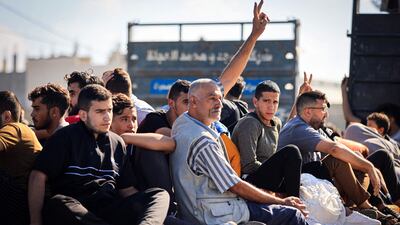
A Palestinian man flashes the victory sign as he and others leave northern Gaza before an expected Israeli ground offensive. AFP -
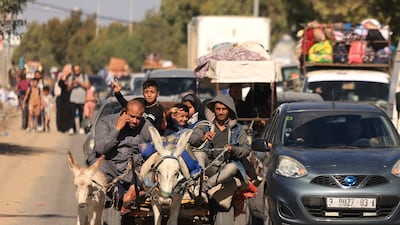
Palestinians head south with their belongings after being ordered by Israel to leave northern Gaza on Friday. AFP -

Israel ordered more than a million Palestinians to head south within 24 hours. Reuters -

The UN criticised the directive, saying forcing such a large number of people to flee en masse would be catastrophic. Reuters -

Gazans have to travel about 15km if they live in the northernmost part of the strip to reach the area south of the Wadi Gaza. Reuters -

The UN said that more than 423,000 people have already fled their homes in the territory, with a sizeable number making the more than 10km journey on foot. Reuters -
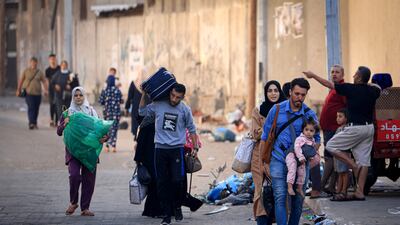
Palestinians with their belongings flee to safer areas in Gaza City. AFP -

An Armoured Personnel Carrier drives near Israel's border with the Gaza Strip. Reuters -
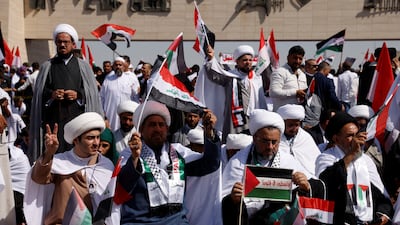
Supporters of Iraqi Shi'ite cleric Moqtada al-Sadr gather for mass Friday prayer during a protest in solidarity with Palestinians in Gaza, in Baghdad, Iraq. Reuters -
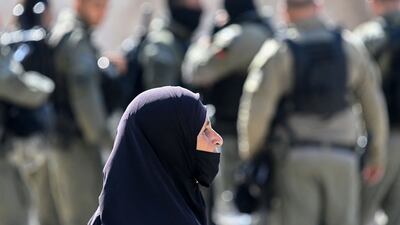
A Palestinian woman waits to cross into Jerusalem's Old City through Damascus Gate next to Israeli soldiers. AFP -
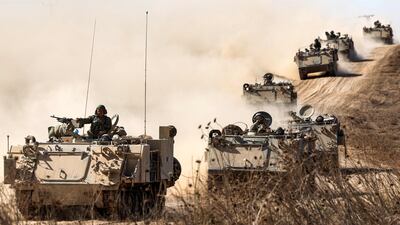
Israeli army infantry fighting vehicles deploy along the border with the Gaza Strip in southern Israel. AFP -
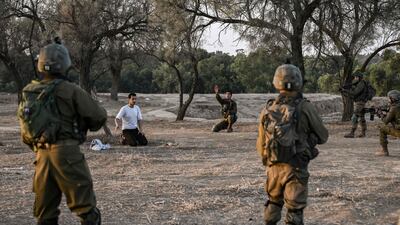
Israeli soldiers detain a man while on patrol near Kibbutz Beeri, near the Gaza Strip. AFP -
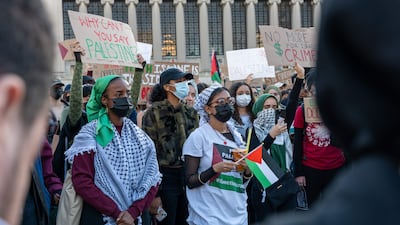
Students hold in a rally in support of Palestine at Columbia University in New York. Getty Images -

Family and friends mourn Valentin Ghnassia, 23, who was killed in a battle with Palestinian militants at Kibbutz Beeri near the Israeli border with the Gaza Strip. Getty Images -
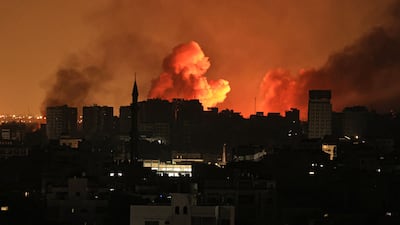
A ball of fire erupts in Gaza city after an Israeli air strike. AFP -
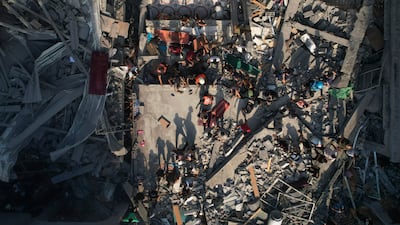
Palestinians inspect the rubble of buildings hit by an Israeli air strike at Al Shati refugee camp. AP -
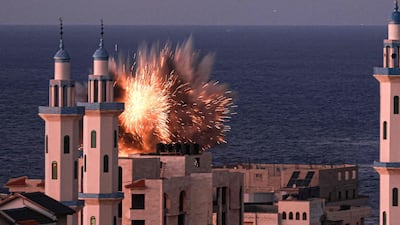
A fireball erupts from an Israeli air strike in Gaza city. AFP -

People waiting for news of victims outside the morgue at Al-Shifa hospital in Gaza City. AFP -
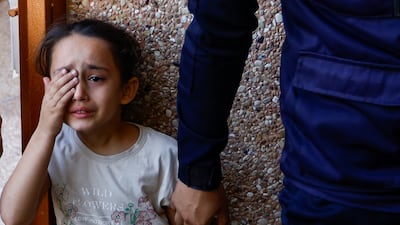
A girl mourns the death of members of the Samour family, who were killed in Israeli strikes on their house in Khan Younis in the southern Gaza Strip. Reuters -
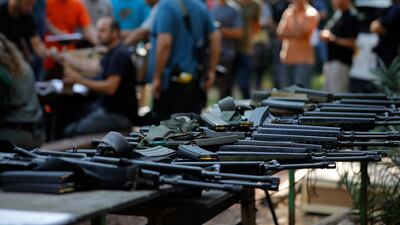
Israelis arrive to sign up at a weapons distribution point for people allowed to carry arms, at the Ayyelet HaShahar Kibbutz in northern Israel, near the Lebanese border. AFP -
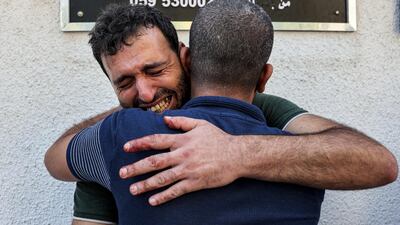
Mourners outside the morgue at Al-Shifa hospital in Gaza City as battles between Israel and the Hamas movement continue for a sixth consecutive day. AFP -
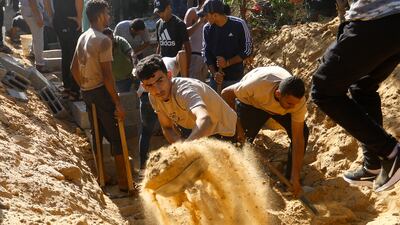
Men dig graves to bury members of the Samour family, who were killed in Israeli strikes on their house in Khan Younis. Reuters -
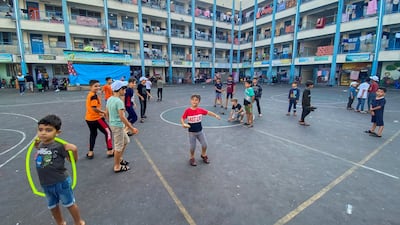
Palestinian children who fled their homes during Israeli strikes, play at a United Nations-run school in Gaza City. Reuters -
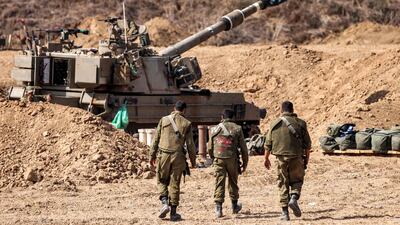
Israeli soldiers near a self-propelled howitzer near the border with Gaza in southern Israel. AFP -

Israel's Foreign Minister Eli Cohen, left, welcomes US Secretary of State Antony Blinken upon arrival at Israel's Ben Gurion Airport. AFP -
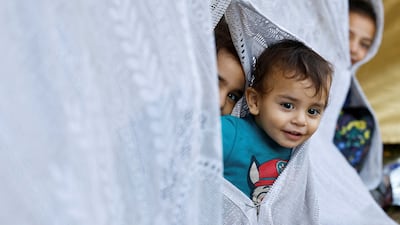
Palestinian children in a makeshift shelter at Al-Shifa hospital in Gaza City. Reuters -
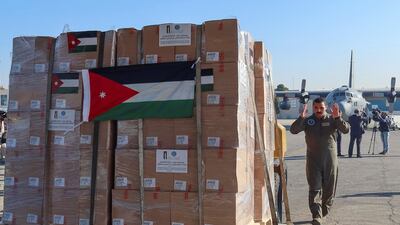
Boxes of humanitarian aid and supplies from Jordan Hashemite Charity Organisation destined for Gaza, in Amman, Jordan. Reuters -
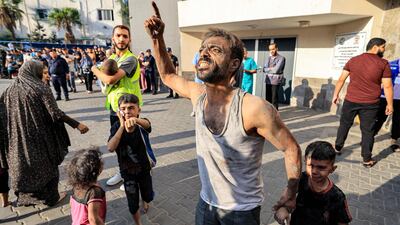
Palestinians outside Al-Shifa hospital in Gaza City on the sixth day of fighting between Israel and Hamas. AFP -
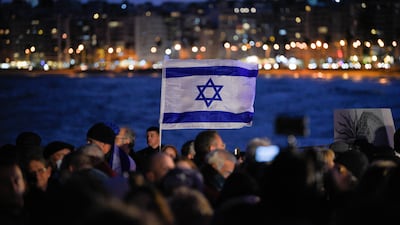
A pro-Israel vigil in Montevideo, Uruguay. EPA


Emergency planning
Mr Salam said that the government discussed formulating an emergency plan should the situation escalate.
He said he had drawn up immediate measures to tackle food security concerns, given the lack of national grain and wheat reserves, while the Health Minister was developing a medical emergency plan.
“We are planning for the worst and hoping for the best,” he said.
The cabinet meeting included top security officers and army chief Joseph Aoun, who presented an assessment of the current situation.
“Based on his military experience, he did not see anything so far that will spark a full-fledged war in the south,” Mr Salam said.
The calculation could change in the coming days as Israel threatens a massive ground invasion of the Gaza Strip, which would be “very alarming”, he said.
“The country is at an existential intersection,” he said. “We don't want, as a small state, to be a bargaining chip in a larger geopolitical game. The only way forward is to stand up and declare that we will not be a weak link.”

