



In a freezing classroom in Arsal, an isolated Lebanese town perched 1,500 metres above sea level near the Syrian border, one by one children line up for their cholera vaccine — taken orally, a quick gulp down the throat.
The teacher marks their hands with a pen, and now the jacket-clad children have an extra layer of protection against Lebanon’s first cholera outbreak in three decades.
Arsal, a largely Sunni Muslim town in the north-eastern reaches of the Baalbek-Hermel governorate, is one area of Lebanon that has been a focal point of the cholera spread — and efforts to fight the disease.
A poor, overcrowded town where informal settlements sit alongside houses, it’s the perfect place for the disease to take hold.
And while Lebanon is — at the moment largely successfully — countering cholera, there are fears that the looming winter could isolate Arsal, where the proportion of Syrian refugees is double that of the Lebanese population.
By the end of November nearly 450,000 vaccines had been administered. Since the outbreak in early October, there have been about 4,600 suspected or confirmed cases and 20 deaths.
The cholera strain found in Lebanon is similar to the one in neighbouring Syria, itself struggling with a much larger outbreak.

The World Health Organisation describes cholera as "an acute diarrheal disease that can kill within hours if left untreated”.
It can be easily treated with oral rehydration salts but in severe cases immediate medical attention is needed.
Lebanon's economic crisis means the country lacks a sufficient supply of medicine, clean water and electricity.
Organisations such as Medicines Sans Frontiers, which recently opened a cholera treatment unit in Arsal, are going door-to-door in a bid to get people vaccinated.

One of those to take the vaccine was the family of Salah, a middle-aged Lebanese man from Arsal who lives near one of the small refugee camps that merge with the older homes.
Normally the family gets their water from lorries and a nearby well.
“You never know. Waste management is not properly functioning, so you never know if this water is clean or if the water in the well is clean,” he said.
Salah said waste management and infrastructure were already in a bad state before a series of crises hit Lebanon, including a devastating economic crisis that first became apparent in 2019 and an influx of refugees fleeing the war in nearby Syria that began more than a decade ago.
“It became worse with overcrowding but it was already bad,” he added.
For now, suspected and confirmed cholera cases are somewhat stable — and are even potentially going down slightly, according to government statistics.

The focus has been on prevention — whether through awareness or efforts to ensure that the water is safe — and on treating those who fall sick.
While cases have largely not been as severe as initially predicted, fears remain that cholera could be around in Lebanon for longer. It is also believed that Lebanon’s health system would struggle to tackle a larger or more serious outbreak. So, the focus is on ensuring that it does not become an epidemic, said Farah Nasser, medical co-ordinator for MSF Lebanon.
“If we want to describe [the situation] it would be we are still in control, as the cases are still mild to moderate. The phase we are in now, we still have the hospitals prepared, there are still places in the hospitals. So it is still under control,” she said, contrasting the current situation to that when cholera first broke out in Lebanon when authorities and humanitarian organisations had to rapidly mobilise.
“But now it is controllable and we are having the time to really work on the prevention arm of the outbreak. The idea is we should focus really on prevention. If we really worked on prevention, then we will be in a good place.”
Lebanon’s economic capitulation has been described as one of the worst in modern history by the World Bank, with much of the population plunged into poverty. It has led to shortages of vital medicine, a lack of clean water and hospitals impaired by power cuts.
-
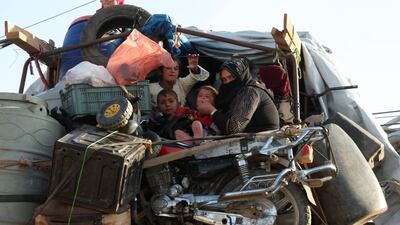
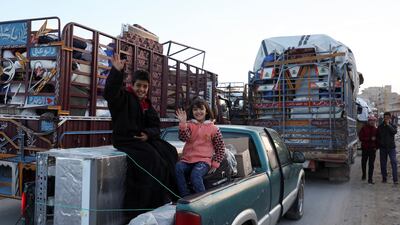
Syrian refugees sit with their belongings on a pickup truck as they prepare to return to Syria from Wadi Hmayyed, on the outskirts of the Lebanese border town of Arsal. All photos: Reuters -
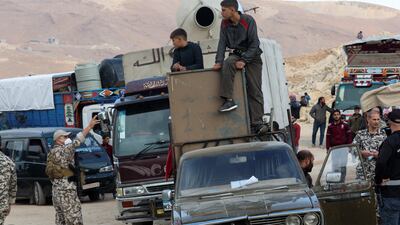
Hundreds of Syrian refugees living in Lebanon returned home on Wednesday, the first day of repatriations organised by Beirut, amid rights groups' concerns that the scheme may involve elements of coercion. -

Lugging suitcases, power generators, fridges and even chickens, about 700 Syrians who had agreed to cross over gathered from early morning in a desolate north-eastern border zone. -
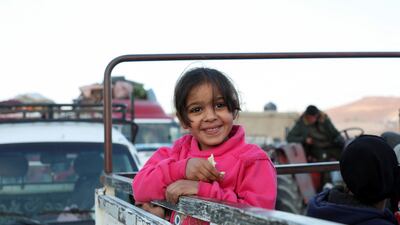
Lebanese authorities said the repatriations, under a revived programme run co-ordinated by the country's General Security agency, are voluntary. -
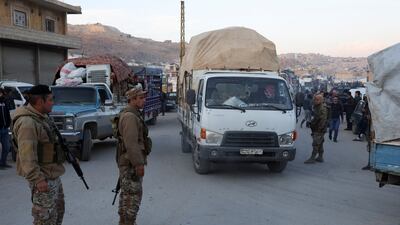
The United Nations says flare-ups in violence and the risk of detention make it still unsafe for large-scale returns. -
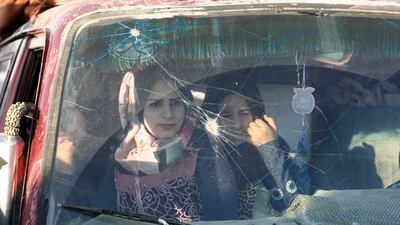
Lebanon is home to more than 800,000 Syrians registered with the UN refugee agency. At its peak, Lebanon hosted around 1.2 million. -
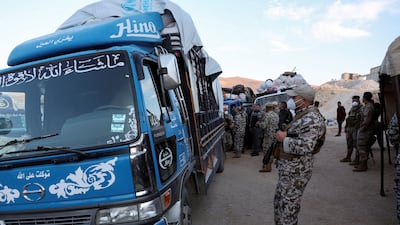
They fled the violence in the aftermath of protests against Syrian President Bashar Al Assad in 2011. -
In 2018, the General Security agency launched a mechanism through which any Syrian refugee could signal a desire to return home. -
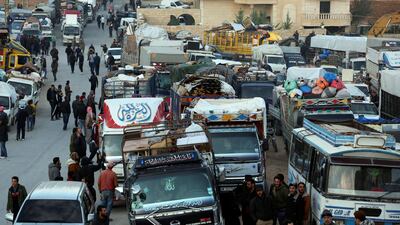
That pathway saw about 400,000 Syrians return home but was put on hold with the outbreak of Covid-19. -

Outgoing Lebanese President Michel Aoun revived it this month and it resumed on Wednesday.


“The health system is under the burden of all the crises,” said Ms Nasser. “We had a good health system, which was mostly private plus what the Ministry of Public Health was working on as primary healthcare centres.
“And then with the economic crisis, it put a huge burden on that system, which is near collapse. They are not getting what they need [financially] and it's a huge burden on the patients themselves.”
All of Lebanon’s eight governorates have detected cholera, but it is most prominent in the areas neighbouring Syria, where the border between the two countries is porous. While Akkar to the north-west of Arsal has recorded more cases, the latter is bereft of a public hospital — although MSF does operate a clinic — and relatively isolated.
Akkar and Arsal, which briefly came under the control of ISIS in 2014, have particularly weak infrastructure and their residents have particularly poor access to clean water.
Winter is expected to be grim in impoverished Arsal — previous years have seen refugee camps covered in blankets of snow amid below freezing temperatures.
One family The National spoke to said they were forced to burn plastic to fuel their heater, despite the fact that it would likely worsen a heart condition of one of their young children.
Recent flooding, blamed on blocked pipes, was yet another issue to hit the area.
One of those affected was Raida, a mother of five who lives in a Syrian refugee camp in Arsal that was flooded. She was in an isolation unit and had taken her youngest — only three months old — to the MSF clinic when she had diarrhoea, a classic symptom of cholera.
“Two days ago I realised I was changing her diapers more than usual,” Raida said.
For now, Lebanon’s embattled health system is responding — but a wider, more serious outbreak could prove too much.
“With a bigger outbreak, I think we would be not in a good place,” said Ms Nasser. "The efforts since day one to prepare government hospitals to accept patients … most of the hospitals were prepared within the first two weeks of the outbreak.
“But if we had a really large outbreak, as we've seen in other countries, that would be a super-big burden on our health system.”

