

Lebanon is close to a deal with the World Bank on a $150 million loan for food security and to stabilise bread prices for the next six months, the country's economy minister has said.
Amin Salam said he was 'optimistic' about talks with the IMF.
“Work is ongoing and the train is moving. I am optimistic,” he said.
Mr Salam said the IMF is focusing on three sectors — electricity, transportation and high-speed internet — which could help reactivate the economy.
He said the government does not have immediate plans to lift bread subsidies, especially for flour used in making flat Arabic bread, the main staple in Lebanon.
The country's economic crisis has been described as one of the worst in modern history. Lebanon imports most of its wheat and has faced shortages over the past weeks as Russia's war in Ukraine leads to increases in prices of oil and food products globally.
There have been concerns the government might lift wheat subsidies as foreign currency reserves drop to critical levels at the central bank. Any lifting of subsidies would sharply increase the price of bread in a country where more than three-quarters of its six million people, including one million Syrian refugees, live in poverty.
“We are working with the World Bank to keep market stability for the next six months by getting $150 million,” Mr Salam told AP.
He said the deal with the World Bank would stabilise the price of bread and wheat until a ration card policy is in force so people in need can benefit.
Wheat shortages affect Lebanon's bakeries — in pictures
-
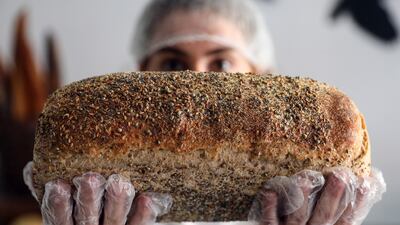
A baker holds up a seeded white loaf of bread at a bakery in Beirut, Lebanon, which faces a food crisis because of war in Europe. All photos: Bloomberg -
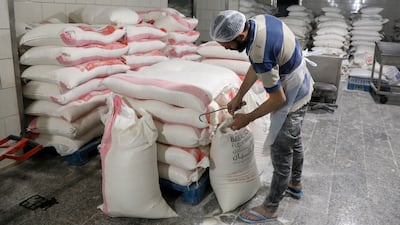
A worker opens a sack of flour to prepare bread dough in Beirut. Lebanon's wheat importers are already rationing flour sales to counter panic buying. -
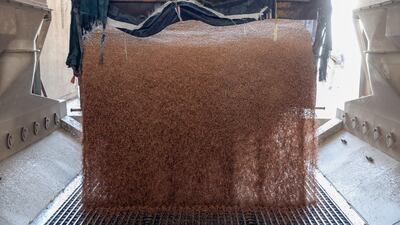
Lebanon, already suffering from years of financial crisis, has faced new problems since Russia invaded Ukraine in February. -
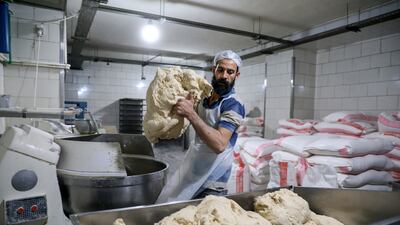
Lebanon normally buys 96 per cent of its wheat from Russia and Ukraine. -
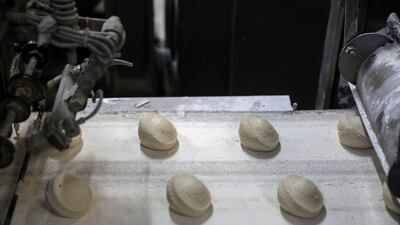
The war between two of the world's biggest wheat exporters has sparked fears of a food crisis in many Middle Eastern countries. -
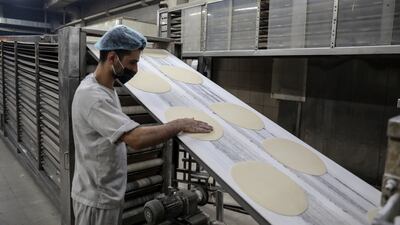
Lebanese importers are struggling to get dollars from a subsidy programme to buy wheat from new suppliers. -
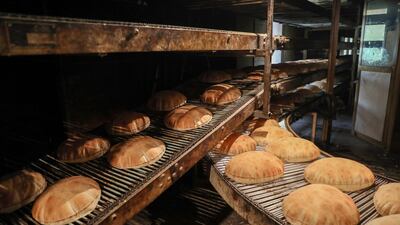
As countries try to secure new sources of wheat, cash-strapped Lebanon's small market of 6 million people could go without. -
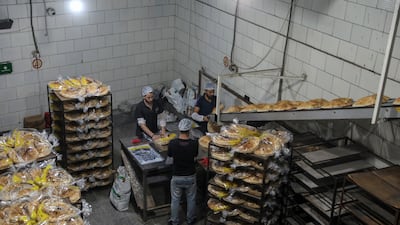
Lebanon lacks grain storage after silos were destroyed in the 2020 Beirut Port blast. -

The country needs 50,000 tonnes of wheat to feed its people for a month. -
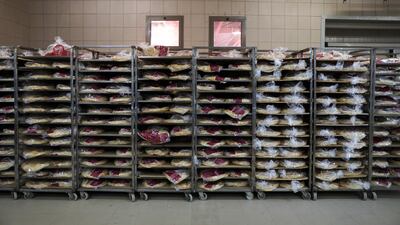
Subsidies keep the price of bread in Lebanon artificially low. -
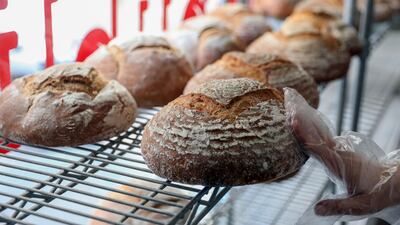
But a loaf now costs on average 10,000 Lebanese pounds, or $0.45, more than six times the price in 2019. -

Millers estimate that without subsidies, prices could more than double. -

Analysts fear that could cause social unrest in a country where three quarters of the population now live in poverty.


Mr Salam said subsidies cannot continue for ever, especially for flour that is used for making pastries and sweets. He said such policies were implemented in Egypt and other countries where subsidies were lifted for wheat used in some products and left for bread.
Meetings are scheduled with World Bank officials on Wednesday, said Mr Salam. Lebanon will then propose final recommendations to the bank’s board.
He said the war in Ukraine is forcing Lebanon to find new sources of wheat that are far away and more expensive.
Earlier this month, Lebanon and the IMF reached a tentative agreement for comprehensive economic policies that could eventually pave the way for some relief for the country after Beirut implements wide-ranging reforms.
Breaking with the position of the prime minister, he suggested central bank governor Riad Salameh should leave his role.
″His situation has become tenuous,″ Mr Salam said.
Mr Salameh, who has been in the job since 1993, is facing investigations in Lebanon and several European countries into possible cases of money laundering and embezzlement. The governor is protected by several top officials, including the prime minister and parliament speaker.
“I’m all for change,” Mr Salam said. “No one is irreplaceable.”

