Activists supporting the families of those who were killed in the port blast last year hold placards during a protest in solidarity with Judge Tarek Bitar. AP

Lebanon judges resign over political interference in judiciary


Gareth Browne
  • English
  • Arabic

Three senior Lebanese judges have resigned over political interference in the country’s judiciary, as the investigation into the Beirut port blast of August 2020 flounders.

The three judges, all women, quit on Wednesday “to protest … political interference in the work of the judiciary and the undermining of decisions issued by judges and courts”, a judicial source told AFP.

The judges were not named in the report.

At least two major investigations — the probe into the port blast of August 2020 and an investigation into accusations of tax evasion and illicit enrichment by the governor of Lebanon’s central bank — have been delayed by complaints against the judges leading the probe.

The investigation into Riyad Salame has been suspended, while a lawsuit against Jean Tannous, the judge heading it, is ongoing.

Meanwhile, Tarek Bitar, who is heading the investigation into the port blast that killed more than 200 people, has been hit with a deluge of complaints from politicians he charged or called in for questioning over the summer.

On Thursday, the country’s top court rejected a lawsuit filed against Mr Bitar by former prime minister Hassan Diab and three other ex-ministers who accused him of “grave mistakes” in his investigation.

They also claimed that Mr Bitar did not have the authority to prosecute them.

All were charged with wrongdoing in the blast investigation, but their lawsuits against Mr Bitar caused the probe to be suspended. However, the investigation has not yet been able to proceed as one other lawsuit is still being examined.

Beirut blast reconstruction - in pictures

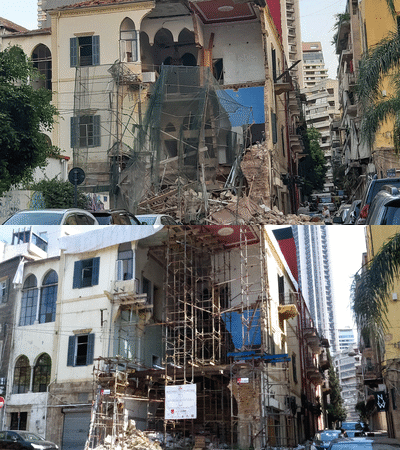
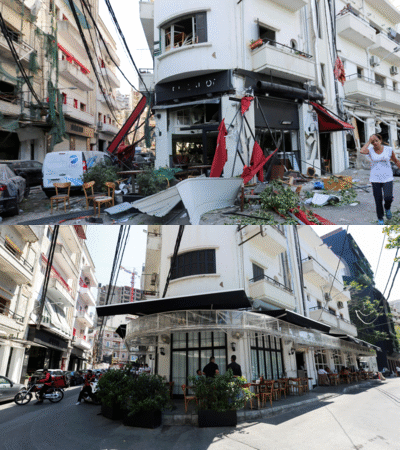
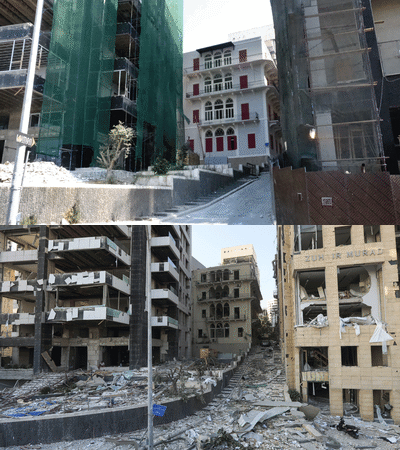
  • These images show various sites in Beirut on August 5, the day after the blast, and how they look now, one year on. This building has only been partially repaired.
    These images show various sites in Beirut on August 5, the day after the blast, and how they look now, one year on. This building has only been partially repaired.
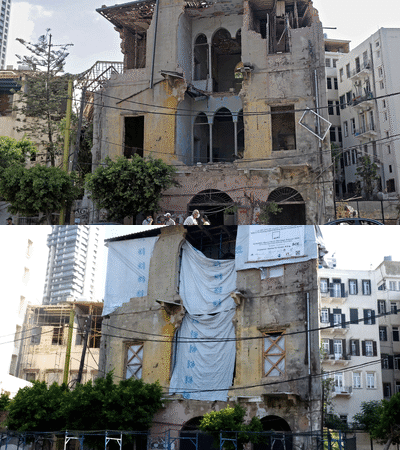
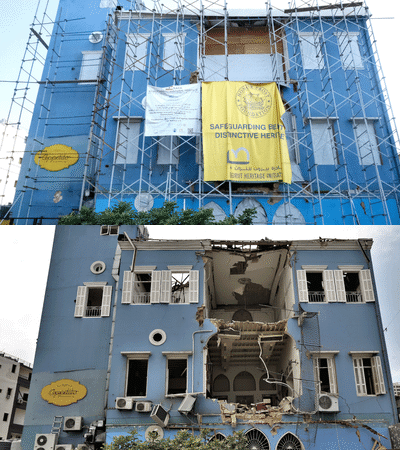
  • The damage to this house in Beirut has been partially covered.
    The damage to this house in Beirut has been partially covered.
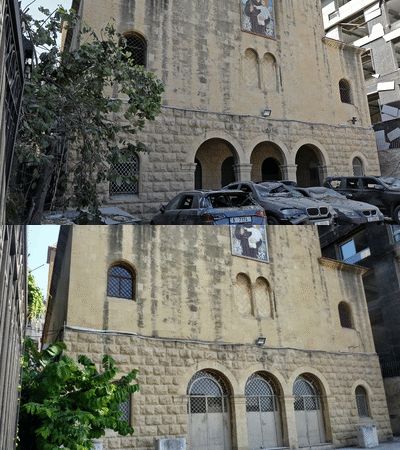
  • Cars were destroyed next to this church in the blast area.
    Cars were destroyed next to this church in the blast area.
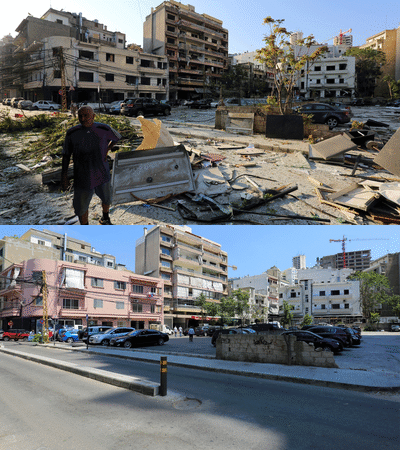
  • Damage near the site of the explosion and how it looks now.
    Damage near the site of the explosion and how it looks now.
  • A restaurant damaged by the explosion has been largely repaired and restored.
    A restaurant damaged by the explosion has been largely repaired and restored.
  • A view of the port on the day of the explosion and how it looks today.
    A view of the port on the day of the explosion and how it looks today.
  • A petrol station and buildings in Al Rmeil area in Beirut.
    A petrol station and buildings in Al Rmeil area in Beirut.
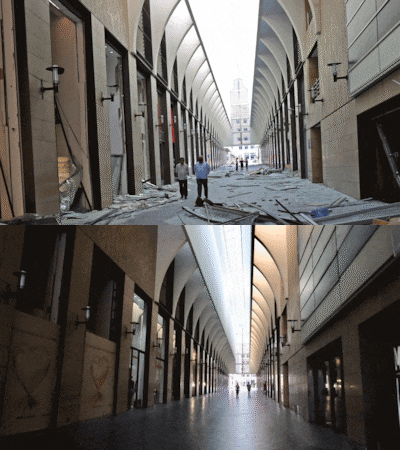
  • The damage to Beirut Souks in the downtown area of the city has been repaired.
    The damage to Beirut Souks in the downtown area of the city has been repaired.
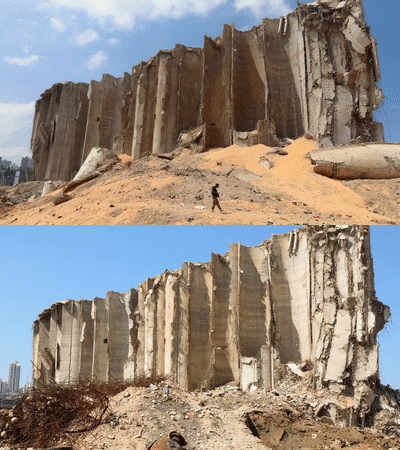
  • The grain silo at Beirut Port the day after the blast and how it looks now.
    The grain silo at Beirut Port the day after the blast and how it looks now.
  • A street in Beirut the day after the blast and how it looks now.
    A street in Beirut the day after the blast and how it looks now.
  • A street in Beirut the day after the blast and how it looks now.
    A street in Beirut the day after the blast and how it looks now.

Awar Qalb

Director: Jamal Salem

Starring: Abdulla Zaid, Joma Ali, Neven Madi and Khadija Sleiman

Two stars

The specs

Engine: 1.5-litre turbo

Power: 181hp

Torque: 230Nm

Transmission: 6-speed automatic

Starting price: Dh79,000

On sale: Now

The%20specs%20
%3Cp%3E%3Cstrong%3EEngine%3A%20%3C%2Fstrong%3E2.0-litre%204cyl%20turbo%0D%3Cbr%3E%3Cstrong%3EPower%3A%20%3C%2Fstrong%3E261hp%20at%205%2C500rpm%0D%3Cbr%3E%3Cstrong%3ETorque%3A%20%3C%2Fstrong%3E400Nm%20at%201%2C750-4%2C000rpm%0D%3Cbr%3E%3Cstrong%3ETransmission%3A%20%3C%2Fstrong%3E7-speed%20dual-clutch%20auto%0D%3Cbr%3E%3Cstrong%3EFuel%20consumption%3A%20%3C%2Fstrong%3E10.5L%2F100km%0D%3Cbr%3E%3Cstrong%3EOn%20sale%3A%20%3C%2Fstrong%3ENow%0D%3Cbr%3E%3Cstrong%3EPrice%3A%20%3C%2Fstrong%3EFrom%20Dh129%2C999%20(VX%20Luxury)%3B%20from%20Dh149%2C999%20(VX%20Black%20Gold)%3C%2Fp%3E%0A
BMW M5 specs

Engine: 4.4-litre twin-turbo V-8 petrol enging with additional electric motor

Power: 727hp

Torque: 1,000Nm

Transmission: 8-speed auto

Fuel consumption: 10.6L/100km

On sale: Now

Price: From Dh650,000

Jetour T1 specs

Engine: 2-litre turbocharged

Power: 254hp

Torque: 390Nm

Price: From Dh126,000

Available: Now

Ten tax points to be aware of in 2026

1. Domestic VAT refund amendments: request your refund within five years

If a business does not apply for the refund on time, they lose their credit.

2. E-invoicing in the UAE

Businesses should continue preparing for the implementation of e-invoicing in the UAE, with 2026 a preparation and transition period ahead of phased mandatory adoption. 

3. More tax audits

Tax authorities are increasingly using data already available across multiple filings to identify audit risks. 

4. More beneficial VAT and excise tax penalty regime

Tax disputes are expected to become more frequent and more structured, with clearer administrative objection and appeal processes. The UAE has adopted a new penalty regime for VAT and excise disputes, which now mirrors the penalty regime for corporate tax.

5. Greater emphasis on statutory audit

There is a greater need for the accuracy of financial statements. The International Financial Reporting Standards standards need to be strictly adhered to and, as a result, the quality of the audits will need to increase.

6. Further transfer pricing enforcement

Transfer pricing enforcement, which refers to the practice of establishing prices for internal transactions between related entities, is expected to broaden in scope. The UAE will shortly open the possibility to negotiate advance pricing agreements, or essentially rulings for transfer pricing purposes. 

7. Limited time periods for audits

Recent amendments also introduce a default five-year limitation period for tax audits and assessments, subject to specific statutory exceptions. While the standard audit and assessment period is five years, this may be extended to up to 15 years in cases involving fraud or tax evasion. 

8. Pillar 2 implementation 

Many multinational groups will begin to feel the practical effect of the Domestic Minimum Top-Up Tax (DMTT), the UAE's implementation of the OECD’s global minimum tax under Pillar 2. While the rules apply for financial years starting on or after January 1, 2025, it is 2026 that marks the transition to an operational phase.

9. Reduced compliance obligations for imported goods and services

Businesses that apply the reverse-charge mechanism for VAT purposes in the UAE may benefit from reduced compliance obligations. 

10. Substance and CbC reporting focus

Tax authorities are expected to continue strengthening the enforcement of economic substance and Country-by-Country (CbC) reporting frameworks. In the UAE, these regimes are increasingly being used as risk-assessment tools, providing tax authorities with a comprehensive view of multinational groups’ global footprints and enabling them to assess whether profits are aligned with real economic activity. 

Contributed by Thomas Vanhee and Hend Rashwan, Aurifer

Updated: November 25, 2021, 6:49 PM