

Driving back to base after firing rockets towards Israeli positions from a border area last month, a group of Hezbollah fighters was accosted by angry villagers who smashed their vehicles' windshields and briefly held up the convoy.
It was a rare incident of defiance that suggested many in Lebanon will not tolerate provocations by the powerful group that risk triggering a new war with Israel.
As Lebanon sinks deeper into poverty, many Lebanese are more openly criticising Iran-backed Hezbollah. They blame the group – with the ruling class – for the numerous, devastating crises plaguing the country, including a dramatic currency crash and severe shortages in medicine and fuel.
“Hezbollah is facing its most consequential challenge in maintaining control over the Lebanese system and what is called the ‘protective environment of the resistance’ against Israel,” said Joe Macaron, a Middle East analyst in Washington.
The incident along the border and other confrontations – including a deadly shooting at the funeral of a Hezbollah fighter and rare indirect criticism by the country’s top Christian religious leader – leave the group on the defensive.
-
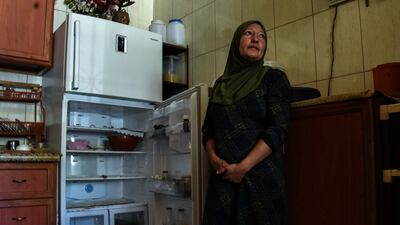
Rweida Mohammed stands next to her almost empty fridge that is warm inside due to prolonged power cuts. Elizabeth Fitt for The National -
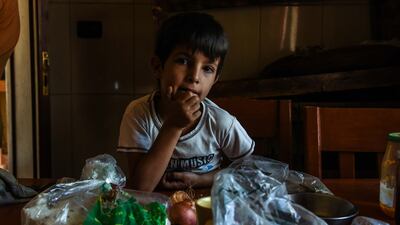
Hamid Khodor sits despondently in the kitchen. There is no electricity to keep food fresh in the fridge and freezer, no cooking gas for the stove and not much to eat except what the family can grow in the garden. Elizabeth Fitt for The National -

The Khodor family is relying on homegrown vegetables. Elizabeth Fitt for The National -
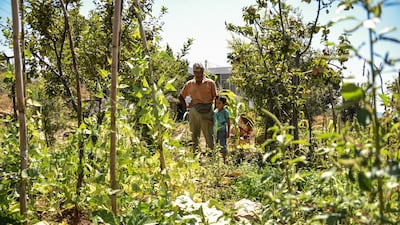
Talal Khodor with his son, Omar, in their vegetable garden. The family is relying on homegrown vegetables to feed themselves during Lebanon's economic collapse. Elizabeth Fitt for The National -
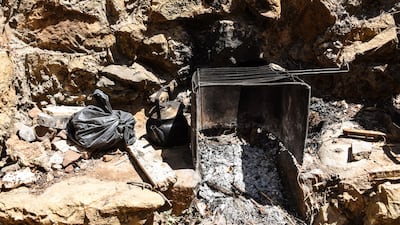
Rweida Mohammed uses a makeshift grill to cook for the family. Since gas for the kitchen stove became so scarce in Lebanon, the family can't get hold of any. Elizabeth Fitt for The National -
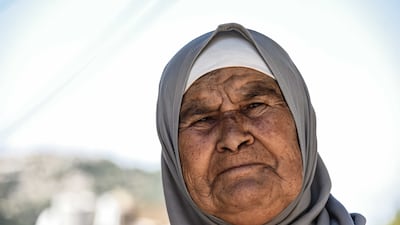
Talal Khodor's mother is frustrated by the ongoing situation. Elizabeth Fitt for The National -
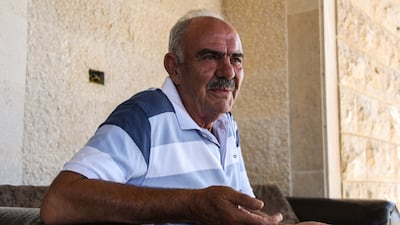
There are few options left to help Mohammed Hazim provide for his family. Elizabeth Fitt for The National -
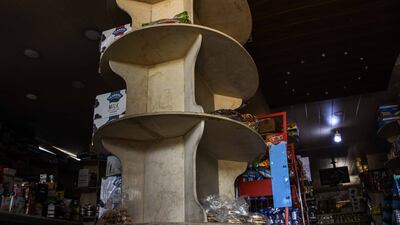
Shelves that usually display bread have been empty for days in the village store. Elizabeth Fitt for The National -
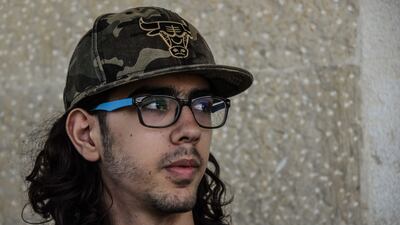
Mohammed Hazim's son, Ziad, waits for his exam results. He had to study using his father's mobile phone. Elizabeth Fitt for The National -
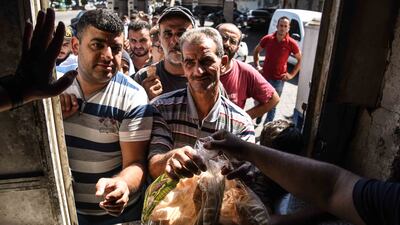
People queue for bread as shortages continue. Elizabeth Fitt for The National -
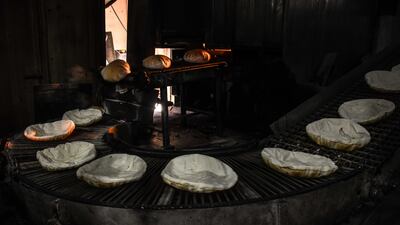
The manager at Tarik Al Ridani bakery says it is one of only two producers still operational in the city and with two tonnes of flour left, it will soon run out of bread. Elizabeth Fitt for The National -
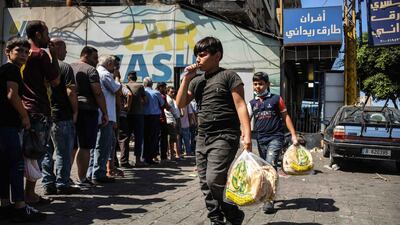
These boys are among the lucky few that have found bread before stocks run out. Elizabeth Fitt for The National -

Ogero, Lebanon's state-run telecoms provider, has a mast in Hrar, but connection speeds are often very slow. Elizabeth Fitt for The National


The anger has spread in recent months, even in Hezbollah strongholds where many have protested against electricity cuts and fuel shortages as well as the currency crash that has plunged more than half the country's six million people into penury.
In its strongholds, predominantly inhabited by Shiite Muslims, it is not uncommon now for people to speak out against the group. They note that Hezbollah is paying salaries in US dollars at a time when most Lebanese get paid in Lebanese currency, which in almost two years has lost more than 90 per cent of its value.
Protests and scuffles have broken out at gas stations around Lebanon and in some Hezbollah strongholds. In rare shows of defiance, groups of protesters closed key roads in those areas south of Beirut and in southern Lebanon.
In recent speeches, Hezbollah leader Sayyed Hassan Nasrallah appeared angry, blaming the shortages on what he describes as an undeclared western siege. The chaos in Lebanon, he said, is being instigated from a “black room” inside the US embassy.
Critics say that rather than push for reform, Hezbollah has stood by its political allies who resist change. They say the group is increasingly pulling Lebanon into Iran’s orbit by doing its bidding, and that US sanctions against Iran and Hezbollah are making things harder.
Where Hezbollah was once considered an almost sacred, untouchable force fighting for a noble cause – the fight against the Israeli enemy – it is now seen by many simply as part of the corrupt political clique responsible for the country’s epic meltdown. Still, when it comes to fighting Israel, the group enjoys unwavering backing from its support base.
Often criticised for operating as a state within a state, Hezbollah has tried to ease the effects of the crisis on its supporters in similar fashion.
While the government has been working for months to issue ration cards to poor families, Hezbollah has been well ahead. It has issued two such cards to poor families living in Hezbollah bastions, one called Sajjad after the name of a Shiite imam, and a second called Nour, or light, for its fighters and employees of its institutions, who number about 80,000.
“We will serve you with our eyelashes,” is Hezbollah’s slogan to serve the extremely poor in its communities – a Lebanese term meaning they are ready to sacrifice anything to help others.
The tens of thousands carrying Sajjad cards can not only buy highly subsidised products from dozens of shops spread around Lebanon – mostly staples made in Lebanon, Iran and Syria – but can also get medical treatment and advice at 48 Hezbollah-run clinics and medical centres around Lebanon.
Nasrallah is also organising a sea corridor carrying oil from Iran to Lebanon to help alleviate the fuel shortages, with the first tanker believed to be on its way. The move has been praised by Hezbollah’s supporters and heavily criticised by its opponents, who say it risks bringing more sanctions on Lebanon.
editor of Diwan, the blog of the Carnegie Middle East Centre
In the border incident, villagers from the minority Druze sect intercepted Hezbollah fighters on their way back after firing rockets at a disputed area held by Israel. The villagers briefly detained them and the mobile rocket launcher they used after accusing them of putting them at risk should Israel strike back.
The fighters and the launcher were handed over to Lebanese troops, who released them the same day.
Later, Hezbollah angered many Christians after supporters launched a social media campaign against the head of Lebanon’s Maronite Catholic church, the country’s largest Christian group, accusing him of treason after he criticised the group for firing the rockets at Israeli positions.
The widely feared group is being hammered by accusations from its local opponents. These include silencing opposition groups, facilitating smuggling of fuel and other subsidised items to neighbouring Syria, and alienating oil-rich Gulf countries such as Saudi Arabia, leading them to halt financial assistance because of Hezbollah’s dominance of Lebanon.
The most serious charge is a claim by opponents at home that the group brought in the hundreds of tonnes of ammonium nitrate that exploded at Beirut’s port last year, killing at least 214 people, injuring thousands and destroying parts of the capital.
No direct connection to Hezbollah has emerged, but unsubstantiated theories that tie the group to the stockpile abound. One claim is that Hezbollah imported the chemicals on behalf of the Syrian government, which used them in barrel bombs against rebel-held areas during the neighbouring country's 10-year conflict.
“Hezbollah’s agencies are active at the port and this is known to security agencies and all Lebanese. Why is Sayyed Hassan Nasrallah above questioning?” Samy Gemayel, head of the right-wing Christian Kataeb Party said recently.
Hezbollah has repeatedly denied any link to the ammonium nitrate. But Nasrallah further angered families of the victims and other Lebanese recently by criticising the judge leading the investigation into the blast, suggesting he should be replaced. Nasrallah described Judge Tarek Bitar as “politicised” after he filed charges against some legislators and former Cabinet ministers allied with Hezbollah.
“There is an attempt to satanise Hezbollah and tarnish its image,” said Lebanese University political science professor Sadek Naboulsi. He said that Hezbollah had overcome such pressures in the past and emerged more powerful.
A serious test for Hezbollah came in early August when a funeral of a militant came under fire by suspected Sunni gunmen at the southern entrance to Beirut. Three Hezbollah supporters were killed and 16 wounded in the shooting in the town of Khaldeh.
Hezbollah did not retaliate and instead called on Lebanese authorities to investigate the case.
“An increasing number of Lebanese are realising that the concept of a Lebanese state cannot coexist with a powerful armed militia serving an outside power,” wrote Michael Young, editor of Diwan, the blog of the Carnegie Middle East Centre.
Mr Macaron said Hezbollah will not be the same after the crisis and will have to adapt to ensure political survival in the long term.
“What they can do at this point is to limit losses as much as possible,” he said.

