


Moqtada Al Sadr on Thursday called for the formation of a national majority government after meeting leaders of the country’s Shiite movement.
The populist cleric’s political movement won 73 of the Parliament's 329 seats in Iraq's general elections in October. The country’s election commission confirmed the results this week after a painstaking manual recount of hundreds of ballot boxes.
The victory puts him at the centre of Iraq's lengthy government formation process.
"Neither eastern or western ... a national majority government," Mr Al Sadr said on Twitter after meeting leaders of the Iraqi Co-ordination Framework, the umbrella group of Shiite parties contesting the election’s results.
In his tweet, Mr Al Sadr indicated that the next government will be free from foreign influence.
The cleric is a former leader of an anti-American militia who has often surprised observers with his political manoeuvres.
He has long said that he is pushing to be in the majority government but not in a coalition with weaker parties. He believes that a coalition government has failed to serve the interests of Iraqis.
The meeting with Shiite leaders included former prime minister Nouri Al Maliki who heads the State of Law, paramilitary leader Hadi Al Amiri who leads the Fatah party, and Shiite cleric Ammar Al Hakim and former prime minister Haider Al Abadi, the chiefs of the State of Forces. It took place in Mr Al Amiri’s house may have been the first face-to-face meeting between Mr Al Maliki and Mr Al Sadr since 2006, said Sajad Jiyad, a fellow at the Century Foundation who lives in Baghdad.
"An agreement might not be reached right away but clearly no other direction apart from consensus, compromise, coalition," he said.
-
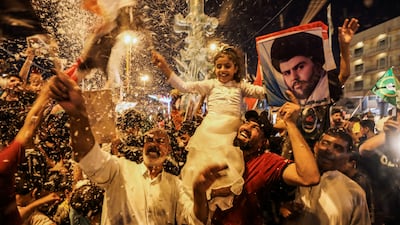
Supporters of the movement of Shiite cleric Moqtada Al Sadr celebrate in Najaf, Iraq, after preliminary results of the country’s parliamentary election were announced. Reuters -

Judge Jalil Adnan Khalaf (C), the chairman of Iraq’s Independent High Electoral Commission, speaks in the capital, Baghdad. AFP -

EU observers of the election hold a press conference in Baghdad. AP -
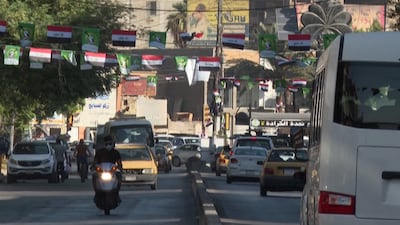
Iraqi flags are strung across a street. -
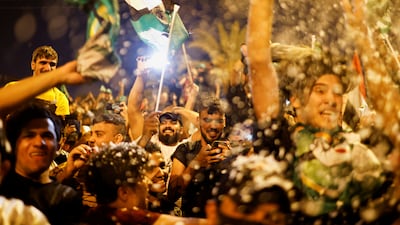
Sadrists celebrate after preliminary results of Iraq’s parliamentary election were announced in Baghdad on October 11. Reuters -
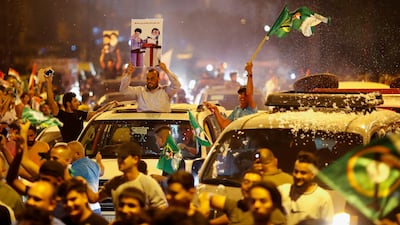
Supporters of Shiite cleric Moqtada Al Sadr celebrate after preliminary results were announced. Reuters -
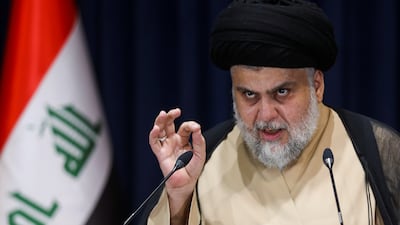
Shiite cleric Moqtada Al Sadr speaks after preliminary results of Iraq’s parliamentary election were announced in Najaf on October 11. Reuters


A statement was issued at the end of the meeting that said the leaders discussed "outstanding issues ... to strengthen the bonds of unity and fraternity between the sons of the nation and to serve the interest of the Iraqi people".
Issues of discussion included, combating corruption, the withdrawal of foreign troops, enhancing security around the country and elevating the state's economic crisis, the statement said.
Iraq, an oil-rich country of 40 million people, is still recovering from years of conflict and turmoil.

