Climate change, pollution and dams threaten Iraq's marshlands - in pictures
-

A man paddles his boat at the Chebayesh marsh, Dhi Qar province, Iraq. All photos: Thaier al-Sudani / Reuters -
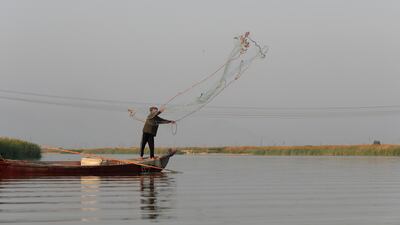
Iraq's 2020-2021 rainfall season was the second driest in 40 years, according to the United Nations. -

The dry season causes the salinity of the wetlands to rise to dangerous levels. -

Buffalos drink less and produce less milk when the water quality drops. -

Sabah Thamer al-Baher and his family are Marsh Arabs, the wetlands' indigenous population that was displaced in the 1990s when Saddam Hussein dammed and drained the marshes to flush out rebels hiding in the reeds. -

After Saddam Hussein was overthrown in 2003, the marshes were partly reflooded and many Marsh Arabs returned, including Baher's family. -

In 2019, the government said five million cubic metres a day of raw sewage water were being pumped directly into the Tigris, one of the rivers that feed Iraq's marshes. -

Iraq's neighbours are also suffering from droughts and rising temperatures, which has led to regional water disputes. -
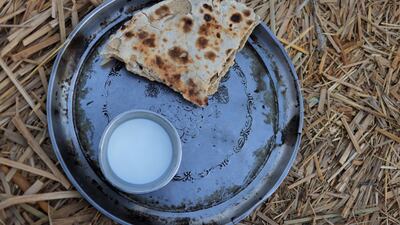
Buffalo milk and bread is seen on a tray. -

Men pray at the Chebayesh marsh. -

Baher prepares animal medicine to give to a buffalo. -

Children play at the Chebayesh marsh. -

Buffaloes wade in the water of the Chebayesh marsh.


Most popular today

