The Kingdom of Iraq between 1921 and 1958 - in pictures
-

Faisal I's army arrives at Yanbu in present-day Madinah, during the Arab Revolt against Ottoman rule in December 1916. Pierre Perrin / Sygma via Getty -
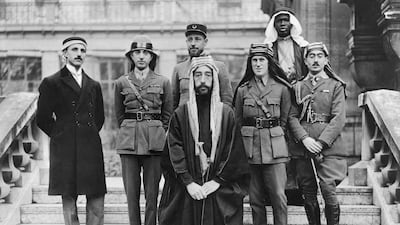
Faisal, son of Hussein ibn Ali of Makkah, with his delegates and advisers at the Versailles peace conference on January 22, 1919. Faisal was briefly king of Syria, and later Iraq. Behind him are (L-R) his private secretary and fellow delegate Rustem Haidar; Brig Gen Nuri Said, of Baghdad; Captain Pisani of France; Col. T. E. Lawrence 'of Arabia', and Hassan Kadri. -

1921: Members of the Mesopotamia Commission, set up to discuss the future of Mesopotamia at the Cairo Conference. Included in the photograph are Gertrude Bell (second L, second row), T E Lawrence (fourth R, second row), Winston Churchill (centre front row) and Herbert Samuel, 1st Viscount Samuel (L of Churchill). General Photographic Agency / Getty Images -
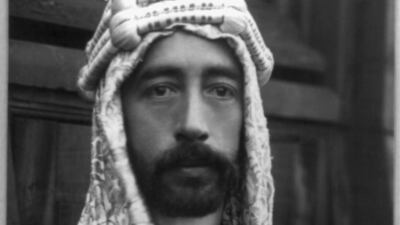
A portrait of Faisal I bin Hussein bin Ali Al Hashemi, King of the Arab Kingdom of Syria in 1920 and King of Iraq from 1921 to 1933. Library of Congress -
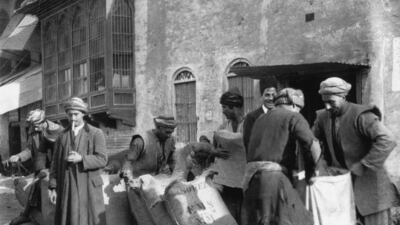
Traders at the bazaar in Baghdad, circa 1925 – a few years into King Faisal's rule. Hulton Archive / Getty -

King Faisal of Iraq is shown above with his advisers on European affairs in March 1928. King Faisal was son of King Hussein ibn Ali of Hejaz. He was appointed King of Iraq seven years before this photo was taken. Bettmann / Corbis / Bettmann Archive -
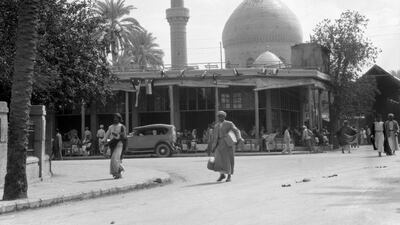
The streets of Iraq pictured in 1932, the year the British Mandate lifted. A year later, King Faisal I would die and his son, Ghazi I, would become king. Granger / Shutterstock -
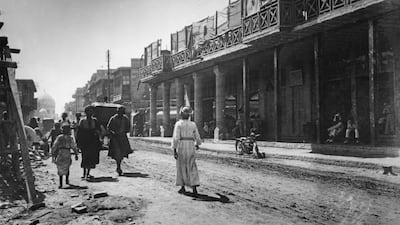
The streets of Baghdad, pictured in around 1940, a year after the death of King Ghazi. Hulton Archive / Getty -
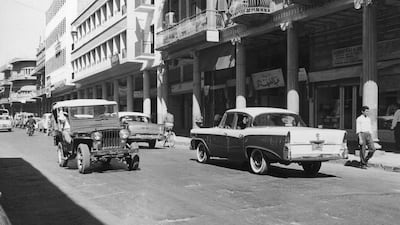
Modern buildings and new cars on a street in Baghdad, October 30, 1957, less than a year before the 14 July Revolution and the overthrow of the monarchy. Keystone / Hulton Archive / Getty -

Traffic on a street in Baghdad, Iraq, circa 1950, during the regency of King Faisal II's uncle, Prince Abdullah. King Faisal II would begin his reign on turning 18 in 1953. Three Lions / Hulton Archive / Getty -
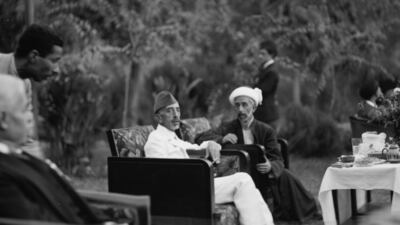
King Faisal I of Iraq (L) with his brother Emir Abdullah of Transjordan, at the palace in Baghdad, on October 6, 1932. Library of Congress -
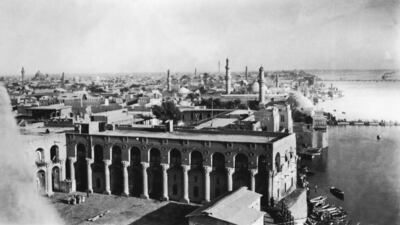
A view of Baghdad from the clock tower of the old Turkish barracks, now a government building in April 1932. A year later, King Faisal I died and his son, Ghazi, ascended the throne. Topical Press Agency / Hulton Archive / Getty -

Baghdad in 1938, a year before the death of King Ghazi. Ts / Keystone USA / Shutterstock -
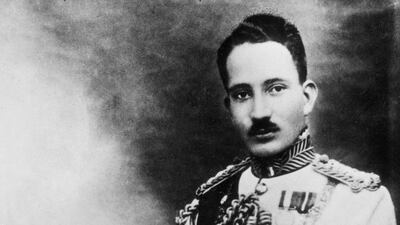
King Ghazi of Iraq shortly before his death in April 1939 at the Royal Palace in Baghdad. He ruled for six years. AFP -
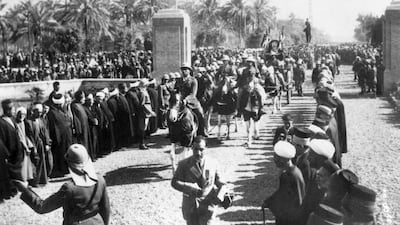
A funeral procession for King Ghazi moves through Baghdad on April 9, 1939. He died in a motor accident and his three-year-old son became King. AFP -
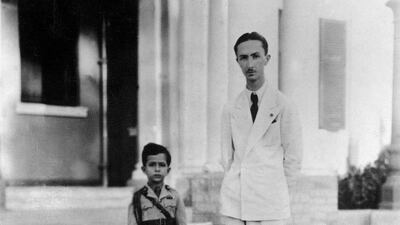
King Faisal II stands for a photograph with his uncle Prince Abdullah, his regent, on June 25, 1939, months after the death of King Ghazi, at the Royal Palace in Baghdad. AFP -
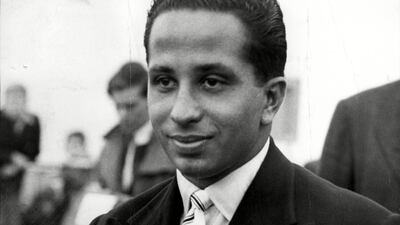
King Faisal II of Iraq reigned from April 1939 to July 1958, when the monarchy was overthrown and he and some of his family were killed during the July 14 Revolution. This regicide marked the end of a 37-year monarchy in Iraq. Afterwards, the country became a republic. ANL / Shutterstock -
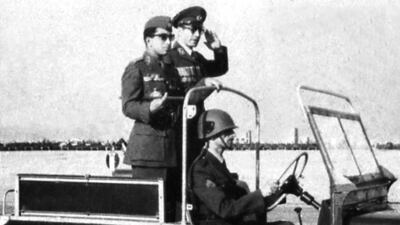
King Faisal II (L) inspects troops in Baghdad in 1953, when he became king and succeeded his father King Ghazi who was killed in 1939. Faisal II was three years old when his father died so his uncle became regent. AFP -

Demonstrators carry portraits of the United Arab Republic President Gamal Abdel Nasser during revolt of pro-Nasser forces in Baghdad on July 14, 1958. The government of King Faisal was overthrown. AP Photo / Iraq Revolutionary Army / Stan Carter -
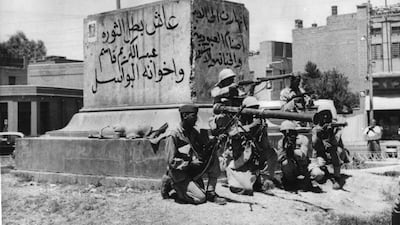
Heavily armed revolutionary soldiers on a street of Baghdad, on July 14, 1958, a few hours after the military staged a coup to take control of the country and overthrow the monarchy, declaring a republic. King Faisal II and Crown Prince Abdullah were shot dead in his palace at the height of the coup. AP


Most popular today

