

Iranian Foreign Minister Hossein Amirabdollahian has said that when his government says it will return to talks on resuming compliance with the 2015 nuclear deal, it means when Tehran has completed its review of the nuclear file.
Tehran will return to talks “very soon,” he said, without giving a specific date.
“People keep asking how soon is soon," Mr Amirabdollahian said in remarks broadcast on state TV channel IRINN on Saturday. "Does it mean days, weeks or months?”
“The difference between Iranian and Western ‘soon’ is a lot," he said.
"To us, ‘soon’ means really in the first opportune time – when our reviews [of the nuclear file] have been completed. What is important is our determination to return to the talks, but those that are serious and guarantee the Iranian nation’s rights and interests.”
“I remind you of the West’s promises," he said. "Such as repeatedly promising they would ‘soon’, ‘in a few months,’ implement the Instex" - a mechanism set up to trade humanitarian goods and food after the US withdrew from the nuclear deal in 2018.
Iran says the channel with Europe has been ineffective.
-
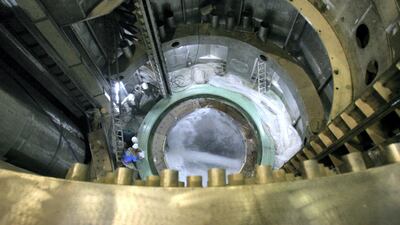
Russian contractors work at the Bushehr nuclear reactor site in 2007. The plant opened four years later. Bloomberg -
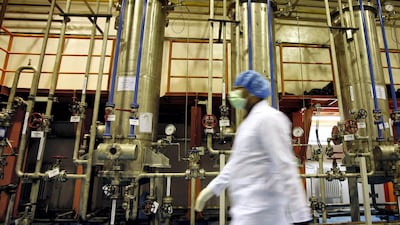
An Iranian technician at the International Atomic Energy Agency inspects the country's Isfahan plant in 2007. Tehran is no longer co-operating with the agency at nuclear sites across the country. EPA -

Workers wait to begin constructing a second reactor at the Bushehr nuclear power plant in 2019. AFP -
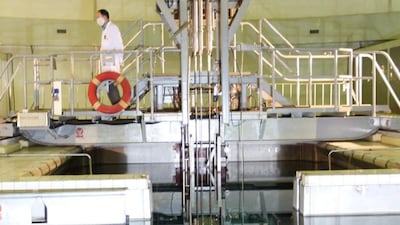
A metal-encased rod with 20 per cent enriched nuclear fuel is inserted into a reactor in Tehran in 2012. AFP -
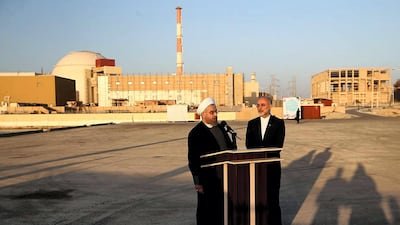
Fomer Iranian President Hassan Rouhani and the country's Atomic Energy Organisation chief Ali Akbar Salehi speak at the Bushehr nuclear site in 2015. AFP -
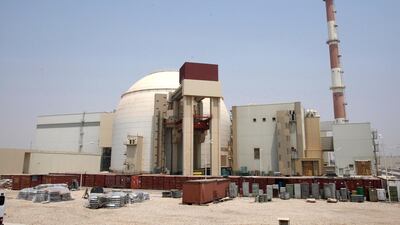
Iran's Bushehr nuclear plant has been restarted. EPA -
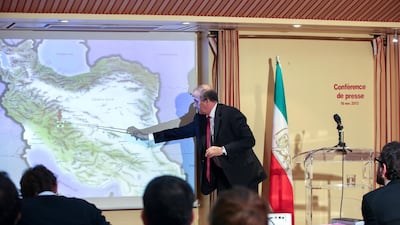
Mehdi Abrichamtchi, chairman of the Peace and Security Committee at the National Council of Resistance of Iran, shows journalists the location of a secret nuclear site in Iran in 2013. AFP -
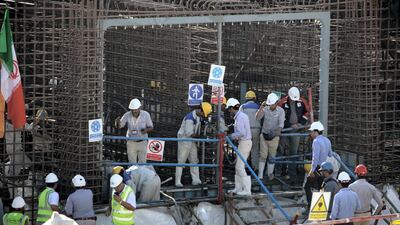
Workers prepare to begin the construction of a second reactor at the Bushehr site. AFP


Under the 2015 deal that Iran signed with world powers, it agreed to curb its nuclear programme in return for the lifting of sanctions. Washington abandoned that deal three years later and unilaterally reimposed financial sanctions.
Talks that began in April between Iran and five other nations – Britain, China, France, Germany and Russia – to revive the deal have been stalled since hardline conservative Ebrahim Raisi was elected president in June.
European diplomats have served as the chief intermediaries between Washington and Tehran, which has refused to negotiate directly with US officials.

