• Iranian President Hassan Rouhani, right, and the head of Atomic Energy Organization of Iran Ali Akbar Salehi inspect the nuclear technology on the occasion of Iran National Nuclear Technology Day in Tehran in 2019. EPA
    Iranian President Hassan Rouhani, right, and the head of Atomic Energy Organization of Iran Ali Akbar Salehi inspect the nuclear technology on the occasion of Iran National Nuclear Technology Day in Tehran in 2019. EPA
  • IR-8 centrifuges at Natanz nuclear power plant, some 300 kilometres south of capital Tehran. AFP
    IR-8 centrifuges at Natanz nuclear power plant, some 300 kilometres south of capital Tehran. AFP
  • The Iranian nuclear power plant in Bushehr in 2010. EPA
    The Iranian nuclear power plant in Bushehr in 2010. EPA
  • Salehi speaks with media while visiting Natanz enrichment facility, in central Iran in 2019. Atomic Energy Organization of Iran via AP
    Salehi speaks with media while visiting Natanz enrichment facility, in central Iran in 2019. Atomic Energy Organization of Iran via AP
  • The gate of Natanz nuclear power plant in Natanz , Isfahan province, in 2019. EPA
    The gate of Natanz nuclear power plant in Natanz , Isfahan province, in 2019. EPA
  • Inside of the Iran's Fordow nuclear facility, in Fordow, Qom province in 2019. EPA
    Inside of the Iran's Fordow nuclear facility, in Fordow, Qom province in 2019. EPA
  • Technicians work at the Arak heavy water reactor's secondary circuit, as officials and media visit the site, near Arak, Iran in 2019. Atomic Energy Organization of Iran via AP
    Technicians work at the Arak heavy water reactor's secondary circuit, as officials and media visit the site, near Arak, Iran in 2019. Atomic Energy Organization of Iran via AP
  • Members of the media and officials tour the water nuclear reactor at Arak in 2019. WANA via Reuters
    Members of the media and officials tour the water nuclear reactor at Arak in 2019. WANA via Reuters
  • Concrete is poured for the base of the second nuclear power reactor at Bushehr plant in 2019. Atomic Energy Organization of Iran via AP
    Concrete is poured for the base of the second nuclear power reactor at Bushehr plant in 2019. Atomic Energy Organization of Iran via AP

Iran ends UN nuclear monitoring after failing to account for trace uranium


  • English
  • Arabic

Iran on Monday said it would not renew its inspection agreement with the UN nuclear watchdog but would continue to record data for one more month.

The decision was made public after an accusation earlier in the day by the International Atomic Energy Agency that Tehran had failed to account for uranium traces.

"We have done our best to co-operate with the [IAEA] and provide all clarifications," said Ali Akbar Salehi, head of the Iranian Atomic Energy Organisation.

Mr Salehi said the decision to extend maintaining data for another month was aimed at making progress and concluding "technical talks" between the two agencies.

Iran's failure to explain traces of processed uranium found at several undeclared sites was revealed in the IAEA's quarterly report, released on Monday.

Three months ago Britain, France and Germany scrapped a US-backed plan for the International Atomic Energy Agency’s 35-nation board of governors to criticise Iran for not fully explaining the origin of the particles.

The three countries relented when IAEA chief Rafael Grossi announced new talks with Tehran.

Mr Grossi hoped to report progress in the talks before the board meets next week and as negotiations to revive the 2015 Iran nuclear deal continue in Vienna, Austria.

“After many months, Iran has not provided the necessary explanation for the presence of the nuclear material particles at any of the three locations where the agency has conducted complementary accesses,” he said in a report to member states.

In another report, the agency said Iran’s stockpile of enriched uranium was about 16 times the limit allowed in the 2015 deal with world powers, which tried to limit Iran’s ability to develop nuclear weapons.

It gave an estimate of a stockpile of 3,241 kilograms but said it could not verify the total.

Iran began increasing production after president Donald Trump withdrew the US from the deal in 2018.

Under the pact, the IAEA placed about 2,000 tamper-proof seals on nuclear material and equipment. Those seals communicated electronically with inspectors.

Automated measuring devices also provided real-time data from Iran’s nuclear programme.

But the IAEA's report said it had not been able to access monitoring data since late February, when Iran started restricting international inspections of its plants.

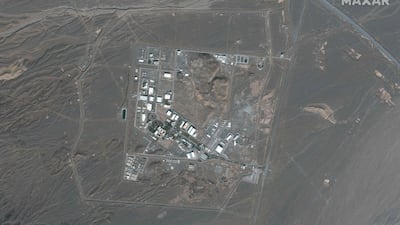
  • An overview of Iran's Natanz nuclear facility, south of the capital Tehran. Maxar Technologies / AFP
    An overview of Iran's Natanz nuclear facility, south of the capital Tehran. Maxar Technologies / AFP
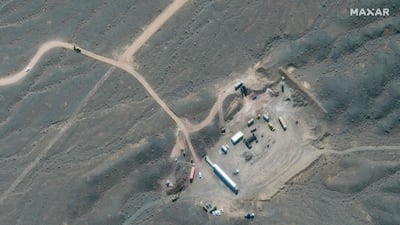
  • An overview of Iran's Natanz nuclear facility, south of the capital Tehran. Maxar Technologies / AFP
    An overview of Iran's Natanz nuclear facility, south of the capital Tehran. Maxar Technologies / AFP
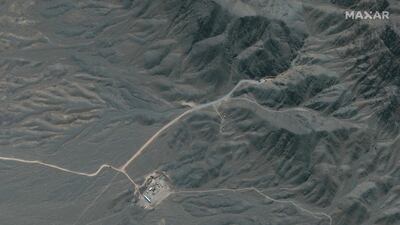
  • An overview of Iran's Natanz nuclear facility, south of the capital Tehran. Maxar Technologies / AFP
    An overview of Iran's Natanz nuclear facility, south of the capital Tehran. Maxar Technologies / AFP
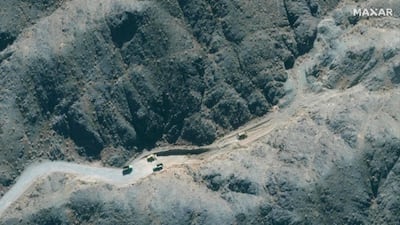
  • An overview of Iran's Natanz nuclear facility, south of the capital Tehran. Maxar Technologies / AFP
    An overview of Iran's Natanz nuclear facility, south of the capital Tehran. Maxar Technologies / AFP

The IAEA said it has “not had access to the data from its online enrichment monitors and electronic seals, or had access to the measurement recordings registered by its installed measurement devices” since February 23.

While Iran and the UN watchdog earlier acknowledged that the restrictions limited access to surveillance cameras at Iranian centres, the latest report indicated they were tougher.

The IAEA said it could only provide an estimate of Iran’s nuclear stockpile as the country enriches uranium at a much higher level.

The IAEA’s latest report leaves Britain, France and Germany with a decision on whether to revive their push for a resolution criticising Tehran, which could undermine the talks to revive the deal.


Mercer, the investment consulting arm of US services company Marsh & McLennan, expects its wealth division to at least double its assets under management (AUM) in the Middle East as wealth in the region continues to grow despite economic headwinds, a company official said.

Mercer Wealth, which globally has $160 billion in AUM, plans to boost its AUM in the region to $2-$3bn in the next 2-3 years from the present $1bn, said Yasir AbuShaban, a Dubai-based principal with Mercer Wealth.

Within the next two to three years, we are looking at reaching $2 to $3 billion as a conservative estimate and we do see an opportunity to do so,” said Mr AbuShaban.

Mercer does not directly make investments, but allocates clients’ money they have discretion to, to professional asset managers. They also provide advice to clients.

“We have buying power. We can negotiate on their (client’s) behalf with asset managers to provide them lower fees than they otherwise would have to get on their own,” he added.

Mercer Wealth’s clients include sovereign wealth funds, family offices, and insurance companies among others.

From its office in Dubai, Mercer also looks after Africa, India and Turkey, where they also see opportunity for growth.

Wealth creation in Middle East and Africa (MEA) grew 8.5 per cent to $8.1 trillion last year from $7.5tn in 2015, higher than last year’s global average of 6 per cent and the second-highest growth in a region after Asia-Pacific which grew 9.9 per cent, according to consultancy Boston Consulting Group (BCG). In the region, where wealth grew just 1.9 per cent in 2015 compared with 2014, a pickup in oil prices has helped in wealth generation.

BCG is forecasting MEA wealth will rise to $12tn by 2021, growing at an annual average of 8 per cent.

Drivers of wealth generation in the region will be split evenly between new wealth creation and growth of performance of existing assets, according to BCG.

Another general trend in the region is clients’ looking for a comprehensive approach to investing, according to Mr AbuShaban.

“Institutional investors or some of the families are seeing a slowdown in the available capital they have to invest and in that sense they are looking at optimizing the way they manage their portfolios and making sure they are not investing haphazardly and different parts of their investment are working together,” said Mr AbuShaban.

Some clients also have a higher appetite for risk, given the low interest-rate environment that does not provide enough yield for some institutional investors. These clients are keen to invest in illiquid assets, such as private equity and infrastructure.

“What we have seen is a desire for higher returns in what has been a low-return environment specifically in various fixed income or bonds,” he said.

“In this environment, we have seen a de facto increase in the risk that clients are taking in things like illiquid investments, private equity investments, infrastructure and private debt, those kind of investments were higher illiquidity results in incrementally higher returns.”

The Abu Dhabi Investment Authority, one of the largest sovereign wealth funds, said in its 2016 report that has gradually increased its exposure in direct private equity and private credit transactions, mainly in Asian markets and especially in China and India. The authority’s private equity department focused on structured equities owing to “their defensive characteristics.”

SPEC%20SHEET%3A%20SAMSUNG%20GALAXY%20Z%20FLIP5
%3Cp%3E%3Cstrong%3EDisplay%3A%3C%2Fstrong%3E%20Main%20%E2%80%93%206.7%22%20FHD%2B%20Dynamic%20Amoled%202X%2C%202640%20x%201080%2C%2022%3A9%2C%20425ppi%2C%20HDR10%2B%2C%20up%20to%20120Hz%3B%20cover%20%E2%80%93%203%2F4%22%20Super%20Amoled%2C%20720%20x%20748%2C%20306ppi%3C%2Fp%3E%0A%3Cp%3E%3Cstrong%3EProcessor%3A%3C%2Fstrong%3E%20Qualcomm%20Snapdragon%208%20Gen%202%2C%204nm%2C%20octa-core%3B%20Adreno%20740%20GPU%3C%2Fp%3E%0A%3Cp%3E%3Cstrong%3EMemory%3A%3C%2Fstrong%3E%208GB%3C%2Fp%3E%0A%3Cp%3E%3Cstrong%3ECapacity%3A%3C%2Fstrong%3E%20256%2F512GB%3C%2Fp%3E%0A%3Cp%3E%3Cstrong%3EPlatform%3A%3C%2Fstrong%3E%20Android%2013%2C%20One%20UI%205.1.1%3C%2Fp%3E%0A%3Cp%3E%3Cstrong%3EMain%20camera%3A%3C%2Fstrong%3E%20Dual%2012MP%20ultra-wide%20(f%2F2.2)%20%2B%2012MP%20wide%20(f%2F1.8)%2C%20OIS%3C%2Fp%3E%0A%3Cp%3E%3Cstrong%3EVideo%3A%3C%2Fstrong%3E%204K%4030%2F60fps%2C%20full-HD%4060%2F240fps%2C%20HD%40960fps%3C%2Fp%3E%0A%3Cp%3E%3Cstrong%3EFront%20camera%3A%3C%2Fstrong%3E%2010MP%20(f%2F2.2)%3C%2Fp%3E%0A%3Cp%3E%3Cstrong%3EBattery%3A%3C%2Fstrong%3E%203700mAh%2C%2025W%20fast%20charging%2C%2015W%20wireless%2C%204.5W%20reverse%20wireless%3C%2Fp%3E%0A%3Cp%3E%3Cstrong%3EConnectivity%3A%3C%2Fstrong%3E%205G%3B%20Wi-Fi%2C%20Bluetooth%205.3%2C%20NFC%20(Samsung%20Pay)%3C%2Fp%3E%0A%3Cp%3E%3Cstrong%3EI%2FO%3A%3C%2Fstrong%3E%20USB-C%3C%2Fp%3E%0A%3Cp%3E%3Cstrong%3ECards%3A%3C%2Fstrong%3E%20Nano-SIM%20%2B%20eSIM%3B%20no%20microSD%20slot%3C%2Fp%3E%0A%3Cp%3E%3Cstrong%3EColours%3A%3C%2Fstrong%3E%20Cream%2C%20graphite%2C%20lavender%2C%20mint%3B%20Samsung.com%20exclusives%20%E2%80%93%20blue%2C%20grey%2C%20green%2C%20yellow%3C%2Fp%3E%0A%3Cp%3E%3Cstrong%3EIn%20the%20box%3A%3C%2Fstrong%3E%20Flip%204%2C%20USB-C-to-USB-C%20cable%3C%2Fp%3E%0A%3Cp%3E%3Cstrong%3EPrice%3A%3C%2Fstrong%3E%20Dh3%2C899%20%2F%20Dh4%2C349%3C%2Fp%3E%0A
Company%C2%A0profile
%3Cp%3E%3Cstrong%3ECompany%20name%3A%20%3C%2Fstrong%3Eamana%3Cbr%3E%3Cstrong%3EStarted%3A%20%3C%2Fstrong%3E2010%3Cbr%3E%3Cstrong%3EFounders%3A%3C%2Fstrong%3E%20Karim%20Farra%20and%20Ziad%20Aboujeb%3Cbr%3E%3Cstrong%3EBased%3A%20%3C%2Fstrong%3EUAE%3Cbr%3E%3Cstrong%3ERegulator%3A%20%3C%2Fstrong%3EDFSA%3Cbr%3E%3Cstrong%3ESector%3A%20%3C%2Fstrong%3EFinancial%20services%3Cbr%3E%3Cstrong%3ECurrent%20number%20of%20staff%3A%20%3C%2Fstrong%3E85%3Cbr%3E%3Cstrong%3EInvestment%20stage%3A%20%3C%2Fstrong%3ESelf-funded%3Cbr%3E%3C%2Fp%3E%0A
RESULTS

6.30pm UAE 1000 Guineas Trial Conditions (TB) US$100,000 (Dirt) 1,400m

Winner Final Song, Christophe Soumillon (jockey), Saeed bin Suroor (trainer).

7.05pm Handicap (TB) $135,000 (Turf) 1,000m

Winner Almanaara, Dane O’Neill, Doug Watson.

7.40pm Handicap (TB) $175,000 (D) 1,900m

Winner Grand Argentier, Brett Doyle, Doug Watson.

8.15pm Meydan Challenge Listed Handicap (TB) $175,000 (T) 1,400m

Winner Major Partnership, Patrick Cosgrave, Saeed bin Suroor.

8.50pm Dubai Stakes Group 3 (TB) $200,000 (D) 1,200m

Winner Gladiator King, Mickael Barzalona, Satish Seemar.

9.25pm Dubai Racing Club Classic Listed Handicap (TB) $175,000 (T) 2,410m

Winner Universal Order, Richard Mullen, David Simcock.

ONCE UPON A TIME IN GAZA

Starring: Nader Abd Alhay, Majd Eid, Ramzi Maqdisi

Directors: Tarzan and Arab Nasser

Rating: 4.5/5

GRAN%20TURISMO
%3Cp%3E%3Cstrong%3EDirector%3A%3C%2Fstrong%3E%20Neill%20Blomkamp%3C%2Fp%3E%0A%3Cp%3E%3Cstrong%3EStars%3A%3C%2Fstrong%3E%20David%20Harbour%2C%20Orlando%20Bloom%2C%20Archie%20Madekwe%2C%20Darren%20Barnet%3C%2Fp%3E%0A%3Cp%3E%3Cstrong%3ERating%3A%3C%2Fstrong%3E%203%2F5%3C%2Fp%3E%0A
Avatar: Fire and Ash

Director: James Cameron

Starring: Sam Worthington, Sigourney Weaver, Zoe Saldana

Rating: 4.5/5