

The flooding disaster that hit the Libyan town of Derna appears to have been an accident waiting to happen after revelations it was caused by the collapse of two badly maintained dams which sent a wall of water into the town.
Amid frantic rescue efforts to find survivors, attention has turned to why money allocated to repair the dams was never used, highlighting the country’s endemic corruption.
Derna, not long ago an attractive small town of 90,000 people nestled on the north-east coast, was well-prepared for the storm that blew in last weekend – but not for the failure of the dams south of the town.
As Storm Daniel tore through Greece, Bulgaria and Turkey, Derna was on high alert last Saturday. The mayor ordered a night-time curfew and the city council broadcast repeated warnings about flooding and a predicted rise in sea level.
When the storm hit on Saturday night, residents were confident they were coping well. As record rainfall fell on the area, most heeded advice to stay indoors.
But far to the south, trouble was brewing. Behind Derna are the Green Mountains, a beauty spot of rugged peaks and forested slopes. Unseen by those sheltering from the torrential rain, the run-off from the mountains turned streams into raging torrents. Those streams all fed to one place, the reservoir of the Derna dam.
The dam, 14 kilometres south of the town, stood 75 metres tall and was built by a Yugoslav construction company in the 1970s. It spanned the Wadi Derna, which for much of the year is a dry river bed. In winter months the dam would collect water which was used to irrigate crops downstream.
To save money, the dam, and a smaller one named Mansour further downstream, were built not of concrete but compacted clay. That gave them a distinctive sloping structure, rather than the hard, wall-like appearance of concrete dams.
Although cheaper than those made from concrete, earthen dams are perfectly safe – provided they are regularly maintained. But according to Derna’s mayor, no work had been done to reinforce them since 2002.
-
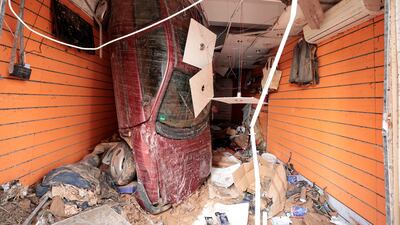
An upturned car inside a shop where it was carried by a torrent of floodwater in Derna, Libya. Reuters -
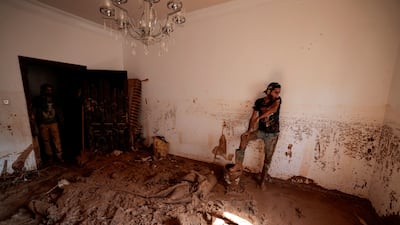
A flood survivor takes a breather from removing mud from his home in the aftermath of deadly floods in Derna. Reuters -
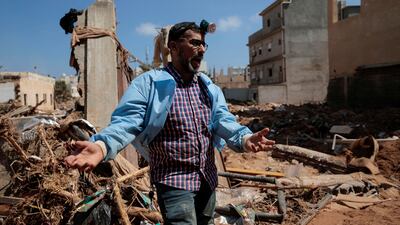
Mohammed Fathallah Al Hassi lost his mother and sister in Derna when dams collapsed, flooding the city, after heavy rainfall and a powerful storm hit eastern Libya. Reuters -
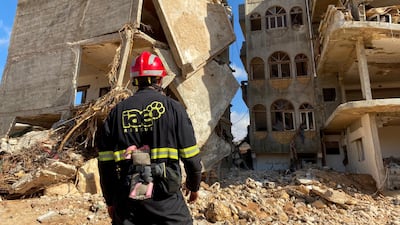
A Spanish rescue worker in Derna where authorities have been struggling to cope with thousands of flood victims' bodies washing up or decaying under rubble. Reuters -
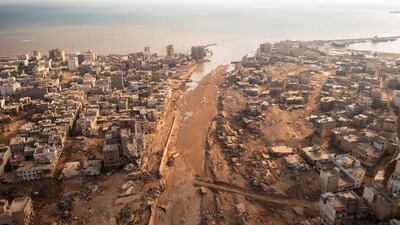
The destruction in the aftermath of the floods in Derna, Libya, as seen from the air. Reuters -

A view of Derna in the aftermath of the floods. Reuters -
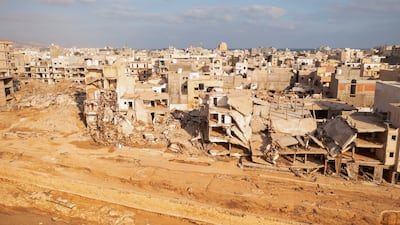
The aftermath of the floods in Derna. Libyan authorities said access to some areas had become impossible. Reuters -
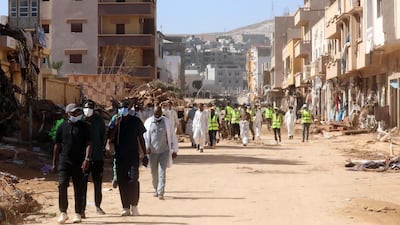
Volunteers amid the ruins and damaged homes after the Mediterranean Storm Daniel hit Libya's eastern city of Derna. AFP -
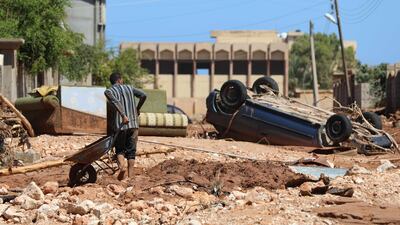
A rubble-strewn street in Libya's eastern city of Soussa. AFP -

People view areas damaged in the flooding in Derna, Libya. Reuters -
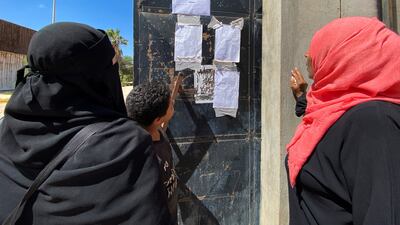
Locals view a list of the missing following the floods in Derna. Reuters -
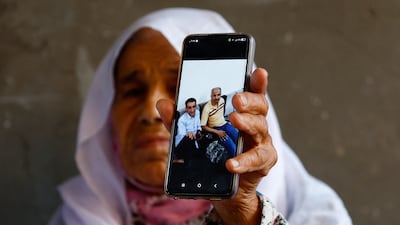
A Palestinian woman in the Gaza Strip displays a picture of her relatives, who had been living in Libya, that were among the victims of the flooding. Reuters -
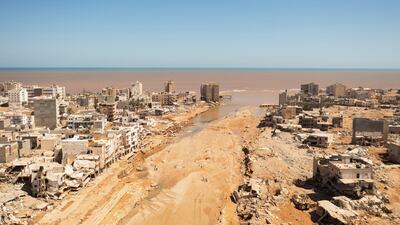
Libya's port city of Derna, days after floods swept away entire communities after two dams collapsed amid heavy rain. Reuters -
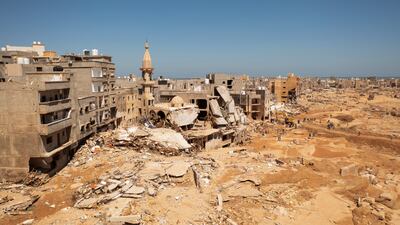
The dams collapsed causing a huge flash flood that killed thousands of people. Reuters -
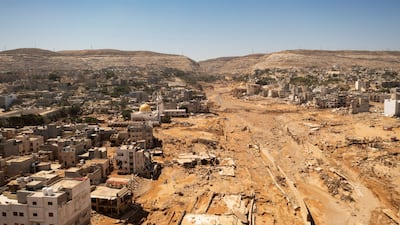
Thousands were still missing while more than 30,000 were displaced. Reuters -
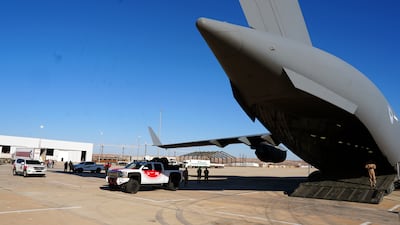
Five Emirati planes arrived in Benghazi carrying three rescue teams, urgent relief and medical aid, as part of UAE efforts to provide relief to the Libyan people. Wam -
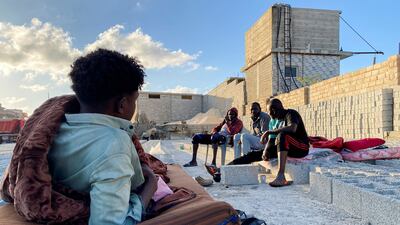
Sudanese workers who lost family members and friends during the disaster sit outside a tile factory in Derna. Reuters -
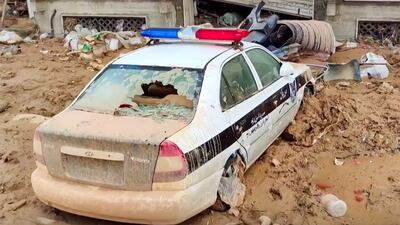
A police vehicle washed away by floods lies on a street in Derna. AFP -

A militiaman directs vehicles on along a muddy road after deadly floods caused by Storm Daniel hit Derna, forcing two dams to collapse. AFP -
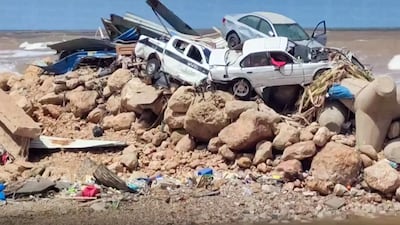
Vehicles washed away by the floods are piled up on the outskirts of Derna. AFP -
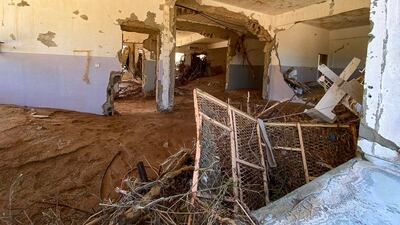
A school damaged by the floods in Derna. Reuters -
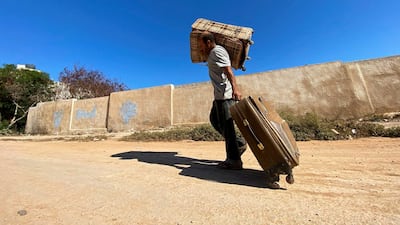
A man carries his belongings, in the aftermath of floods in Derna. Reuters -
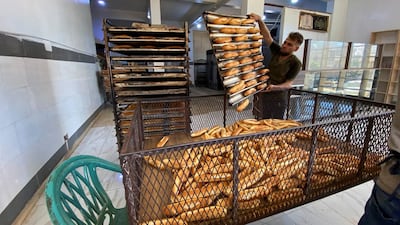
A worker puts bread in a box at a bakery, in the aftermath of the floods in Derna. Reuters -
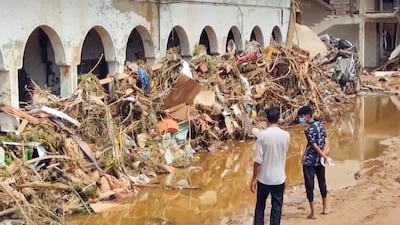
The trail of destruction left by the floods that hit Derna. AFP


Documents released this week show a contract was issued to a Turkish company for 53.5 million Libyan dinars (about $11 million) to fix both dams in 2020. Yet no work was done. A year later, Libya’s Audit Bureau criticised the Ministry of Works and Natural Resources for failing to cancel the contract and give it to a company that would do the work. Yet still nothing was done, even when a scientific study was produced last year warning of the very disaster that has now happened.
The study, by Abdelwanees Ashore of Sebha University in Libya, predicted disaster for the dams without repairs: “In the event of a big flood, the consequences will be disastrous for the residents of the valley and the city.”
The stage was set for disaster and in the early hours of Monday morning it arrived. The Derna dam reservoir was filled to its capacity of 510,000 cubic metres, and then overflowed. The weight of water was more than the dam could bear, and it disintegrated.
In seconds a wall of water cascaded down the Wadi Derna valley, wiping out farms and crops. It smashed into the smaller Mansour dam, rapidly overwhelming it, and exploded into the town itself.
With more than 11,000 dead, according to the Libyan Red Crescent, and many thousands more missing after a quarter of the town was washed out to sea, calls have come from all sides for Libya’s Attorney General Al Siddiq Al Sour to investigate the failure of the repairs contract.
Mr Al Sour travelled to Derna on Thursday with a team of prosecutors and announced an investigation was under way.
But for many, the neglect of the dam is symptomatic of a wider problem of chaos and corruption stretching back many years.
With Africa’s largest oil reserves and a population of only six million, Libya should be one of the world’s most prosperous countries. Instead, it is one of the most chaotic. Transparency International’s annual Corruption Perceptions Index ranks Libya 171 out of 180 countries surveyed, viewing it as one of the least transparent countries on Earth.
Added to the corruption is political chaos. Libya has two rival governments, the legacy of a bitter six-year civil war that ended in 2020. The internationally recognised administration in Tripoli controls west Libya while a rival administration holds sway in the east. Each has its own prime minister and, despite attempts to reunify them, rival central banks. Despite its immense oil wealth, Libya has no railway and only limited postal and public bus services. In this bureaucratic labyrinth it is even unclear which authority is responsible for the failure to fix the dam.
For many Libyans, the Derna catastrophe is an indicator of a wider bureaucratic chaos. “This is the tip of the iceberg of how the dysfunctional governance in Libya and infighting for power among various stakeholders impacts people,” tweeted Libyan analyst Mohamed Eljarh of the online media site Libya Desk.

