


Ultra-nationalist candidate Sinan Ogan may be Turkey's “kingmaker” despite placing third in presidential elections, in which Recep Tayyip Erdogan gained a narrow lead over rival Kemal Kilicdaroglu.
Mr Ogan captured a surprising 5 per cent of the vote.
Mr Erdogan and Mr Kilicdaroglu will contest a run-off vote on May 28.
But who is Mr Ogan and what does he want? Here is what we know so far.
Who is Sinan Ogan?
Born to an Azerbaijani family in the small Turkish town of Melekli in 1967, Mr Ogan is the son of a farmer and the youngest in his family.
He completed his primary and secondary school education in the city of Igdir before studying business administration at Marmara University. He earned a master's degree in financial law in 1992.
In 2009, he was awarded a doctorate in international relations and political science by Moscow State University of International Relations.
During his youth, he was heavily active in politics, organising rallies and events to protest against the Soviets' massacre of civilians in Azerbaijan's capital Baku on January 20, 1990, now commemorated as Black January.
In 2011, he became a member of parliament after the Nationalist Movement Party won in local elections.
What party does he belong to?
Today, Mr Ogan represents nationalist, anti-refugee ideals, often claiming that Syrian refugees represent a national security threat to Turkey.
He is a member of the four-party right-wing Ancestral Alliance, which was established in March this year.
What is Ogan's role in Turkey's election?
In an interview with Reuters, Mr Ogan said he would back Mr Kilicdaroglu in run-offs if the second-placed candidate ruled out concessions to the Peoples' Democratic Party (HDP) pro-Kurdish party.
The left-wing HDP is accused of supporting Kurdish militias, a claim it rejects.
Turkey considers the Kurdistan Workers’ Party, or PKK, to be a terrorist group.
Mr Ogan has said he would not back any candidate “who doesn’t keep a distance with the terror organisation”.
The 2.8 million people who voted for Mr Ogan in the first round of elections could be crucial to the winning candidate in the run-offs.
Turkey's presidential election voting — in pictures
-
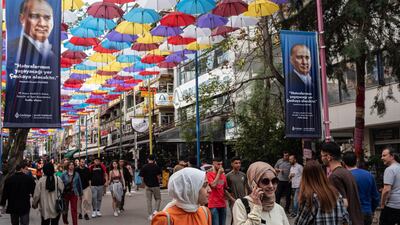
People walk under posters showing Mustafa Kemal Ataturk, founder of modern Turkey, in Ankara. The country is holding its first presidential run-off election after neither candidate earned more than 50 per cent of the vote in the May 14 election. Getty -
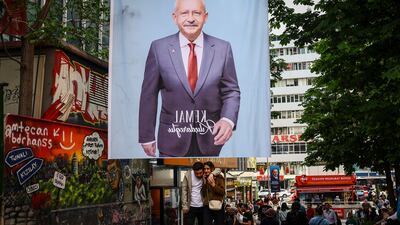
A couple walk under a poster of Turkish presidential candidate Kemal Kilicdaroglu, leader of the opposition Republican People's Party, the day after the general election, in Ankara. EPA -
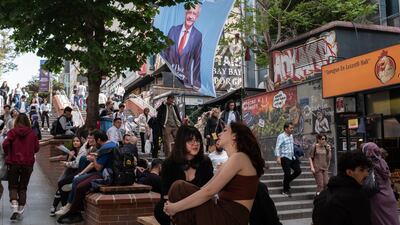
People sit on a bench by posters showing Mr Kilicdaroglu in Ankara. Getty -

The bustling Taksim area of Istanbul. Turkey will hold its first presidential run-off election after neither candidate earned more than 50 per cent of the vote this week. Getty -

People eat ice cream in Istanbul as the country prepares for an election run-off later this month. Getty -
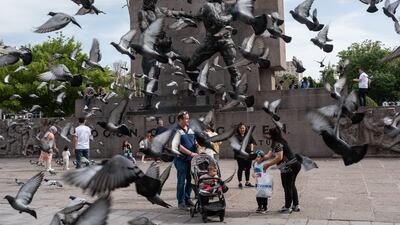
People stand in front of the Guven Monument in Ankara. Getty -
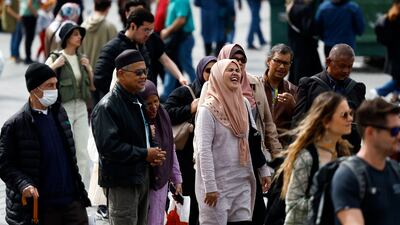
The second round of voting will be held on May 28. Getty -
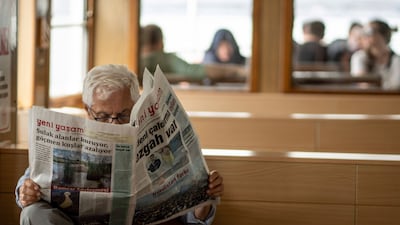
A passenger reads a newspaper on a ferry across the Bosphorus in Istanbul. Bloomberg -
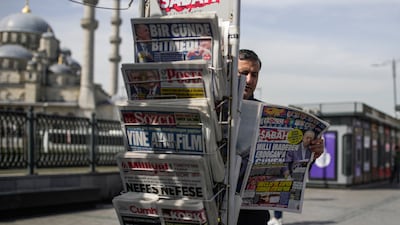
Politics dominates the headlines in Istanbul on the day after the presidential elections. AP -
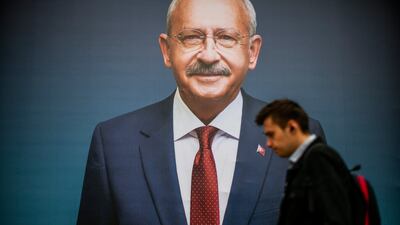
A billboard featuring presidential candidate Mr Kilicdaroglu in Istanbul. AP -
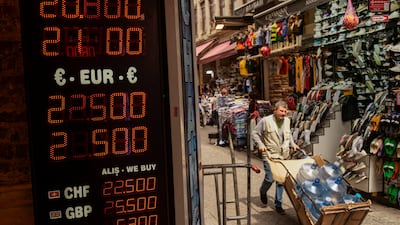
A run-off for the presidency was expected to lead to volatility for the Turkish lira. AP -
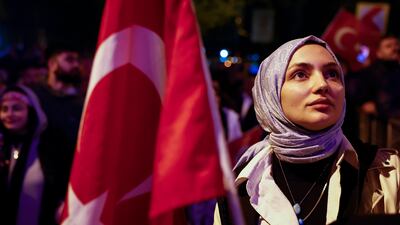
Supporters of President Recep Tayyip Erdogan gather at the AK Party's headquarters in Istanbul on election night. Getty -
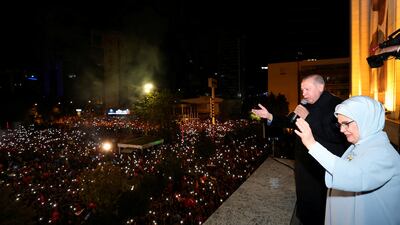
Mr Erdogan, accompanied by his wife Emine, addresses supporters in Ankara. Photo: Turkish Presidential Press Office -
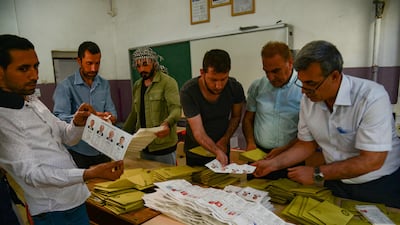
Election officials count ballots in Diyarbakir after polls closed in Turkey's presidential and parliamentary elections. AFP -
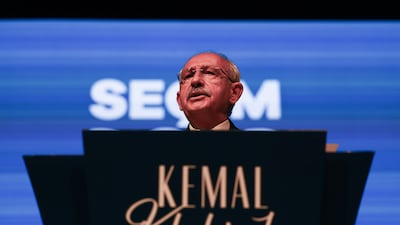
Turkish presidential candidate Kemal Kilicdaroglu, leader of the opposition Republican People's Party, speaks to the media in Ankara. EPA -
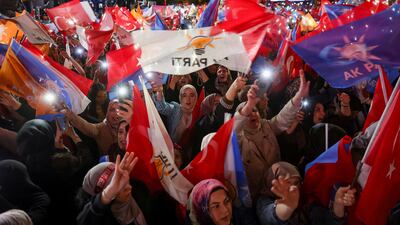
Mr Erdogan's supporters wave flags outside the AK Party's headquarters in Ankara. Reuters -

Mr Erdogan casts his vote in Istanbul on Sunday. Getty -
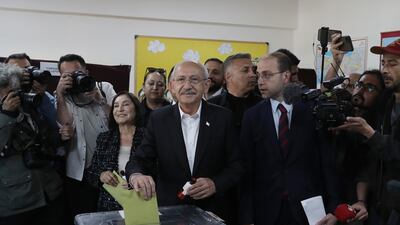
Mr Kilicdaroglu votes in Ankara. Getty -
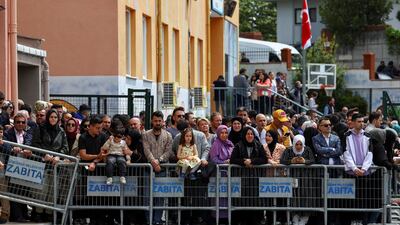
People wait for Mr Erdogan outside a polling station in Istanbul. Reuters -
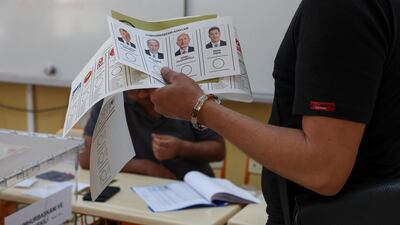
A man holds a ballot at a polling station in Hatay. Reuters -

A ballot paper featuring candidates for Turkey's presidential and parliamentary elections. Reuters -
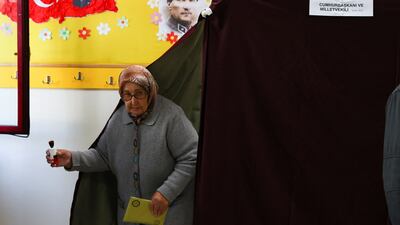
Voting began in Turkey's presidential election on Sunday morning. Reuters -
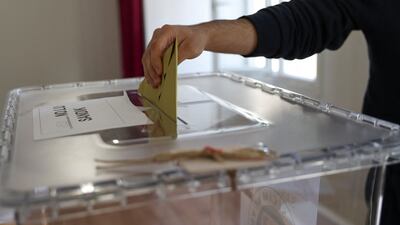
A voter casts a ballot at a polling station in Hatay. Reuters -
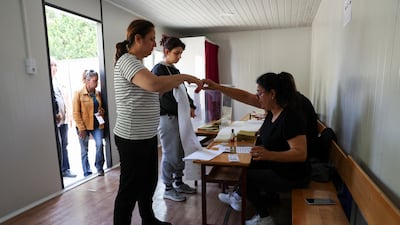
Hatay is one of the Turkish regions that were worst-affected by February's earthquake. Reuters -
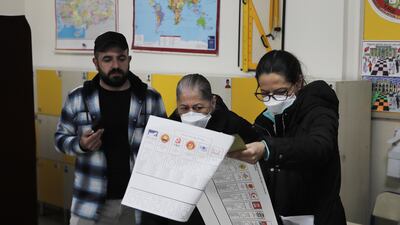
Voters take a closer look at the candidates on the ballot, in Ankara. Getty -
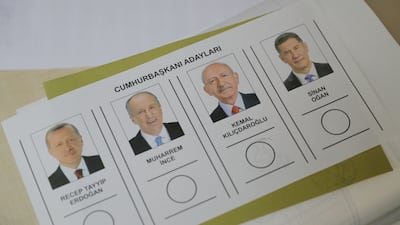
A ballot paper with Mr Erdogan, Muharrem Ince, Mr Kilicdaroglu and Sinan Ogan. Getty -
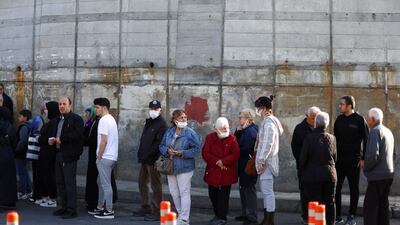
Voters queue outside a polling station in Istanbul. Reuters -
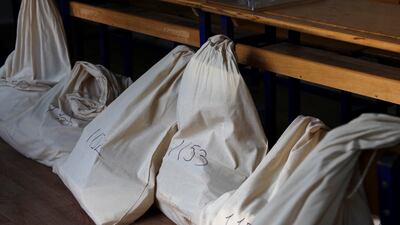
Bags containing blank ballots are stored at a temporary polling station in the courtyard of a quake-damaged school in Hatay. Reuters -
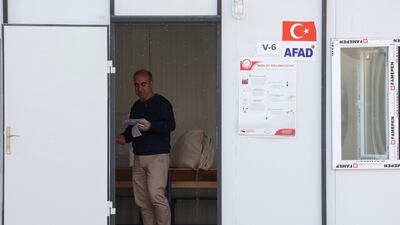
An election worker prepares a temporary polling station in Hatay. Reuters



