


Sudanese union officials have offered competing explanations for the surprise move by the country's military ruler to order professional bodies and associations to freeze their activities as they seek to understand the shifting political landscape.
Some told The National that they saw Gen Abdel Fattah Al Burhan's decision as a pre-emptive attempt to deny extremists loyal to ousted dictator Omar Al Bashir the chance to retake charge of professional bodies through court rulings.
Others saw it as an attempt to neutralise pro-democracy activists who have been running many of the bodies since Al Bashir's removal in April 2019 and the subsequent dismissal of their loyalist board members.
The Monday night decision came as military and political stakeholders stepped up the search for a resolution to a crippling political crisis brought about by a military takeover 13 months ago that Gen Al Burhan led.
The escalating international effort to diffuse the situation is mostly taking place behind closed doors and involves the UN and several resident ambassadors of Sudan’s Arab backers, like Saudi Arabia, along with those of the US and EU.
Gen Al Burhan’s decision was followed by a decree creating a committee led by a top Justice Ministry official to run the unions until elections could be held for new boards of directors.
One year on from Sudan's coup — in pictures
-
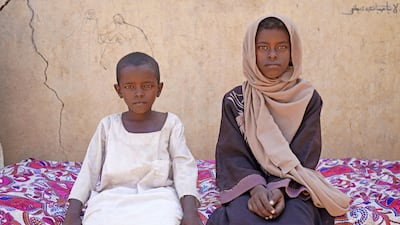
Zahra Hussein (R), a nine-year-old Sudanese girl who dropped out of school for financial reasons, poses for a picture with her brother at their home in the village of Ed Moussa in Sudan's eastern state of Kassala, on September 27, 2022. - There are nearly seven million children in Sudan who no longer go to school, a victim of what aid agencies have warned is a "generational catastrophe". Children in the country have for years faced mounting difficulties gaining access to proper education, especially in rural areas. Sudan is already one of the world's poorest countries, plagued by political instability, droughts, hunger and conflict, with an adult literacy rate of only around 60 percent according to the World Bank. AFP -
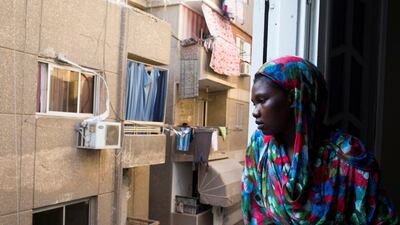
Abukk Sebit, 25, looks from her balcony after working to help financially her family in Sudan, at Ain Shams district area in Cairo, Egypt September 13, 2022. Reuters -
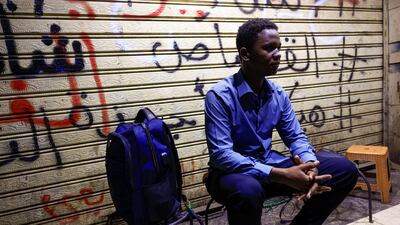
Mostafa waits for the bus before leaving for Egypt in Khartoum, Sudan September 24, 2022. Reuters -
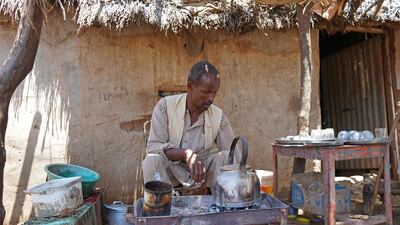
Abdalla Ibrahim, the Sudanese owner of a coffee shop and father of seven, looks on as he sits behind a pot on a fire in the village of Gosla in Sudan's eastern state of Kassala, on September 27, 2022. There are nearly seven million children in Sudan who no longer go to school, a victim of what aid agencies have warned is a "generational catastrophe". Children in the country have for years faced mounting difficulties gaining access to proper education, especially in rural areas. Sudan is already one of the world's poorest countries, plagued by political instability, droughts, hunger and conflict, with an adult literacy rate of only around 60 percent according to the World Bank. AFP -
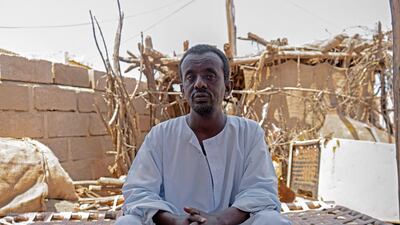
Othman Abubakr, a Sudanese day labourer who has nine children, poses for a picture in the village of Wad Sharifai in Sudan's eastern state of Kassala on September 27, 2022. There are nearly seven million children in Sudan who no longer go to school, a victim of what aid agencies have warned is a "generational catastrophe". Children in the country have for years faced mounting difficulties gaining access to proper education, especially in rural areas. Sudan is already one of the world's poorest countries, plagued by political instability, droughts, hunger and conflict, with an adult literacy rate of only around 60 percent according to the World Bank. AFP -
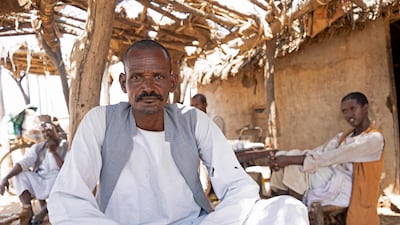
Ohaj Soliman, a 43-year-old Sudanese day labourer who put his children to work, poses for a picture during an interview with AFP in the village of Gosla in Sudan's eastern state of Kassala, on September 27, 2022. There are nearly seven million children in Sudan who no longer go to school, a victim of what aid agencies have warned is a "generational catastrophe". Children in the country have for years faced mounting difficulties gaining access to proper education, especially in rural areas. Sudan is already one of the world's poorest countries, plagued by political instability, droughts, hunger and conflict, with an adult literacy rate of only around 60 percent according to the World Bank. AFP -
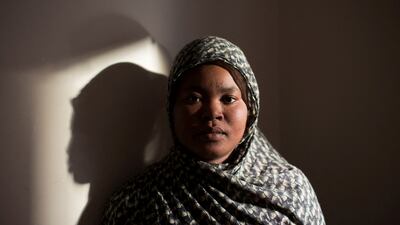
Malaz Al-Bakr Ibrahim, 23, who has worked as a babysitter in Egypt since 2020 because of the economic and political situation in Sudan, poses for a photograph at Ain Shams district area in Cairo, Egypt September 13, 2022. Reuters -
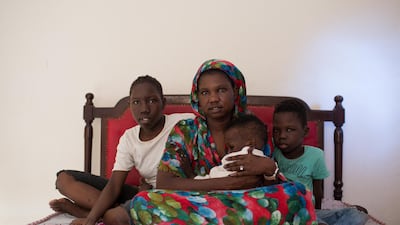
Abukk Sebit, 25 years old, poses with her children after working to help her family in Sudan financially at Ain Shams district area in Cairo, Egypt September 13, 2022. Reuters -
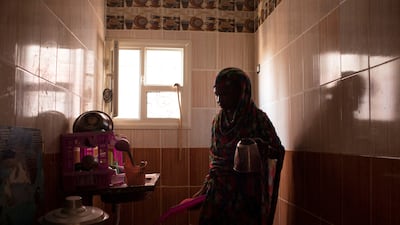
Abukk Sebit, 25 years old, prepares food before going to work to help her family in Sudan financially at Ain Shams district area in Cairo, Egypt September 13, 2022. Reuters -
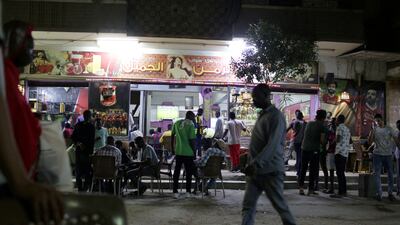
General view of a Sudanese coffee shop, where the number of Sudanese clients has increased in recent years after the economic and political conditions in their country deteriorated, at Ain Shams district area in Cairo, Egypt September 13, 2022. Reuters -

Sudanese protesters rally against the October 2021 military coup which has led to deaths and scores of arrests of demonstrators, in Khartoum, Sudan, Monday, February 28, 2022. Since the coup, more than 80 people, mostly young men, have been killed and over 2,600 others injured in the protests, according to a Sudanese medical group. AP Photo -
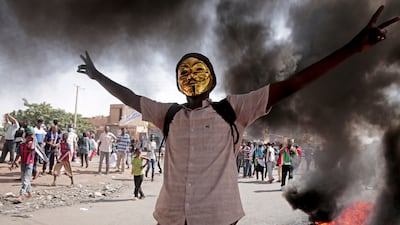
A man flashes the victory sign during a protest to denounce the October 2021 military coup, in Khartoum, Sudan, Jan. 9, 2022. Since the coup, security forces launched a deadly crackdown on protesters. Many activists were taken from their homes or snatched from the streets, according to documents he provided to The Associated Press. Around 80 people, mostly young men, were killed and over 2,200 others were wounded in the protests since the coup, according to a Sundanese medical group. AP Photo -
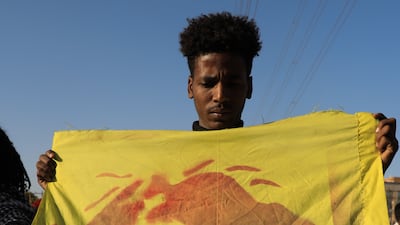
A Sudanese protester holds a painting of a person who reportedly died in a previous rally during a protest, in Khartoum, Sudan, 20 January 2022. Sudanese protesters rallied against the killing of at least 70 protests in crackdown against pro-democracy since the beginning of the military coup on 25 October 2021. The protest was organized as the US Assistant Secretary of State Molly Phee and US special envoy for the Horn of Africa David Satterfield visit Khartoum to meet separately with pro-democracy activists and military leaders to put an end to the crisis in the country. EPA -
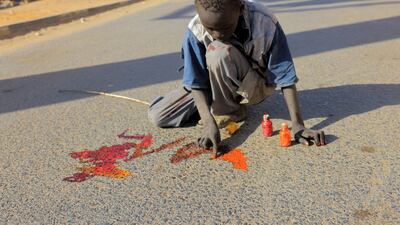
A boy draws on the street in front of a barricade during a two-day general strike and civil disobedience campaign in response to demonstrators' deaths against military takeover on October 25, 2021, in Khartoum, Sudan January 18, 2022. Reuters -

A Sudanese demonstrator waves a national flag during a protest against the October 2021 military coup, in the capital Khartoum, on January 13, 2022. The demonstrations which converged from several parts of Khartoum came only days after the United Nations launched a bid to facilitate talks between Sudanese factions. AFP -
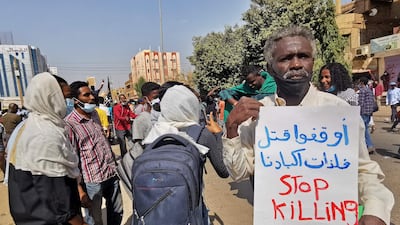
Sudanese protesters take to the streets of the capital Khartoum as they rally against the October 2021 military coup, on January 13, 2022. The demonstrations which converged from several parts of Khartoum came only days after the United Nations launched a bid to facilitate talks between Sudanese factions. AFP -
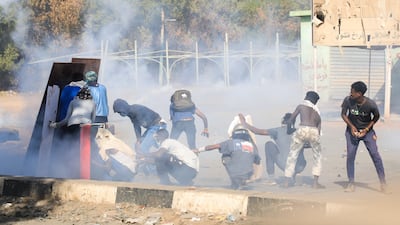
Sudanese protesters take cover as security forces fire tear gas during clashes with security forces at an anti-coup protest, in Khartoum, Sudan, 09 January 2022. Security forces fired tear gas to disperse protesters gathering in Khartoum and attempting to march towards the presidential palace, as part of the continuing protesting movement against a military coup in October 2021. The protest was organized a day after the UN envoy for Sudan said the international group will invite different parties for talks in Sudan to end the crisis. EPA -
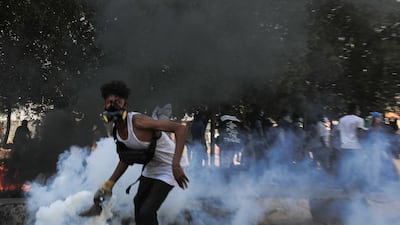
A Sudanese protester attempts to throw back a tear gas canister during clashes with security forces at an anti-coup protest, in Khartoum, Sudan, 09 January 2022. Security forces fired tear gas to disperse protesters gathering in Khartoum and attempting to march towards the presidential palace, as part of the continuing protesting movement against a military coup in October 2021. The protest was organized a day after the UN envoy for Sudan said the international group will invite different parties for talks in Sudan to end the crisis. EPA -
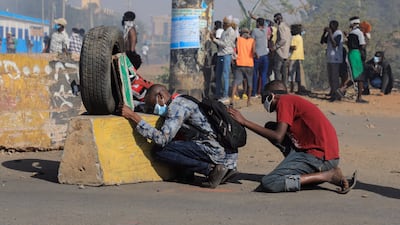
Sudanese protesters take cover during clashes with security forces at an anti-coup protest, in Khartoum, Sudan, 09 January 2022. Security forces fired tear gas to disperse protesters gathering in Khartoum and attempting to march towards the presidential palace, as part of the continuing protesting movement against a military coup in October 2021. The protest was organized a day after the UN envoy for Sudan said the international group will invite different parties for talks in Sudan to end the crisis. EPA -
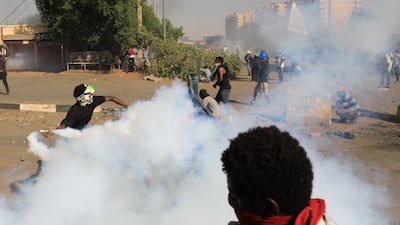
Sudanese protesters take cover as security forces fire tear gas during clashes with security forces at an anti-coup protest, in Khartoum, Sudan, 09 January 2022. Security forces fired tear gas to disperse protesters gathering in Khartoum and attempting to march towards the presidential palace, as part of the continuing protesting movement against a military coup in October 2021. The protest was organized a day after the UN envoy for Sudan said the international group will invite different parties for talks in Sudan to end the crisis. EPA


The decision also gives the new committee control of all union assets in Sudan and overseas.
Since his October 2021 coup, Gen Al Burhan has faced persistent accusations that he courted Islamists once loyal to Al Bashir's regime in an effort to build a popular support base.
This has included reinstating them in top civil service jobs and key state agencies they were fired from after the fall of Al Bashir in a bid to counter the influence of pro-democracy groups opposed to his rule.
In recent months, Gen Al Burhan and his associates in the ruling, military-led Sovereign Council also turned a blind eye to political activity by religious extremists loyal to Al Bashir and did not challenge court rulings freeing their assets or allowing their organisations to operate again.
That was coupled with the military’s crackdown on members of a state commission set up after Al Bashir’s removal to dismantle his support base and purge government offices of his loyalists.
“It is a clear bid by Al Burhan to debunk accusations that he is allied with Al Bashir loyalists,” Moatasam Abdullah, a leading member of the Union of State Radio and Television, said of Monday's decision.
“It’s also an attempt to create a climate conducive to a settlement of the political crisis, which is very near.”

Amir El Sayed of the Journalists’ Union said the decision to suspend the activities of professional bodies offered Gen Al Burhan a way out from his “entanglement” with the extremists.
“Al Burhan did not have an exit except through this decision,” he said.
However, Tariq Kandik, a member of the powerful lawyers' union, said Gen Al Burhan's decision appears to have also targeted pro-democracy activists who have been running many of those unions and associations since 2019.
“He wanted to get rid of them as well as deny former regime loyalists from returning to run those unions and associations with court rulings,” he said. “It was a two-pronged move by Al Burhan.”
Gen Al Burhan's decision was made against a backdrop of a growing rift between the ruling military and millions of Sudanese who want civilian rule.
They also want to hold accountable those responsible for the killing of nearly 120 protesters during pro-democracy rallies that swept the country since last year’s coup, which derailed Sudan’s fragile democratic transition.
Both Gen Al Burhan and his second-in-command in the Sovereign Council, Gen Mohamed Hamdan Dagalo, have been seeking to improve their image in recent weeks, publicly adopting a reconciliatory narrative built on their declared willingness to step aside and let civilians rule the country.
Gen Dagalo leads a notorious paramilitary militia that, in name only, is part of the armed forces but is in effect run independently.
“We are totally with a political resolution that treats all Sudanese as equal,” Gen Dagalo said this week, pressing on with his discourse as a champion of “marginalised” groups in Sudan.
“There must be equality and justice.”
Gen Dagalo, whose well-armed forces are deployed across Khartoum, is a native of the outlying western Darfur region where his militia fought on the government side against mostly ethnic African rebels in a ruinous civil war in the 2000s.
Gen Al Burhan, however, has made it clear on numerous occasions that he wanted the military to retain the final word or be the ultimate arbiter on major policies when civilians take charge. His proposition has been rejected by opposition groups.
The Forces for Freedom and Change, the civilian alliance that shared power in the administration toppled in last year’s coup, said this month that it has reached a framework deal with the military to break the political impasse.
Gen Al Burhan has denied reaching a deal with any civilian party and insisted, as he has for months, that political forces must reach a consensus before an agreement can be reached.
That condition, pro-democracy groups say, is a stalling tactic given agreement is virtually impossible between the many factions making up Sudan’s complex and intractable political landscape.
News of an agreement between the FFC and the military, meanwhile, has deepened divisions among the alliance and hardline groups like the Resistance Committees, which accuse the FFC of seeking to revive its partnership with the military. The FFC rejects the charge.
“We are talking about a new constitutional situation and full civilian administration,” said Ammar Hamouda, spokesman for the Sudanese Professional Alliance, a major pro-democracy group.
“Already, many FFC leaders are on the record saying they will not return to sharing power with the generals.”
Mohammed El Faky Suliman, a senior FFC member, said the alliance was no longer the sole representative of revolutionary forces, but rather one of them.
Consequently, he said at a news conference this month, any deal negotiated by the FFC with the military must be embraced by other pro-democracy groups.
“The military has its own negotiating strategy. One of these is that you can only win on the negotiating table what matches the range of your artillery,” he said. “But the military is not the unified or strong entity everyone seems to think it is.
“They are pressured by the terrible economic situation they drove the country into, their total loss of control over parts of the country and crippled state agencies.”

