


Former Israeli prime minister Benjamin Netanyahu has re-emerged as a strong contender in Israel's elections, which take place on Tuesday. Incredibly, his prominence remains despite a battle with long-standing corruption allegations, which could continue in the courts for another year.
On a 30-minute walk from Jerusalem’s main bus station to the centre of town, by far the most political posters on show are for Benjamin “Bibi” Netanyahu.
But, as Israel goes to the polls for the fifth time in less than four years, the prominence of the former prime minister contrasts with a lack of excitement among the public. In a visit earlier this week to the Likud stronghold of Lod, even Mr Netanyahu managed to fill only half a car park with supporters.
Widespread voter apathy and its effect on turn-out, particularly in key communities and political camps, could well be the central story this time round. Issam, an airport worker and resident of East Jerusalem, summed up what many are thinking: “The politicians in the seats change but our situation never does. Even if I could vote, I wouldn’t.”
Apathy seems to be the product of so many recent elections and the complicated results they have thrown up. It is testing people’s patience — and their interest.
But such is the importance of any election in this country — internationally and domestically — that there is a sense that interest could still rise as the campaigns enter the final stages.
A crumbling coalition
The elections have happened because of the gradual breakdown of an unprecedented eight-party coalition led by former prime minister Naftali Bennett of the right-wing Yamina party. Within Mr Bennett's coalition, for the first time in Israeli history, an independent Arab party had a stake in government.
Yair Lapid, a centrist from the Yesh Atid party, which is also in the coalition, has been caretaker prime minister in the run-up to elections.
But for now, it seems the most likely outcome of the vote is a diverse right-wing coalition led by Mr Netanyahu. Likud is first in the polls and convincing the ascendant far-right Religious Zionism party to join a government should not be hard. But, as ever with Israeli politics, anything could happen.
In an attempt to build a more moderate coalition, Mr Lapid was in the northern Arab-majority city of Nazareth on Tuesday to bolster the crucial Arab-Israeli vote, telling his audience that “you are voting for your lives”.
His political life and those of his more liberal colleagues also depend on their votes.
There has been some positive news for them in recent days. A pollster upped his prediction of Arab turn-out by four percentage points last week, bringing the projected total to 46 per cent. A poll released on Tuesday projects that Mr Lapid’s party will gain 27 Knesset seats, higher than all previous estimates.
Far right on the rise
The antics of extreme right-wing parties could be driving this last-minute increase. Priorities for the right include targeting the supreme court, which many conservatives view as politically biased, as well as hawkish — many would say racist — national security policies and more generally shaping society around conservative Jewish law.
At a briefing at the Haredi Institute for Public Affairs, Knesset member Simcha Rothman of the Religious Zionism party explained why he thinks liberal fears are baseless.
“When Menachem Begin came to power in 1977, people were talking like it was the end of the state of Israel. It survived. Like then, I don’t think there are any reasons to be concerned today.”
What counts as strong policy for Mr Rothman is terrifying for many Israelis. A recent video shows a rising star in his party, Itamar Ben-Gvir, pulling a gun at a rally in the East Jerusalem neighbourhood of Sheikh Jarrah, while calling on Israeli security services to shoot Arab protesters. Even the otherwise apathetic are taking note. Issam had slightly more to say of Mr Ben-Gvir: “He’s crazy!”
If there are similar antics in the next few days, it could decide the election. But even after a result is clear, perhaps the biggest question of all is whether a new government could avoid a sixth premature election. With so much uncertainty remaining, many think not.
-
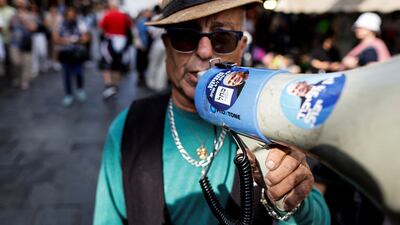
A supporter of former Israeli prime minister Benjamin Netanyahu's Likud party on the campaign trail at Mahane Yehuda market in Jerusalem on polling day's eve. Reuters -
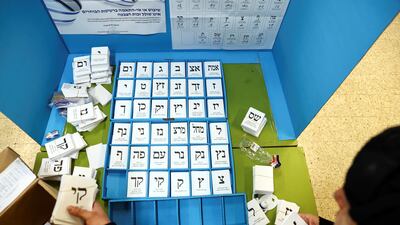
Officials sort ballot papers before a polling station opens to the voters of Kiryat Arba, a Jewish settlement in Hebron in the Israeli-occupied West Bank. Reuters -

Far-right politician Itamar Ben-Gvir at the ballot box on general election day in Kiryat Arba, a Jewish settlement in Hebron in the Israeli-occupied West Bank. Reuters -
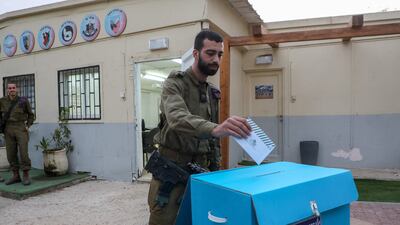
An Israeli soldier casts a ballot at Kerem Shalom Army Base in the south of Israel, close to the border with the Gaza strip. AFP -
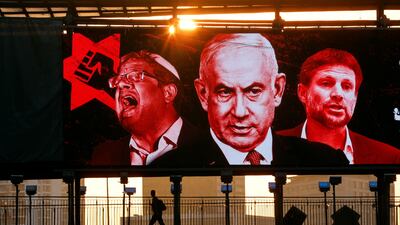
An election campaign billboard by Blue and White party on a bridge in Ramat Gan, Tel Aviv. Reuters -
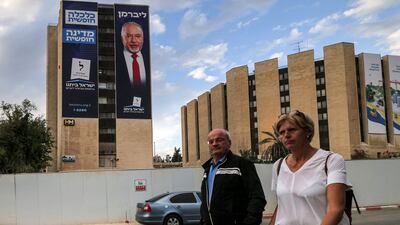
A billboard for Finance Minister Avigdor Lieberman's Yisrael Beiteinu party in Jerusalem. AFP -
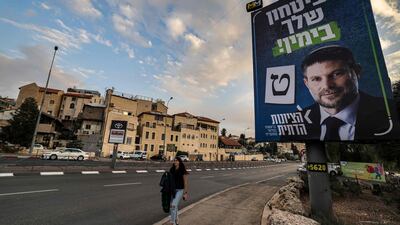
An billboard for the far-right Religious Zionist party led by Bezalel Smotrich. AFP -
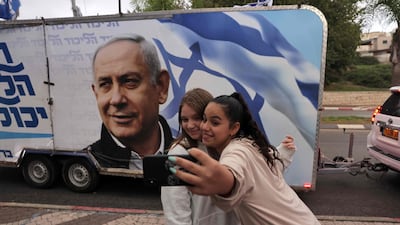
An election campaign bandwagon and a chance for a selfie as Benjamin Netanyahu aims to return Likud to power. AFP -

Itamar Ben-Gvir, Israeli far-right politician and leader of the Otzma Yehudit (Jewish power) party, greets supporters. AFP -

Israelis hang a poster of Likud party candidate Benjamin Netanyahu in the southern city of Beersheva in the run up to Israel's election on November 1. AFP -
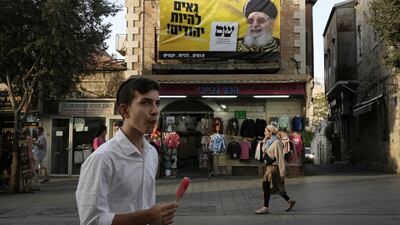
A popsicle break beneath an election campaign hoarding for Israel's ultra-Orthodox Shas political party near Mahane Yehuda market in Jerusalem. Israelis are back at the polls for a fifth time in less than four years. AP -
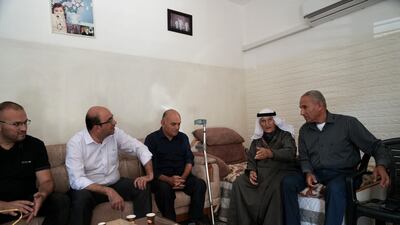
Knesset member Sami Abu Shehadeh, second left, head of the nationalist Balad party, meets Israel's Palestinian citizens during his election campaign tour in Musmus village. AP -
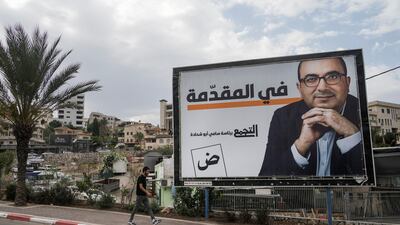
An election hoarding for Sami Abu Shehadeh's Balad party campaign in Umm Al Fahm. Israel’s Palestinian citizens could be central to breaking the country’s political deadlock. AP -
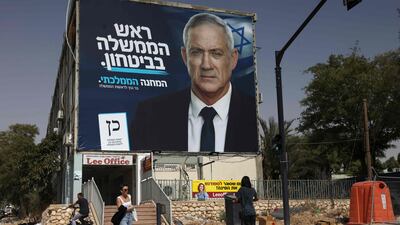
A campaign poster of National Unity Party leader Benny Gantz in the southern city of Beersheva. AFP -
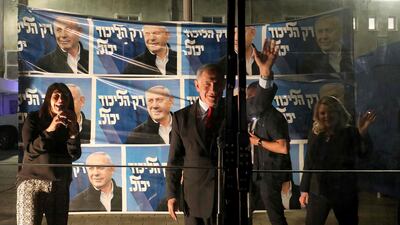
Benjamin Netanyahu addresses supporters from behind a security screen beside his wife Sara, right, and Likud member Miri Regev during a campaign rally in the northern city of Tirat Carmel. AFP -
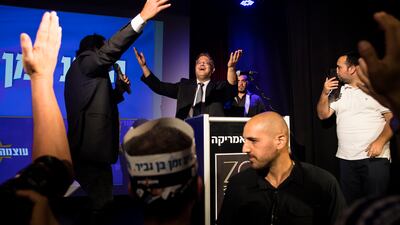
Itamar Ben-Gvir, Israeli far-right politician and leader of the Otzma Yehudit, at an event in Tel Aviv. Getty -
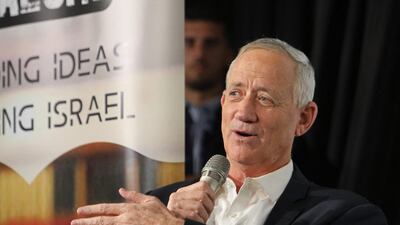
National Unity leader Benny Gantz makes an address in Tel Aviv. AFP -
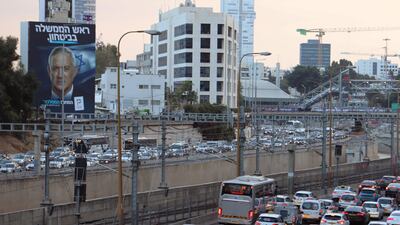
Since 2019, Israel has had four inconclusive elections, which resulted in two short-lived coalition governments. AFP -
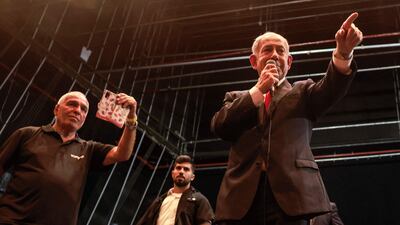
Likud's Benjamin Netanyahu speaks at a campaign rally at Migdal HaEmek in the Northern District of Israel. AFP -
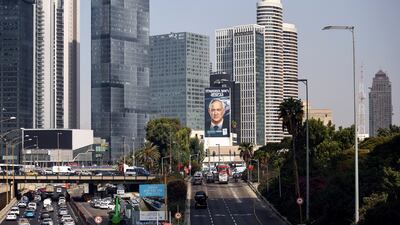
A giant image of National Unity's Benny Gantz looks over one of the motorways into Tel Aviv. Reuters -
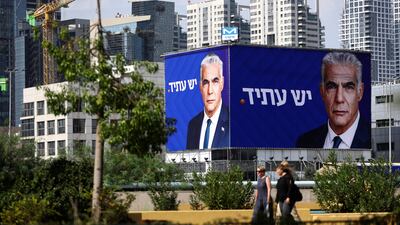
Israeli Prime Minister Yair Lapid leads a fragmented coalition spanning left to right. Reuters -
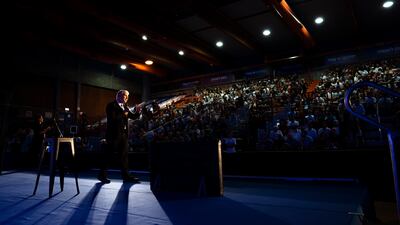
Polls suggest Prime Minister Yair Lapid's camp is set for a weaker showing than in the last election. AP -
Prime Minister Yair Lapid speaks at an event in the city of Rishon Lezion in Gush Dan. AP -
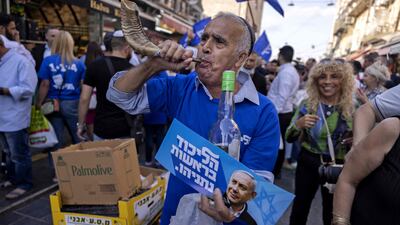
In Jerusalem, a Netanyahu supporter blows a shofar, made of a ram's horn. AFP -
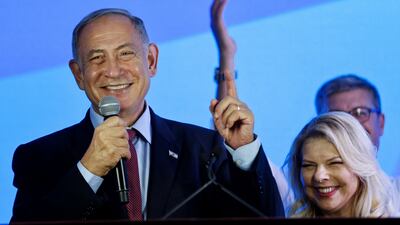
Benjamin Netanyahu has pledged to form a 'strong, stable and national' government. Reuters -
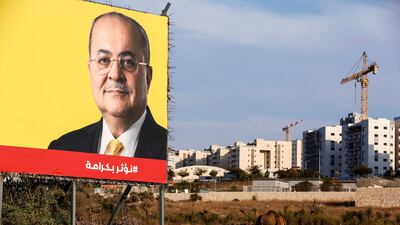
A poster of Arab politician Ahmad Tibi of the Ta'al party in his home town of Taibe in Gilboa region. Reuters



