

Turkish President Recep Tayyip Erdogan has hinted at the possibility of meeting Syrian counterpart Bashar Al Assad in the future, reinforcing recent tentative steps to restore ties after Ankara's support of rebel groups in Syria's civil war.
"As of now such a meeting is not on the agenda. But I cannot say it is impossible for me to meet with Al Assad," Mr Erdogan told reporters on Thursday in Prague, where he was attending the first meeting of the newly established European Political Community.
"When the right time comes, we can also go to the way of meeting with the president of Syria," he said.
Turkey’s backing has been vital to sustaining Syrian rebels in their last major stronghold in the north-west, after Mr Al Assad defeated the insurgency across the rest of the country with help from Russia and Iran.
Turkey has been hosting nearly four million Syrian refugees since the start of the civil war in Syria in 2011.
Mr Erdogan said on Saturday that more than half a million Syrians had returned home since 2016.
"Since the start of our cross-border operations in Syria, about 526,000 volunteers have returned to the safety zones that we established," he told the Turkish Parliament.
Mr Erdogan has in recent months said he is preparing to send back a million Syrian refugees on a “voluntary basis”.
He has said that Ankara aimed to encourage them to return to "safe zones" on the Turkey-Syria border by building them housing and local infrastructure.
Less than nine months from presidential elections, their presence in Turkey has become a thorny political issue, especially as the country battles an economic and monetary crisis.
Opposition parties regularly call on authorities to send Syrian refugees home.
Syria's civil war, which began with a brutal crackdown on peaceful anti-government protests in 2011, has killed nearly half a million people and forced around half of the country's pre-war population from their homes.
Syria was suspended from the Arab League in November 2011, eight months after the protests erupted to punish Mr Al Assad’s regime for failing to end the bloodshed caused by its clampdown.
However, there have been calls from several Arab nations for Syria to be readmitted into the Arab League as the government has regained control over most of the country. The Al Assad regime has been mainly backed by Russia, Iran and Lebanon's Hezbollah.
-
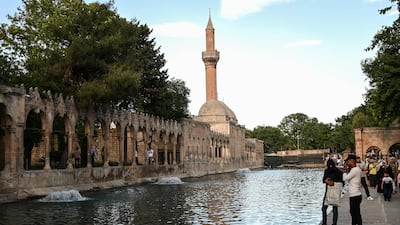
A severe economic downturn in Turkey is making life difficult for the country's population of 3.7 million Syrian refugees. All photos: AFP -

Syrian refugee Ahmad Ibrahim, 31, poses inside his textile shop in Sanliurfa, Turkey. Inflation has surged and the value of the Turkish lira has dropped. -
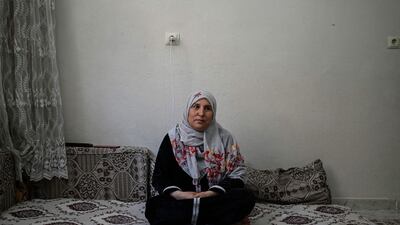
Samira, 43, hears the same message from Turkish politicians on television day and night: Syrian refugees like her must return home. But her home near Damascus is still not safe, she says. -

Refugees fear they will be used as a scapegoat for Turkey's problems in the 2023 electoral campaign, as President Recep Tayyip Erdogan faces rising public anger over their presence. -
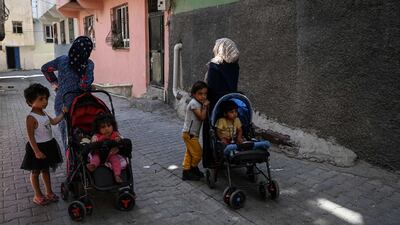
Despite pressure from opposition parties, Mr Erdogan has promised that Turkey will not force Syrian refugees back and 'will not throw them into the lap of murderers'. But his assurances are not allaying their fears. -
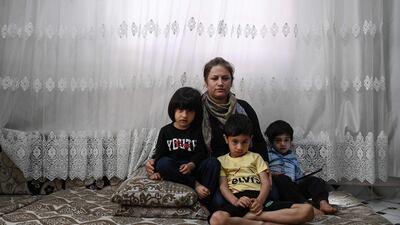
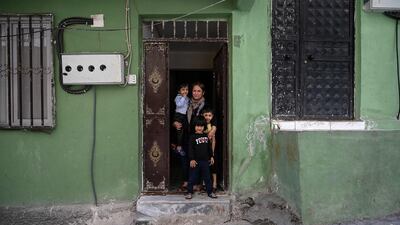
Fatima Ibrahim, in her early 30s, married a Syrian refugee after fleeing to Turkey nine years ago. The economic fallout is hitting them equally as hard as the Turks, she said. 'Employers pay us less, so locals are annoyed, blaming us for accepting a wage less than theirs,' she said, sitting next to her three young sons. -
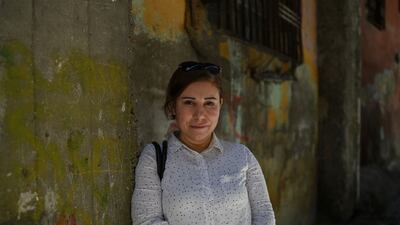
Haifa, 39, English teacher from Aleppo, is fluent in Turkish after nine years here, and avoids speaking Arabic in public so as not to attract attention. 'I want to keep myself safe. Political issues affect us more than the economy,' she said. -
Since 2016, the Turkish army has launched military operations in Syria, battling outlawed Kurdish militants and ISIS extremists. -
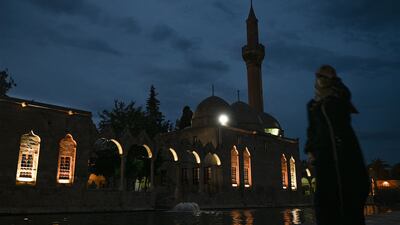
Haifa said: 'Some people tell us 'go back to your country, you're having fun while our soldiers are dying there. You think it is easy to leave everything behind you? Your memories, your house, everything. You cannot even visit your mother or father's grave.'


Turkey regularly carries out cross-border air strikes, often with armed drones, in neighbouring Iraq and Syria as part of its offensive against Kurdish militants based there.
The Kurdistan Workers' Party (PKK) launched an insurgency against the Turkish state in 1984 that has claimed more than 40,000 lives. The PKK is regarded as a terrorist group by Turkey, the US and the EU.
Turkey said on Sunday it had "neutralised", the term its defence ministry usually employs for killed, about 30 PKK members in cross-border operations in Iraq and Syria.

