Sudanese protesters take part in an anti-coup rally on a barricaded street in the Daym-Bashdar station area in Khartoum, on July 17. AFP

Death toll from violence in Sudan's Blue Nile state reaches 65


Hamza Hendawi
  • English
  • Arabic

The death toll from tribal clashes in Sudan’s Blue Nile state has risen to 65, authorities in the southern region said on Sunday.

The Blue Nile’s Health Ministry said 192 people were injured in the clashes, which began nearly a week ago.

The latest death toll is nearly 30 more than the number given by the local Blue Nile government late on Friday.

The clashes prompted the local government on Friday to impose a night-time curfew and ban gatherings in two provincial cities — Rosiris and Damazin.

Police and army reinforcements have been sent to the state to restore order.

There are conflicting reports on what started the violence between members of the rival Berti and Hawsa tribes.

Initially, the violence was said to have been caused by the killing of a farmer, but reports later said it was due to the rejection by the Berti tribe of a Hawsa request to create a civil authority to supervise access to land.

But the Berti tribe said the violence broke out when it responded to a "violation" of its lands by the Hawsas.

A major rebel group that once fought the government in Blue Nile state – the Sudan Popular Liberation Movement-North — said the violence followed the local government’s refusal to endorse the creation by the Hawsas of a body to run their tribe’s affairs.

The group denied involvement in the violence.

In Khartoum on Sunday, the Security and Defence Council led by military ruler Gen Abdel Fattah Al Burhan ordered the attorney general to investigate the clashes in Blue Nile.

Gen Al Burhan urged the local government to swiftly bring to justice anyone found responsible for the violence.

The council is made up of top military, police and security officials.

  • A Sudanese stallholder waits for a customer in a local market in Khartoum, Sudan. EPA
    A Sudanese stallholder waits for a customer in a local market in Khartoum, Sudan. EPA
  • On May 29, Sudan's army chief Abdel Fattah Al Burhan announced that a state of emergency imposed since a military coup in 2021 had been lifted. EPA
    On May 29, Sudan's army chief Abdel Fattah Al Burhan announced that a state of emergency imposed since a military coup in 2021 had been lifted. EPA
  • All detained people under the state of emergency will be released, the Transitional Sovereign Council said. EPA
    All detained people under the state of emergency will be released, the Transitional Sovereign Council said. EPA
  • At least 98 people have been killed and more than four thousand others wounded in a crackdown on anti-coup protesters, according to the council. EPA
    At least 98 people have been killed and more than four thousand others wounded in a crackdown on anti-coup protesters, according to the council. EPA
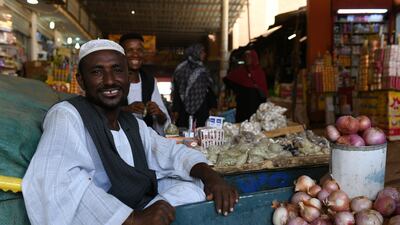
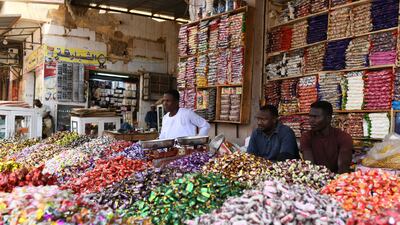
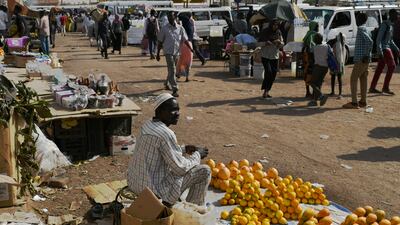
  • Market vendors wait for customers. EPA
    Market vendors wait for customers. EPA
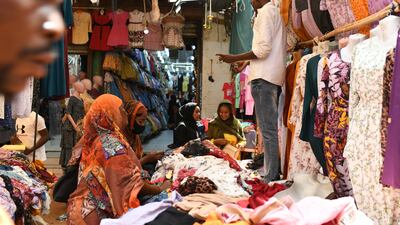
  • Vendors display fabric. EPA
    Vendors display fabric. EPA
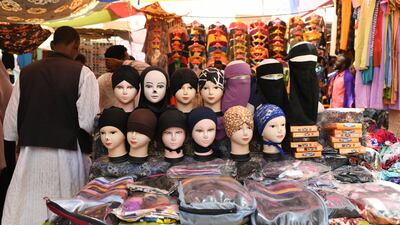
  • A vendor displays his selection of hats, scarves and glasses. EPA
    A vendor displays his selection of hats, scarves and glasses. EPA
  • A man sells mangoes at the side of the road. EPA
    A man sells mangoes at the side of the road. EPA
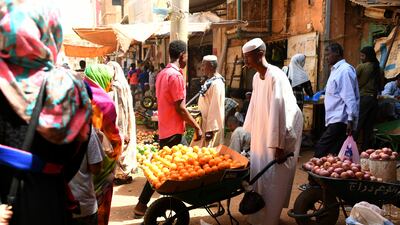
  • Sudanese people shop at the market. EPA
    Sudanese people shop at the market. EPA
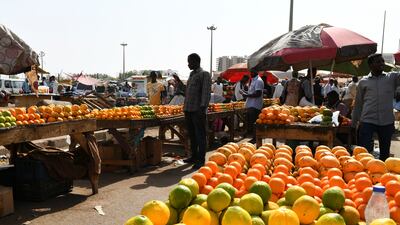
  • A variety of citrus fruit is displayed for sale. EPA
    A variety of citrus fruit is displayed for sale. EPA

Sudan is an ethnically and religiously diverse country of 41 million people that has suffered civil wars since independence in 1956.

At present, it is mired in a political and economic crisis that began when the military seized power in a coup last October that derailed the country’s fragile democratic transition.

The Blue Nile province is in the south of the country and shares a border with Ethiopia.

It was torn for years by fighting between government troops and rebels disgruntled by what they see as the monopoly on power and national resources by the north of the country.

Some rebel groups there, including the SPLM-North, and the country’s military signed a peace deal in October 2020 but security is still fragile.

Only weeks ago, tribal fighting in the restive Darfur region in western Sudan killed hundreds, injured thousands and forced tens of thousands out of their homes.

News of the higher death toll in Blue Nile coincided with another day of street rallies in Khartoum against military rule, with police using tear gas and water cannon to disperse hundreds of protesters.

Many of Sunday’s protesters referred to the events in Blue Nile in their chants and the banners they carried.

"Sudan is one nation" and "No to racism, no to tribalism," some chanted.

In the city of Wad Madani, about 200 kilometres south of Khartoum, protesters diverted their demonstration to the local hospital to "donate blood to our brothers wounded in tribal clashes in Blue Nile", protest organiser Ammar Mohammed said.

Pro-democracy demonstrators accuse Sudan's military leadership and ex-rebel leaders who signed the 2020 peace deal of exacerbating ethnic tensions in Blue Nile for personal gain.

Experts say last year's coup created a security vacuum that has fostered a resurgence in tribal violence, in a country where deadly clashes regularly erupt over land, livestock, access to water and grazing.

Guerrillas in Blue Nile battled former dictator Omar Al Bashir during Sudan's civil war between 1983 and 2005. They took up arms again in 2011.

Additional reporting by AFP

Who was Alfred Nobel?

The Nobel Prize was created by wealthy Swedish chemist and entrepreneur Alfred Nobel.

  • In his will he dictated that the bulk of his estate should be used to fund "prizes to those who, during the preceding year, have conferred the greatest benefit to humankind".
  • Nobel is best known as the inventor of dynamite, but also wrote poetry and drama and could speak Russian, French, English and German by the age of 17. The five original prize categories reflect the interests closest to his heart.
  • Nobel died in 1896 but it took until 1901, following a legal battle over his will, before the first prizes were awarded.
Ten tax points to be aware of in 2026

1. Domestic VAT refund amendments: request your refund within five years

If a business does not apply for the refund on time, they lose their credit.

2. E-invoicing in the UAE

Businesses should continue preparing for the implementation of e-invoicing in the UAE, with 2026 a preparation and transition period ahead of phased mandatory adoption. 

3. More tax audits

Tax authorities are increasingly using data already available across multiple filings to identify audit risks. 

4. More beneficial VAT and excise tax penalty regime

Tax disputes are expected to become more frequent and more structured, with clearer administrative objection and appeal processes. The UAE has adopted a new penalty regime for VAT and excise disputes, which now mirrors the penalty regime for corporate tax.

5. Greater emphasis on statutory audit

There is a greater need for the accuracy of financial statements. The International Financial Reporting Standards standards need to be strictly adhered to and, as a result, the quality of the audits will need to increase.

6. Further transfer pricing enforcement

Transfer pricing enforcement, which refers to the practice of establishing prices for internal transactions between related entities, is expected to broaden in scope. The UAE will shortly open the possibility to negotiate advance pricing agreements, or essentially rulings for transfer pricing purposes. 

7. Limited time periods for audits

Recent amendments also introduce a default five-year limitation period for tax audits and assessments, subject to specific statutory exceptions. While the standard audit and assessment period is five years, this may be extended to up to 15 years in cases involving fraud or tax evasion. 

8. Pillar 2 implementation 

Many multinational groups will begin to feel the practical effect of the Domestic Minimum Top-Up Tax (DMTT), the UAE's implementation of the OECD’s global minimum tax under Pillar 2. While the rules apply for financial years starting on or after January 1, 2025, it is 2026 that marks the transition to an operational phase.

9. Reduced compliance obligations for imported goods and services

Businesses that apply the reverse-charge mechanism for VAT purposes in the UAE may benefit from reduced compliance obligations. 

10. Substance and CbC reporting focus

Tax authorities are expected to continue strengthening the enforcement of economic substance and Country-by-Country (CbC) reporting frameworks. In the UAE, these regimes are increasingly being used as risk-assessment tools, providing tax authorities with a comprehensive view of multinational groups’ global footprints and enabling them to assess whether profits are aligned with real economic activity. 

Contributed by Thomas Vanhee and Hend Rashwan, Aurifer

What can victims do?

Always use only regulated platforms

Stop all transactions and communication on suspicion

Save all evidence (screenshots, chat logs, transaction IDs)

Report to local authorities

Warn others to prevent further harm

Courtesy: Crystal Intelligence

The burning issue

The internal combustion engine is facing a watershed moment – major manufacturer Volvo is to stop producing petroleum-powered vehicles by 2021 and countries in Europe, including the UK, have vowed to ban their sale before 2040. The National takes a look at the story of one of the most successful technologies of the last 100 years and how it has impacted life in the UAE.

Read part three: the age of the electric vehicle begins

Read part two: how climate change drove the race for an alternative 

Read part one: how cars came to the UAE

The Vile

Starring: Bdoor Mohammad, Jasem Alkharraz, Iman Tarik, Sarah Taibah

Director: Majid Al Ansari

Rating: 4/5

UAE currency: the story behind the money in your pockets
Tips to keep your car cool
  • Place a sun reflector in your windshield when not driving
  • Park in shaded or covered areas
  • Add tint to windows
  • Wrap your car to change the exterior colour
  • Pick light interiors - choose colours such as beige and cream for seats and dashboard furniture
  • Avoid leather interiors as these absorb more heat
AS%20WE%20EXIST
%3Cp%3EAuthor%3A%20Kaoutar%20Harchi%C2%A0%3C%2Fp%3E%0A%3Cp%3EPublisher%3A%20Other%20Press%3C%2Fp%3E%0A%3Cp%3EPages%3A%20176%3C%2Fp%3E%0A%3Cp%3EAvailable%3A%20Now%3C%2Fp%3E%0A
A little about CVRL

Founded in 1985 by Sheikh Mohammed bin Rashid, Vice President and Ruler of Dubai, the Central Veterinary Research Laboratory (CVRL) is a government diagnostic centre that provides testing and research facilities to the UAE and neighbouring countries.

One of its main goals is to provide permanent treatment solutions for veterinary related diseases. 

The taxidermy centre was established 12 years ago and is headed by Dr Ulrich Wernery. 

The 12

England

Arsenal, Chelsea, Liverpool, Manchester City, Manchester United, Tottenham Hotspur

Italy
AC Milan, Inter Milan, Juventus

Spain
Atletico Madrid, Barcelona, Real Madrid

Super Bowl LIII schedule

What Super Bowl LIII

Who is playing New England Patriots v Los Angeles Rams

Where Mercedes-Benz Stadium in Atlanta, United States

When Sunday (start time is 3.30am on Monday UAE time)


Updated: July 17, 2022, 10:44 PM