



A two-month ceasefire has given aid groups a chance to step up aid to Yemen's hungry millions, but malnutrition ravaging children is projected to worsen if fighting returns or humanitarian funding does not pick up.
More than seven years of conflict in Yemen have devastated the economy, displaced millions and pushed food prices out of the reach of many. Surging grain and commodity prices globally are adding further strain.
"The benefits of the first weeks of truce are already significant," said Erin Hutchinson, Yemen director for the Norwegian Refugee Council.
The group has been able to give aid to 12,000 people in one district of Hajjah province that has not been reached for more than three years.
"Tens of millions of people in Yemen are living hand-to-mouth," said Richard Ragan of the World Food Programme (WFP), which is trying to feed half of Yemen's 30 million people in one of its largest programmes.
Stunted and weakened by severe malnourishment, one-year-old Jiad Jalal's skin is dry and wrinkled over his protruding skull, limbs and stomach.
Living in a makeshift displacement camp in Khadish, Hajjah, one of Yemen's poorest regions, Jalal is one of 2.2 million children under five — including 538,000 severely malnourished — who will suffer acute malnutrition this year, according to pre-ceasefire UN estimates.
"We eat only what we can get from aid agencies. Wheat, beans and such items. If we don't receive food, then some days we eat and other days we go hungry," said his grandmother Zahra Ahmed.
"We are trapped between hunger and exhaustion. Look at the children," she said, gesturing to Jiad who they cannot afford to take to the capital Sanaa for treatment.
Hunger and malnutrition have worsened this year, the UN's March data showed. The global body projected that those unable to secure minimum nutrition will hit a new high of 19 million, up from 17.4 million currently, between June and December.
The number facing famine-like conditions could increase from 31,000 to 161,000 people, the UN's Integrated Food Security Phase Classification analysis said.
In Al Mahra, in Yemen's east, women in a displacement camp of tattered shelters built outdoor fires to fry dough balls that children eat, and pat bread into hot mud ovens.
a mother of 10
"We adults, we have to be patient and go hungry to feed the children. If only you could see how sick I am, because I only feed my children," said Fatima Qayed, a mother of 10.
She said they only get aid once a year, during Ramadan, and rarely see meat. They buy food by collecting and selling plastic cans.
Seham Abdelhakim, a mother of four, feeds her young children sugar and water because she is unable to obtain milk.
"When I'm pregnant I barely eat, just tea and bread ... After I give birth it's the same thing; we have no chicken or anything. All I pray for is to hug my child after giving birth," she said.
a mother of four
UN Yemen Envoy Hans Grundberg said this week the two-month truce, which began on April 2 to coincide with Ramadan, was broadly holding with a "significant reduction of violence and civilian casualties".
The truce, the first nationwide cessation of hostilities since 2016, includes a halt to offensive military operations, and allows fuel imports into areas controlled by the Iran-aligned Houthi group and some commercial flights to operate from Houthi-held Sanaa.
Yemen Airways is scheduled to start operating return flights between Sanaa and Amman, Jordan, from Sunday.
-
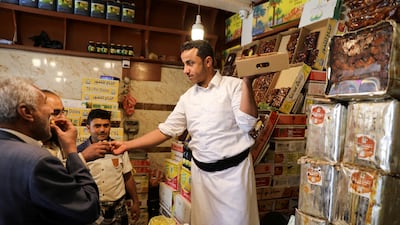
A vendor gives dates to customers to taste in preparation for the fasting month of Ramadan, as food prices soar in Sanaa, Yemen. All photos: Reuters -
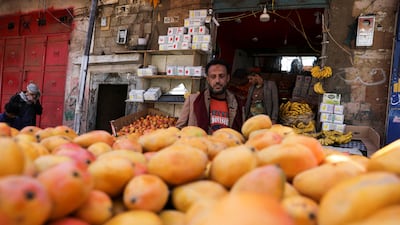
A man looks at mangoes in a street stall in Sanaa. -
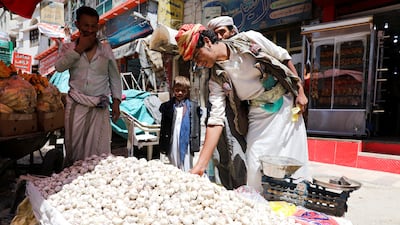
A vendor selling garlic waits for customers on a street in Sanaa. -
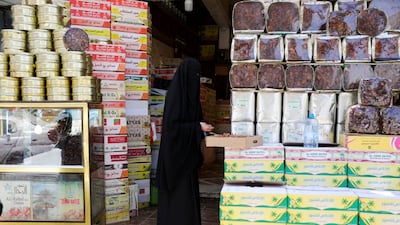
A woman checks dates at a shop. -
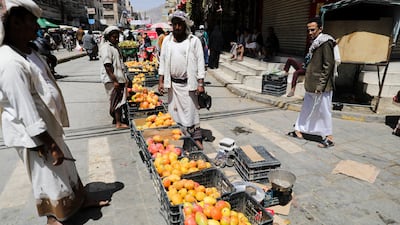
Vendors selling mangoes wait for customers. -

A vendor shows a date at his shop. -

A vendor displays dates at his shop. -
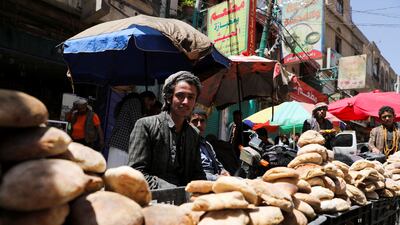
Vendors selling bread wait for customers. -
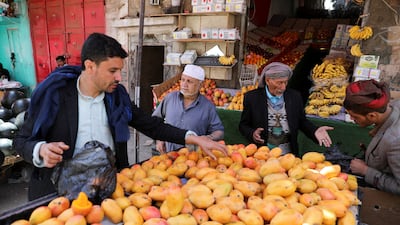
People buy mangoes from a street stall. -
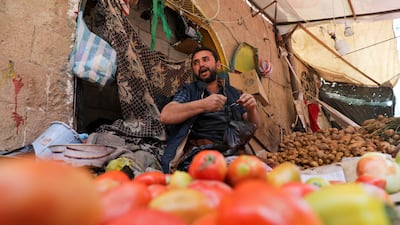
A vendor waits for customers at his vegetable stall.


A military coalition led by Saudi Arabia intervened in March 2015 to support Yemen's internationally recognised government against the Houthis.
The ceasefire has allowed the WFP and commercial partners to increase milling and distribution work, Mr Ragan said.
The truce "is good for Yemen but it's also good for the humanitarian operations that are so desperately needed to get up and running," he said.
He said the WFP's operations were 60 to 75 days behind schedule because of a previous escalation in fighting.
Should peace not allow Yemen's economy to rebuild, at least 80 per cent of the country will continue to rely on humanitarian assistance.
But in March, the UN received only $1.3 billion for 2022, well short of the planned $4.27 billion. Additional pledges have since come from Saudi Arabia, the UAE and the EU, but funding remains precarious.
The WFP has since January reduced rations for 8 million of the 13 million people it feeds a month due to funding shortages.

