

Lebanon’s Hezbollah and Amal parties have pledged to lift their boycott of Cabinet sessions to address the 2022 budget.
But an economist has told The National the path to economic recovery is long and mired with obstacles.
The two parties paralysed the Cabinet with a three-month boycott intended to end the Beirut port blast investigation in which some of their ministers were called for questioning.
During that time, the Lebanese pound depreciated by about 50 per cent, hitting salaries pegged to the official exchange rate and causing poverty to rise to four fifths of the country’s population.
Ministers were still meeting behind closed doors during this time, preparing the 2022 budget required for coming talks with the International Monetary Fund.
financial expert
During closed-door sessions in December, the committee preparing the technical talks for the IMF concurred that Lebanon’s financial-sector losses amounted to $68.8 billion.
-
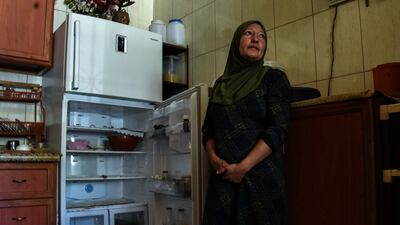
Rweida Mohammed stands next to her almost empty fridge that is warm inside due to prolonged power cuts. Elizabeth Fitt for The National -
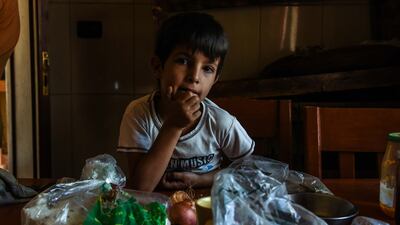
Hamid Khodor sits despondently in the kitchen. There is no electricity to keep food fresh in the fridge and freezer, no cooking gas for the stove and not much to eat except what the family can grow in the garden. Elizabeth Fitt for The National -

The Khodor family is relying on homegrown vegetables. Elizabeth Fitt for The National -
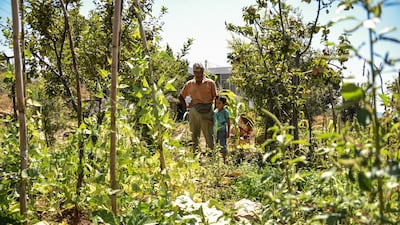
Talal Khodor with his son, Omar, in their vegetable garden. The family is relying on homegrown vegetables to feed themselves during Lebanon's economic collapse. Elizabeth Fitt for The National -
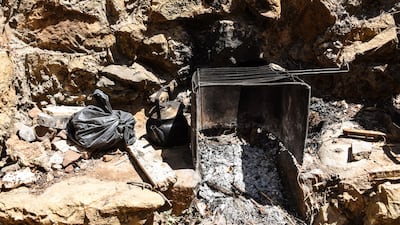
Rweida Mohammed uses a makeshift grill to cook for the family. Since gas for the kitchen stove became so scarce in Lebanon, the family can't get hold of any. Elizabeth Fitt for The National -
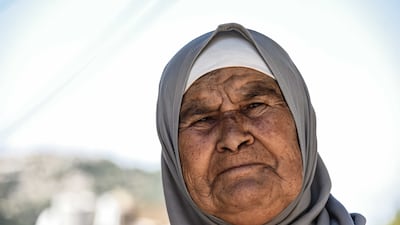
Talal Khodor's mother is frustrated by the ongoing situation. Elizabeth Fitt for The National -
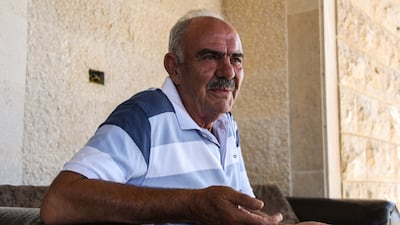
There are few options left to help Mohammed Hazim provide for his family. Elizabeth Fitt for The National -
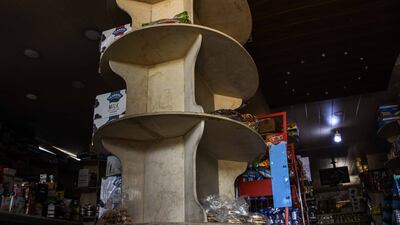
Shelves that usually display bread have been empty for days in the village store. Elizabeth Fitt for The National -

Mohammed Hazim's son, Ziad, waits for his exam results. He had to study using his father's mobile phone. Elizabeth Fitt for The National -
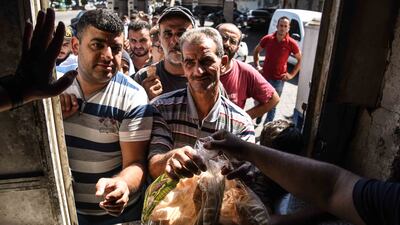
People queue for bread as shortages continue. Elizabeth Fitt for The National -
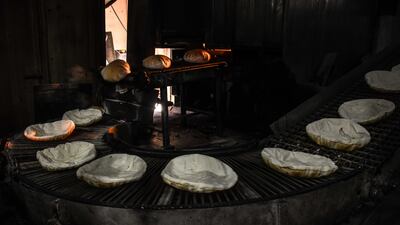
The manager at Tarik Al Ridani bakery says it is one of only two producers still operational in the city and with two tonnes of flour left, it will soon run out of bread. Elizabeth Fitt for The National -
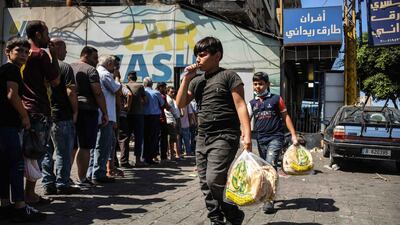
These boys are among the lucky few that have found bread before stocks run out. Elizabeth Fitt for The National -

Ogero, Lebanon's state-run telecoms provider, has a mast in Hrar, but connection speeds are often very slow. Elizabeth Fitt for The National


Jean Tawile, an economist, told The National no agreement had been reached on how to distribute the losses among stakeholders, which include the state, the financial sector, depositors and banks.
“The main negotiation was happening with the central bank and the banking sector… They were not including the main stakeholders, the depositors,” he said.
The depositors stood to be the biggest losers in this settlement, he said.
Last week, Prime Minister Najib Mikati signalled that he would need two weeks to present a budget to the Cabinet.
One of many points of disagreement is determining which exchange rate to use in the budget.
The official rate is 1,507 Lebanese pounds to the US dollar, though the black market rate is 24,500 at the time of writing, but reached as high as 33,000 last week.
According to Circular 161 which was released by the Central Bank in December, public sector staff are now able to withdraw their salary in dollars according to the Safraya rate — now at 24,400 - which would then enable them to buy liras at an exchange house at the black market rate.
“In an environment when you have multiple exchange rates, how are they going to do their modelling and forecasting without having a very clear view about what rate they will use?,” Mr Tawile said.
IMF financial aid talks
The IMF has said Lebanon must present a comprehensive plan of economic reform that includes lowering its deficit, cutting wasteful spending and improving tax collection, among many other requirements.
Both the plan and the budget would have to be approved by parliament, a problem for the government of Hassan Diab, Mr Mikati’s predecessor.
“In the past this is how things were blocked … we can see a lot of obstacles,” Mr Tawile said.
“It doesn’t mean that if the government is going to meet that it’s completely solved and the sky is blue and the sun is shining.”
He said budget negotiations can be problematic when the reforms needed, such as cutting wasteful spending, are not in the interest of those in power.
The decision of Hezbollah and Amal to lift their boycott of Cabinet sessions now could have been motivated by the coming elections in May, and a wish to shift debate from the Beirut blast investigation to the economy.
Saeb El Zein, a former managing director with international banks and funds, said the emphasis on economic recovery and the budget reflected the interests of Lebanon’s political class.
“Any deepening economic crisis will affect all the current leadership, not just Hezbollah and Amal, so it’s important that they show they’re doing something,” he told The National.
He said it was unlikely that an agreement with the IMF could be reached before the election. But productive talks with the fund – an online meeting is planned for this month – may at least contain some of the currency movement and volatility in Lebanon.
“To achieve an agreement with the IMF would be a huge political and economic win for the current government. However, from experience, with the parliament, the various interest groups and their leaders, it’s not going to be an easy process,” Mr El Zein said.
“An IMF programme should have been in place by June 2020 … I, myself, thought it was quite easy to address the issues. It’s Economics 101, but in the end politics won. In a way, I gave up on hope.”

