

After a blizzard of legal challenges, Libya’s presidential election is going ahead on schedule with candidates cleared by the courts to take part.
Last week, separate appeal courts ruled that Saif Al Islam Qaddafi, son of former dictator Muammar Qaddafi, and current prime minister Abdul Hamid Dbeibah can be candidates in the poll set for December 24.
Meanwhile, disputes over the election law, which opponents said was issued by parliament without consultation with a rival assembly, the High Council of State, found no traction in the courts.
Barring further legal challenges, all the country’s most prominent figures will be standing in the first national election since civil war began in Libya in 2014.
-
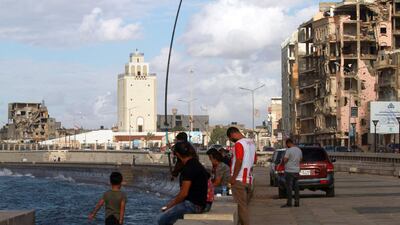
People gather at a seaside promenade in Libya's eastern city of Benghazi. AFP -
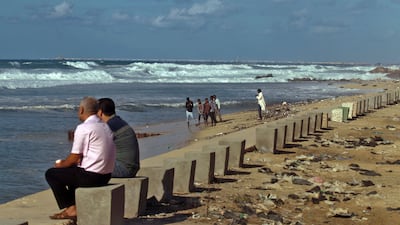
Benghazi is a major seaport and the second-most populous city in Libya. AFP -
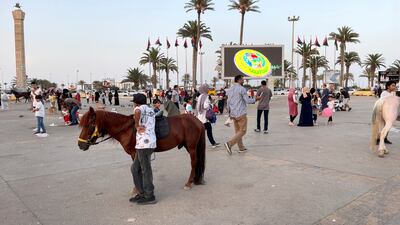
People walk in Martyrs' Square, Tripoli. Reuters -
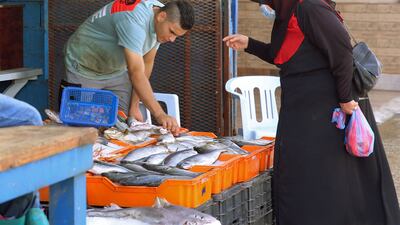
A woman shops at Tripoli's fish market. AFP -
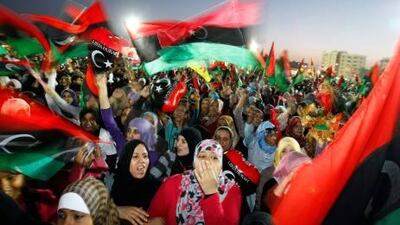
Women celebrate the liberation of Libya at Martyrs' Square in Tripoli. AP -
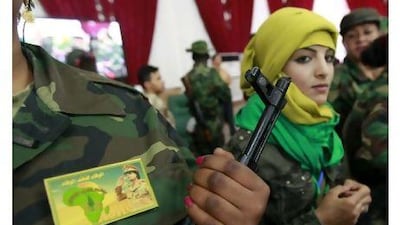
Female volunteer government fighters attend a women's forum in Tripoli. Reuters -

Between 2011 and today, Libyan society has become progressively more conservative towards women and gender equality. Reuters -
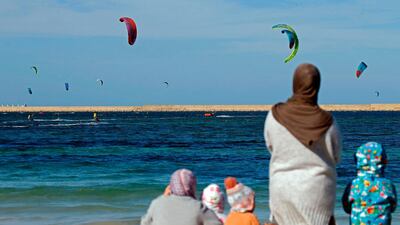
A family enjoys a day at the beach. AFP


Other notable candidates include Field Marshall Khalifa Haftar, commander of the eastern-based Libyan National Army, Aguila Saleh, speaker of the current parliament, and a former prime minister Ali Zeidan.
Mr Qaddafi, 49, is popular among supporters of his father’s former regime despite being indicted for war crimes by the International Criminal Court.
Mr Dbeibah, a wealthy 63-year-old businessman from the western town of Misurata, has strong backing from groups in west Libya. Opponents said he should honour a pledge he made, on becoming prime minister in March, not to stand as president.
The convoluted legal appeals against both men were marred by the lack of a single body of law governing Libya’s elections after a decade of transitional governments and contradictory constitutions.
Amid this legal uncertainty, it will now be the voters who pass judgment. More than 2.4 million of Libya’s 6.6 million population have registered to vote. There are no reliable opinion polls as to whom Libyans favour, making this election a major test of popularity.
The UN’s Libya envoy Jan Kubis praised the numbers registering to vote on Thursday, saying: “The Libyan people, from across the country, are yearning for an opportunity to elect their representatives.”
Mr Kubis unexpectedly resigned last month, and his term will end on December 10. He has yet to give a clear explanation as to why he chose to abruptly leave an election process he did so much to create.
His official reason for quitting was to allow the UN to dissolve his job and split his duties between two new envoys, one based outside Libya and the other in the capital, Tripoli.
“In order to create conditions for this, on November 17, 2021, I tendered my resignation,” he told the UN.
However, his resignation was a surprise to the UN which had no plan in place to create these new posts, and little time before the election to find a new envoy.
Elections key to peace?
Many Libyans had doubted the elections would happen, after months of delays by parliament to pass the necessary legislation. Presidential candidates were registered on November 24, leaving little time to campaign and explain their election platforms.
Peace is the ultimate prize for this election, because the civil war is only paused. Two loose alliances of forces, from east and west Libya, have largely observed a UN-mediated ceasefire signed in October last year. However, those forces remain in place either side of a frontline west of the central town of Sirte.
Transitioning from ceasefire to disarmament will depend on elections delivering leadership acceptable to all sides.
The presidential poll, being held on the 70th anniversary of Libya’s independence, will be followed by parliamentary elections a month later, along with a possible run-off for the presidency between the top two candidates if nobody wins more than 50 per cent of votes in the first round.
Outside powers are united in expressing support for the elections, with US ambassador Richard Norland warning of the risk of violence by groups opposed to the process.
“The United States shares the concerns of Libyans and the international community that armed actors and the risk of violence not be allowed to threaten elections,” he said.
His warning followed attacks by armed groups on five polling stations in western Libya last week, with the Higher National Elections Commission saying bundles of polling cards were stolen and election officials threatened, with one briefly kidnapped.
Last week, the UN Security Council said it would designate sanctions against anyone obstructing the elections.

