


A new Bentley grand tourer has just arrived in the UAE, coinciding with the brand announcing testing has just finished on the Batur, a vehicle which is set to be its most powerful vehicle ever.
The Flying Spur Speed is the latest grand tourer to make landfall in the Emirates, sitting alongside the Continental GT and 4x4 Bentayga.
As its name might suggest, the Speed is no slouch in the motion department – the turbocharged 6-litre W12 engine churns out 625 horsepower, which is enough to give the vehicle a top whack of 333 kph.
-

The Bentley Flying Spur speed in Dubai. All photos: Al Habtoor Motors -

The Speed is one of Bentley's premier performance models -

British racing green, as seen here on the Speed, is a classic Bentley hue -

Not your average dune basher -

Power in the speed comes from a 6-litre W12 engine -

Flat out, the Speed can reach 333kph -

Unlike the Batur, the Speed is not a limited-edition vehicle


Together with the Flying Spur Mulliner, this makes the Speed the brand’s premier performance model since production of the standard Flying Spur ceased in May last year.
Bentley aficionados will note some familiar exterior styling cues on the new arrival, notably the dark tint finishes to the grille and front and rear lights, and signature badges on the lower wing.
The 22-inch wheels, unique to the Speed, come as standard, with a choice of gloss or silver finishes.
Inside, the car is as immaculate as you’d expect any Bentley to be, with luxury watches apparently providing the inspiration for the driver information panel.
The Flying Spur’s arrival comes as Bentley announced development had been completed on the Batur, a vehicle the manufacturer says will be its ultimate grand tourer.
You may be lucky to see one though – only 18 cars will make it onto the world’s roads.
Despite this tiny number, the manufacturer’s teams put the prototype through the mill, with durability tests including both high-speed and real-world handling, as well as solar loading to ensure the materials used will be robust enough to last the life of the car.
Customers are clearly showing confidence in Bentley though, as all 18 have already been sold.
Interested parties who haven’t put their order in may have to opt for the Flying Spur Speed after all, but that’s not exactly a hardship.
-
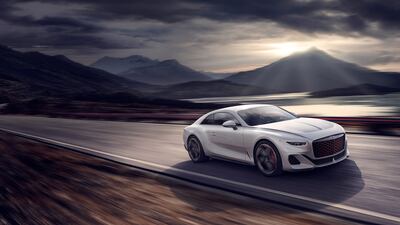
Full throttle in Bentley's Mulliner Batur. All photos: Bentley -
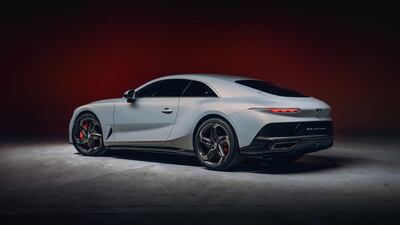
The Batur is a two-door coupe. -
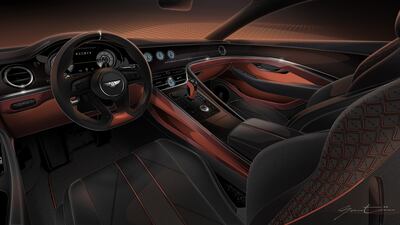
The view of the driver's seat. -

Only 18 Baturs will be created. -
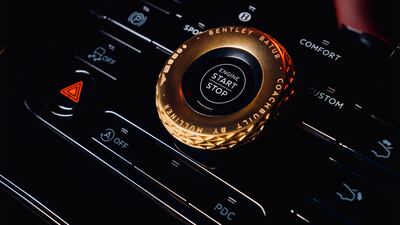
The start/stop button doesn't lack any of the fanciness of the rest of the vehicle. -
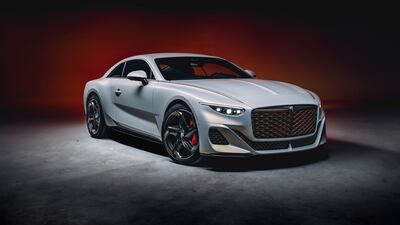
A grille to thrill. -
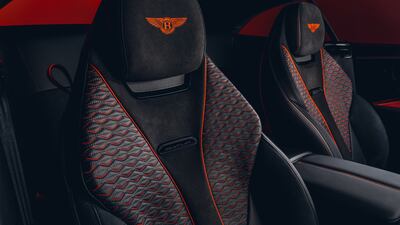
The Batur's sporty seats. -
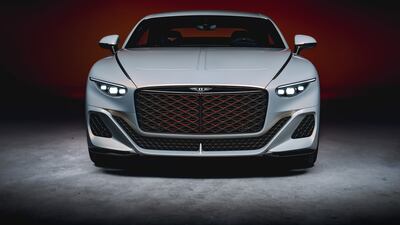
Head on. -
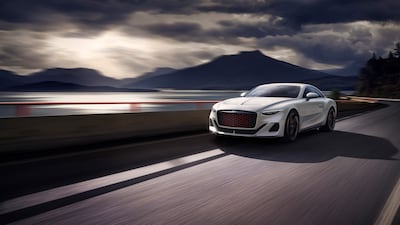
The Batur follows on from Bentley's Bacalar. -
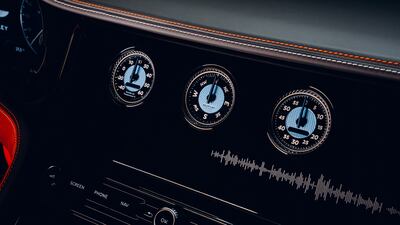
Old-school dials on the Batur. -
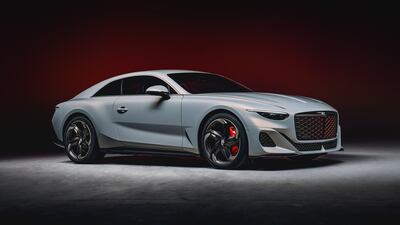
The Batur is the most powerful Bentley in history. -

The Batur's powerful red brake calipers are an essential addition. -

The passenger-side dashboard. -

The Batur has a 6-litre twin turbocharged engine. -

Inside the cabin. -

The Batur is named after a lake in Indonesia. -

The Batur's fierce grille. -

An enticing ride.



