


Researchers have uncovered a medical breakthrough in trauma care that could save the lives of wounded military in remote battlefields or civilians injured in mass casualty events or in rural locations.
For the first time, technology was used to nearly quadruple the “golden hour” during which surgeons could save the life of a large animal with internal traumatic bleeding during emergency ground and air transport.
The research was published on Friday in Intensive Care Medicine Experimental by physician-scientists at the University of Pittsburgh School of Medicine and funded by the US Department of Defence.
“Under normal conditions, if we can get somebody with severe trauma to the hospital within an hour, there’s a good chance that we can save them,” said the project’s scientific lead, Dr Michael Pinsky, of the University of Pittsburgh School of Medicine.
“For the first time in the history of medicine, we took an animal in a critical state on to a helicopter and autonomously brought it back healthier than when it was placed in emergency transport hours earlier.
"The implications this has for treating people in the field with trauma are phenomenal.”
3D printing in prosthetics – in pictures
-

One of those to recently benefit from a new 3D-printed knee joint is Mohammad Shafiq, a 69-year-old American in Dubai who had lived with a deformity in his right knee. Dr Samih Tarabichi is alongside. Photo: Burjeel Hospital -

A CT scan provided the exact dimensions required by the manufacturer in Switzerland, who then created a virtual model and a titanium implant for Mohammad Shafiq's new knee joint. Photo: Burjeel Hpspital -
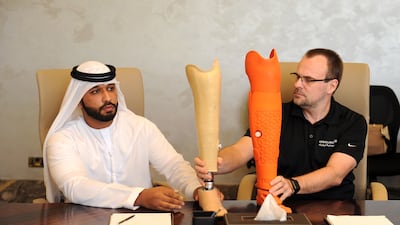
Fahad Ali (L), a long-term amputee, compares conventional examples with his new 3D-printed prosthetics alongside Sebastian Giede, a certified orthopaedic prosthetist with Mediclinic. Photo: Dubai Health Authority -
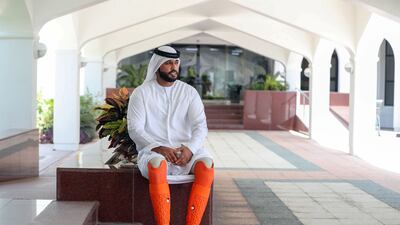
Fahad Ali is a double amputee who has been fitted with a set of 3D-printed prosthetic legs. Chris Whiteoak / The National -

Dr Demetrius Evriviades, a combat trauma surgeon, says 3D printing is revolutionising how people are being put back together after suffering severe injuries. Victor Besa / The National -
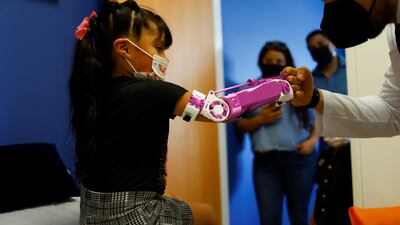
Monserrath Montanez, 4, receives a 3D prosthetic arm with a Spider-Woman design that was donated by orthopedist Oscar Juarez, who gives prosthetics to low-income children without arms, in Ciudad Juarez, Mexico. Reuters -
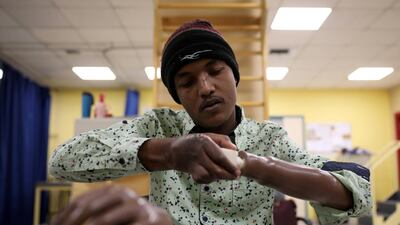
Abdullah Ayed, 21, from Yemen, who was wounded in the war, tries on his 3D-printed prosthetic limb at the MSF-run hospital in Amman. Reuters -
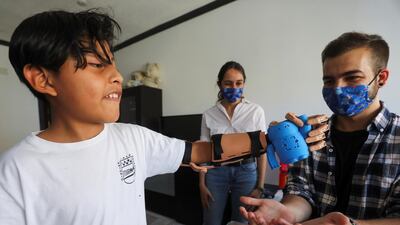
Moyolema, 8, who was born missing the lower part of his left arm, picks a toy up using a 3D-printed prosthetic with Martinez, founder of Madrid-base social entity Ayudame3D in Spain, looking on. Reuters


A team from the School of Medicine and computer scientists from Carnegie Mellon University tested a key part of the Trauma Care in a Rucksack (Tracir) system, which fits inside a backpack that could be delivered by drone to remote locations.
A minimally invasive, closed loop algorithm part of the rucksack system, called Resuscitation based on Functional Hemodynamic Monitoring (ReFit), autonomously gave intravenous fluids, blood and drugs to maintain vital functions in animals with a traumatic lethal liver injury for three to five hours without human intervention.
They were taken by ground ambulance and helicopter, and finally returned to the laboratory surgical suite as a demonstration project.
On different days, four fully anaesthetised animals underwent liver laceration in a laboratory surgical suite under approved animal research guidelines.
They were allowed to hemorrhage for 30 minutes before being resuscitated with the ReFit computer algorithm system, which is about the size of a microwave.
Once the autonomous resuscitation device was turned on, the animals received no medical intervention from a human beyond monitoring by an emergency medicine doctor to ensure they remained fully anaesthetised and in no discomfort.
Latest body scanners at Arab Health - in pictures
-
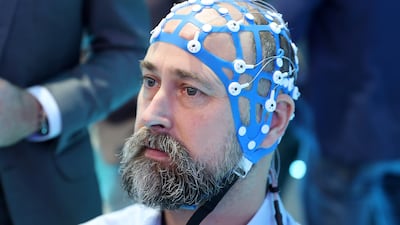
Tue Lehn-Schioler, chief executive of BrainCapture wearing the device which helps to diagnose epilepsy and other neuro problems at the Arab Health conference held at Dubai World Trade Centre. Pictures: Pawan Singh / The National -
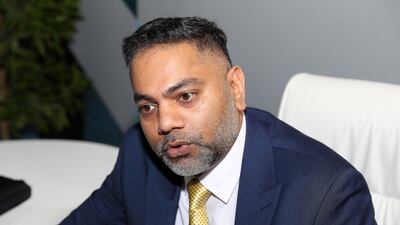
Dr Hidayath Ali Ansari, staff physician in the imaging institute at Cleveland Clinic Abu Dhabi, said MRI scans can be expensive. -
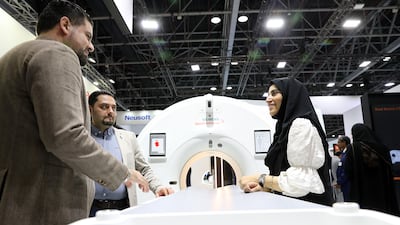
The scanning machine on display at the Siemens Healthineers stand at Arab Health. -
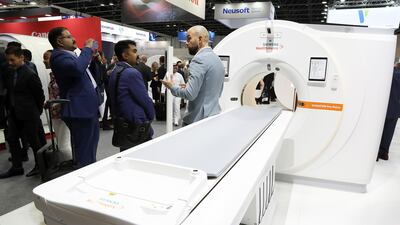
The latest scanners are much sleeker and less cumbersome than the larger models of the past, one expert told The National. -
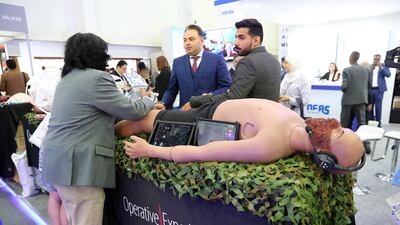
Visitors descend on the Anfas stand at Arab Health. -
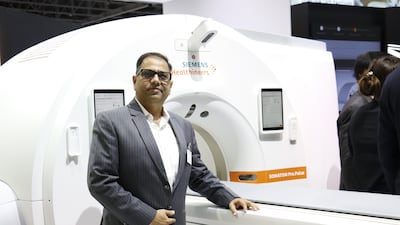
Vivek Kanade, Managing Director of Siemens Healthineers for the Middle East and Africa with the latest MRI scanner at Arab Health 2024 in Dubai. Photo: Siemens


Two of the animals, connected to ReFit, were placed on a stretcher and moved by emergency medical technicians to a hospital helipad where a medical helicopter flew them around western Pennsylvania for several hours to mimic an emergency rescue from a remote location.
The other two were taken by ground ambulance to the Allegheny County Airport where they were then loaded on to a medical helicopter and flown back to the hospital helipad in similarly prolonged flights to simulate long-distance transport.
When returned, the research team confirmed that they could resuscitate the anaesthetised animals autonomously for several hours without human intervention.
“By keeping these animals with a lethal injury alive for up to five hours with a computer driving the resuscitation, you can see how that extends the golden hour,” said principal investigator Dr Ronald Poropatich, director of the Centre for Military Medicine Research and professor of medicine at University of Pittsburgh School of Medicine.
“We are excited about the potential to soon apply this technology to saving the lives of people injured in austere environments.”
The team’s next step is to test transporting ReFit-connected injured animals by unmanned aerial drones to make the process even more effective for rescuing injured people in difficult-to-access locations, such as a mountain or a battlefield.

