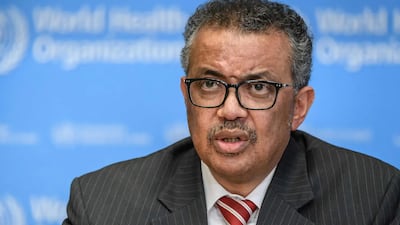
The discovery of microplastics in human veins could assist in better results for cardiac bypass grafts. Reuters

Study discovers microplastics in human veins


Soraya Ebrahimi
  • English
  • Arabic

Microplastics that are used in food packaging and paint have been found in human veins, a study has discovered.

Microplastics can pass through blood vessels to vascular tissue, results suggest, but scientists said it was not yet clear what the implications were for human health.

Human saphenous vein tissue taken from patients undergoing heart bypass surgery was assessed in a small pilot study by a team from the University of Hull and Hull York Medical School, and from the Hull University Teaching Hospitals NHS Trust.

They found 15 microplastic particles for every gram of vein tissue and five different polymer types.

The most prominent included alkyd resin, used in synthetic paint, varnishes and enamels; polyvinyl acetate, an adhesive found in food packaging and nylon; and EVOH and EVA, used in flexible packaging materials.

“We were surprised to find them. We already know microplastics are in blood, from a study by Dutch colleagues last year," said Prof Jeanette Rotchell, an environmental toxicologist at the University of Hull.

“But it was not clear whether they could cross blood vessels into vascular tissue and this work would suggest they can do just that.

“Whilst we don’t yet know the implications of this on human health, what we can say is that from studies using cells grown in dishes, they cause inflammation and stress responses.”

The study, published in the journal Plos One, showed the levels of microplastics observed were similar to, or higher than, those reported for colon and lung tissues.

Saphenous veins are blood vessels in the legs, which help to send blood from the legs and feet back up to the heart.

The veins consist of three layers of tissue and are widely used in coronary artery bypass graft (CABG) procedures.

About 40 to 50 per cent of CABG procedures ultimately fail after 10 years because of a variety of factors, which are not always clear.

WHO says health of billions still threatened by trans fats - in pictures

  • Potato, corn and tortilla chips often contain trans fat. And while popcorn can be a healthy snack, many types of packaged or microwave popcorn use trans fat to help cook or flavour the popcorn. Photo: Getty
    Potato, corn and tortilla chips often contain trans fat. And while popcorn can be a healthy snack, many types of packaged or microwave popcorn use trans fat to help cook or flavour the popcorn. Photo: Getty
  • Foods that require deep frying such as french fries, doughnuts and fried chicken, can contain trans fat from the oil used in the cooking process. Photo: Getty
    Foods that require deep frying such as french fries, doughnuts and fried chicken, can contain trans fat from the oil used in the cooking process. Photo: Getty
  • Most cakes, cookies, pie crusts and crackers contain shortening, which is usually made from partially hydrogenated vegetable oil. Readymade frosting is another source of trans fat. Photo: iStockphoto
    Most cakes, cookies, pie crusts and crackers contain shortening, which is usually made from partially hydrogenated vegetable oil. Readymade frosting is another source of trans fat. Photo: iStockphoto
  • Products such as canned biscuits and cinnamon rolls often contain trans fat, as do frozen pizza crusts. Photo: Getty
    Products such as canned biscuits and cinnamon rolls often contain trans fat, as do frozen pizza crusts. Photo: Getty
  • Non-dairy coffee creamer and stick margarines also may contain partially hydrogenated vegetable oils. Photo: Getty
    Non-dairy coffee creamer and stick margarines also may contain partially hydrogenated vegetable oils. Photo: Getty
  • Dr Tedros Adhanom Ghebreyesus, WHO director-general, condemned trans fats as having "no known benefit" while generating "huge costs for health systems". Photo: Getty
    Dr Tedros Adhanom Ghebreyesus, WHO director-general, condemned trans fats as having "no known benefit" while generating "huge costs for health systems". Photo: Getty
  • In December, UAE unveiled the National Nutrition Strategy 2022-2030 aimed at eliminating trans fats and slashing salt and sugar from foods. Antonie Robertson / The National
    In December, UAE unveiled the National Nutrition Strategy 2022-2030 aimed at eliminating trans fats and slashing salt and sugar from foods. Antonie Robertson / The National

Until now, no studies have examined whether microplastics can infiltrate or cross any biological barrier, including blood vessels, or any possible link between environmental microplastic exposure and CABG results.

“The characterisation of types and levels of microplastics can now inform experiments to determine vascular health impacts, including any potential link between environmental microplastic exposure and CABG outcomes," said Prof Rotchell.

Prof Mahmoud Loubani, a co-author and honorary professor of cardiothoracic surgery, said: "Failure of saphenous vein grafts has been a long-standing issue following coronary artery bypass surgery.

"It is an effective treatment but the longevity is limited by deterioration in the patency of the veins.

“The presence of these microplastics in the veins may well play a role in damaging the inside of the vein, leading to it becoming blocked with the passage of time.

"We do need to identify if there is any correlation and figure out ways of maybe removing the microplastics.”


Ten tax points to be aware of in 2026

1. Domestic VAT refund amendments: request your refund within five years

If a business does not apply for the refund on time, they lose their credit.

2. E-invoicing in the UAE

Businesses should continue preparing for the implementation of e-invoicing in the UAE, with 2026 a preparation and transition period ahead of phased mandatory adoption. 

3. More tax audits

Tax authorities are increasingly using data already available across multiple filings to identify audit risks. 

4. More beneficial VAT and excise tax penalty regime

Tax disputes are expected to become more frequent and more structured, with clearer administrative objection and appeal processes. The UAE has adopted a new penalty regime for VAT and excise disputes, which now mirrors the penalty regime for corporate tax.

5. Greater emphasis on statutory audit

There is a greater need for the accuracy of financial statements. The International Financial Reporting Standards standards need to be strictly adhered to and, as a result, the quality of the audits will need to increase.

6. Further transfer pricing enforcement

Transfer pricing enforcement, which refers to the practice of establishing prices for internal transactions between related entities, is expected to broaden in scope. The UAE will shortly open the possibility to negotiate advance pricing agreements, or essentially rulings for transfer pricing purposes. 

7. Limited time periods for audits

Recent amendments also introduce a default five-year limitation period for tax audits and assessments, subject to specific statutory exceptions. While the standard audit and assessment period is five years, this may be extended to up to 15 years in cases involving fraud or tax evasion. 

8. Pillar 2 implementation 

Many multinational groups will begin to feel the practical effect of the Domestic Minimum Top-Up Tax (DMTT), the UAE's implementation of the OECD’s global minimum tax under Pillar 2. While the rules apply for financial years starting on or after January 1, 2025, it is 2026 that marks the transition to an operational phase.

9. Reduced compliance obligations for imported goods and services

Businesses that apply the reverse-charge mechanism for VAT purposes in the UAE may benefit from reduced compliance obligations. 

10. Substance and CbC reporting focus

Tax authorities are expected to continue strengthening the enforcement of economic substance and Country-by-Country (CbC) reporting frameworks. In the UAE, these regimes are increasingly being used as risk-assessment tools, providing tax authorities with a comprehensive view of multinational groups’ global footprints and enabling them to assess whether profits are aligned with real economic activity. 

Contributed by Thomas Vanhee and Hend Rashwan, Aurifer

ABU%20DHABI%20CARD
%3Cp%3E%3Cstrong%3E5pm%3A%20%3C%2Fstrong%3EWathba%20Stallions%20Cup%20%E2%80%93%20Handicap%20(PA)%20Dh70%2C000%20(Turf)%202%2C200m%0D%3Cbr%3E%3Cstrong%3E5.30pm%3C%2Fstrong%3E%3A%20Rub%20Al%20Khali%20%E2%80%93%20Maiden%20(PA)%20Dh80%2C000%20(T)%201%2C400m%0D%3Cbr%3E%3Cstrong%3E6pm%3A%20%3C%2Fstrong%3EAl%20Marmoom%20Desert%20%E2%80%93%20Maiden%20(PA)%20Dh80%2C000%20(T)%201%2C600m%0D%3Cbr%3E%3Cstrong%3E6.30pm%3A%20%3C%2Fstrong%3ELiwa%20Oasis%20%E2%80%93%20Handicap%20(PA)%20Dh80%2C000%20(T)%201%2C400m%0D%3Cbr%3E%3Cstrong%3E7pm%3A%20%3C%2Fstrong%3EAl%20Khatim%20Desert%20%E2%80%93%20Handicap%20(PA)%20Dh80%2C000%20(T)%201%2C600m%0D%3Cbr%3E%3Cstrong%3E7.30pm%3A%3C%2Fstrong%3E%20Al%20Quadra%20Desert%20%E2%80%93%20Handicap%20(TB)%20Dh80%2C000%20(T)%201%2C600m%3C%2Fp%3E%0A
Classification of skills

A worker is categorised as skilled by the MOHRE based on nine levels given in the International Standard Classification of Occupations (ISCO) issued by the International Labour Organisation. 

A skilled worker would be someone at a professional level (levels 1 – 5) which includes managers, professionals, technicians and associate professionals, clerical support workers, and service and sales workers.

The worker must also have an attested educational certificate higher than secondary or an equivalent certification, and earn a monthly salary of at least Dh4,000. 

Mercer, the investment consulting arm of US services company Marsh & McLennan, expects its wealth division to at least double its assets under management (AUM) in the Middle East as wealth in the region continues to grow despite economic headwinds, a company official said.

Mercer Wealth, which globally has $160 billion in AUM, plans to boost its AUM in the region to $2-$3bn in the next 2-3 years from the present $1bn, said Yasir AbuShaban, a Dubai-based principal with Mercer Wealth.

Within the next two to three years, we are looking at reaching $2 to $3 billion as a conservative estimate and we do see an opportunity to do so,” said Mr AbuShaban.

Mercer does not directly make investments, but allocates clients’ money they have discretion to, to professional asset managers. They also provide advice to clients.

“We have buying power. We can negotiate on their (client’s) behalf with asset managers to provide them lower fees than they otherwise would have to get on their own,” he added.

Mercer Wealth’s clients include sovereign wealth funds, family offices, and insurance companies among others.

From its office in Dubai, Mercer also looks after Africa, India and Turkey, where they also see opportunity for growth.

Wealth creation in Middle East and Africa (MEA) grew 8.5 per cent to $8.1 trillion last year from $7.5tn in 2015, higher than last year’s global average of 6 per cent and the second-highest growth in a region after Asia-Pacific which grew 9.9 per cent, according to consultancy Boston Consulting Group (BCG). In the region, where wealth grew just 1.9 per cent in 2015 compared with 2014, a pickup in oil prices has helped in wealth generation.

BCG is forecasting MEA wealth will rise to $12tn by 2021, growing at an annual average of 8 per cent.

Drivers of wealth generation in the region will be split evenly between new wealth creation and growth of performance of existing assets, according to BCG.

Another general trend in the region is clients’ looking for a comprehensive approach to investing, according to Mr AbuShaban.

“Institutional investors or some of the families are seeing a slowdown in the available capital they have to invest and in that sense they are looking at optimizing the way they manage their portfolios and making sure they are not investing haphazardly and different parts of their investment are working together,” said Mr AbuShaban.

Some clients also have a higher appetite for risk, given the low interest-rate environment that does not provide enough yield for some institutional investors. These clients are keen to invest in illiquid assets, such as private equity and infrastructure.

“What we have seen is a desire for higher returns in what has been a low-return environment specifically in various fixed income or bonds,” he said.

“In this environment, we have seen a de facto increase in the risk that clients are taking in things like illiquid investments, private equity investments, infrastructure and private debt, those kind of investments were higher illiquidity results in incrementally higher returns.”

The Abu Dhabi Investment Authority, one of the largest sovereign wealth funds, said in its 2016 report that has gradually increased its exposure in direct private equity and private credit transactions, mainly in Asian markets and especially in China and India. The authority’s private equity department focused on structured equities owing to “their defensive characteristics.”

Call of Duty: Black Ops 6

Developer: Treyarch, Raven Software
Publisher:  Activision
Console: PlayStation 4 & 5, Windows, Xbox One & Series X/S
Rating: 3.5/5

The biogs

Name: Zinah Madi

Occupation: Co-founder of Dots and links

Nationality: Syrian

Family: Married, Mother of Tala, 18, Sharif, 14, Kareem, 2

Favourite Quote: “There is only one way to succeed in anything, and that is to give it everything.”


Name: Razan Nabulsi

Occupation: Co-founder of Dots and Links

Nationality: Jordanian

Family: Married, Mother of Yahya, 3.5

Favourite Quote: A Chinese proverb that says: “Be not afraid of moving slowly, be afraid only of standing still.”

UAE gold medallists:

Omar Al Suweidi (46kg), Khaled Al Shehhi (50kg), Khalifa Humaid Al Kaabi (60kg), Omar Al Fadhli (62kg), Mohammed Ali Al Suweidi (66kg), Omar Ahmed Al Hosani (73), all in the U18’s, and Khalid Eskandar Al Blooshi (56kg) in the U21s.

Updated: February 01, 2023, 10:24 PM