

Four people died and three were injured in a road accident in southern Oman.
The crash involved a single car and all of the victims were from the same family, Royal Oman Police said on Sunday.
Police shared footage of a helicopter landing on the Adam-Haima road in Dhofar province to take one seriously injured car occupant to hospital. The condition of the other injured people was not released.
Dhofar, with its regional capital Salalah, is a popular getaway as people head south to escape the summer heat.
Fatal accidents in the area are common, particularly on two-lane roads that lack a central dividing barrier.
In May, an Indian nurse who worked in Abu Dhabi died when her vehicle collided with a lorry near Salalah.
The main road from Muscat to Salalah, a popular drive for many travellers from the UAE, Oman and elsewhere, is 1,100 kilometres long and about 40 per cent of it is single carriageway.
Every year people are killed on the road, including tourists who are unfamiliar with the long stretch and changeable weather.
In 2017, police statistics showed an average of 105 fatalities a year on the stretch to Salalah — about a quarter of all road deaths in the sultanate.
Oman's cave network: in pictures
-
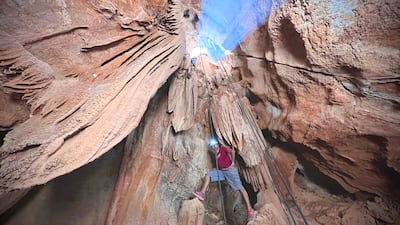
Oman’s Jebel Akhdar region is dotted with caves caused by eroding limestone. Photo: Nabil Alsaqri -

A group of Omani cavers are mapping out the openings. Photo: Salim Alsuqri -

The cavers have written a book about Oman's cave system, ranging from expert level explorations to family-friendly adventures. Photo: Nabil Alsaqri -
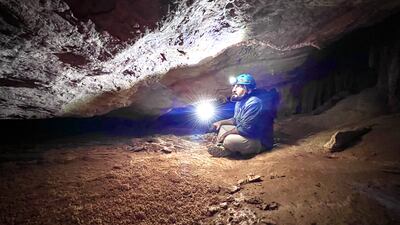
The same team discovered the 'Well of Hell' cave last year. -

The caves vary in size, from the small to the enormous. -
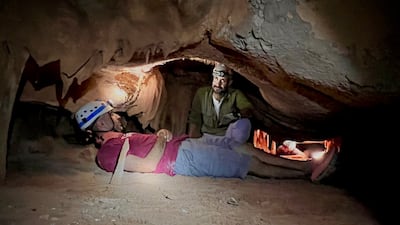
A caver lies on the ground, to manoeuvre in a tight area, during an expedition. Photo: Nabil Alsaqri -

Mounds known as stalagmites on the floor of a cave. -

Icicle-shaped stalactites form across a cave’s ceiling. -

Rays of sunlight illuminate a shaft as the explorers descend. -

Oman is promoting the caves as a tourist draw. -

The caves are home to lizards, water beetles, snails, hunting spiders and fish. -

This cave called Khaslat Safi Sahra was known to locals but not extensively explored. -

The period of discovering, documenting and surveying the cave took about five hours. -
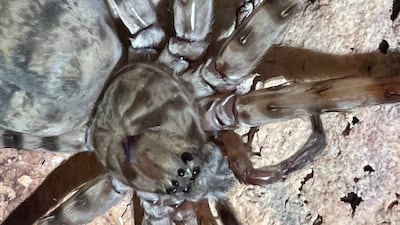
A cave-dwelling spider. -

Some caves were used in the past as shelter or hideouts during times of conflict.



