

As a fresh modern face of the Saudi royal family, Prince Salman bin Mansour Al Saud is following two of the paths that best define his country’s progress – sport and entrepreneurship.
The prince, 18, a rising polo star, is also in the process of completing a Bachelor’s degree in entrepreneurship and digital innovation.
"For me, the most important things to achieve my goals are continuing my education and pursuing my polo career. Most of the year I am in London where I attend Brunel University full-time," Prince Salman tells The National.
-

The Richard Mille AlUla Desert Polo 2022 got under way in the Saudi Arabia's north-western city. All photos: AFP -

It is the first modern polo tournament in the world to be staged in the desert. -
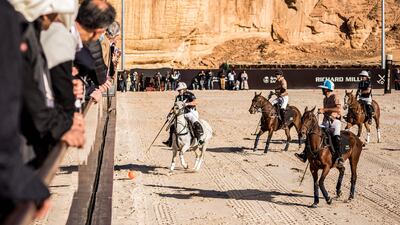
The event brought together polo patrons and professionals from around the world. -
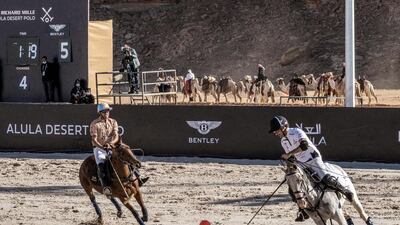
French entrepreneur and polo player Jean-Francois Decaux, right, takes part in the tournament. -

Four teams took part in the tournament in a specially designed arena. -

Women riders also showed their skills. -

Some of the best polo players in the world in action. -
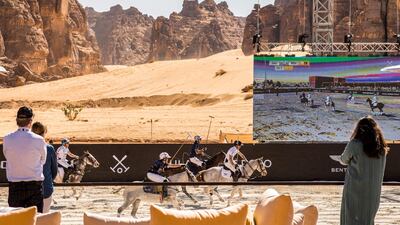
Spectators had a great time watching players show their talent. -
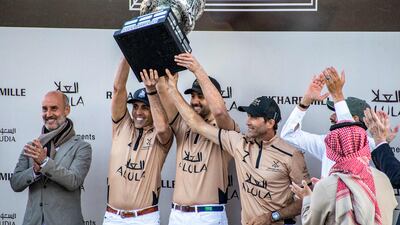
Members of the Saudi polo team celebrate with their trophy.


Prince Salman returned to Saudi Arabia last month to train and prepare for the recent Richard Mille AlUla Desert Polo tournament. He has been attending classes online every morning and catching up on university work before going to polo practice.
“In the afternoon after practice, I go to the gym for strength, stamina and flexibility training," he says. "It’s a new era for the kingdom and my dream is to be a part of the progression and the country’s future."
The second Richard Mille AlUla Desert Polo event took place last month at Saudi Arabia’s first Unesco World Heritage Site.
The Saudi Polo Federation was formed in July 2018 to develop the sport across the kingdom and the federation's first major event was in AlUla with the young prince among the participants.
"It was an absolute honour to be invited to participate in the tournament, especially to be able to represent my country on home soil," Prince Salman tells The National. "I played on the same team as one of my idols, Juan Martin Nero of La Dolfina, the best team in the world. Watching and playing alongside him so closely was an unforgettable experience and I have learnt so much."
Prince Salman started playing polo as a 10-year-old schoolboy.
Aside from the physical aspect of the game, polo is also "mentally stimulating as it combines strategy and tactics with physical activity", he says.
"I love the fact that I am constantly challenged, the intensity and the action is what drives my passion for the game."
The 18 year old was part of the team that won the Saudi Polo Federation Silver Cup in April 2021.
-
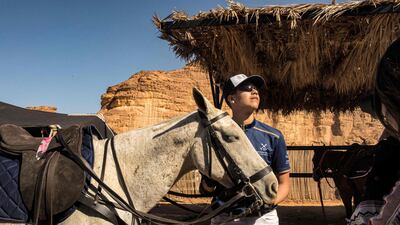
Saudi Arabia's Prince Salman Bin Mansour was among the competitors in the AlUla Desert Polo event, the only modern polo tournament to be staged in a desert environment. All photos: AFP -
Four teams took part in the event in Saudi Arabia's north-western city of AlUla. -
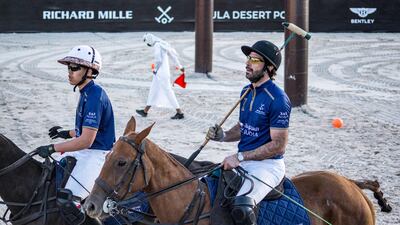
Prince Salman Bin Mansour, left, and Saudi scientist Hosam Zawawi on their horses. -

Hosam Zawawi competes in the tournament, which was returning after a two-year coronavirus hiatus. -
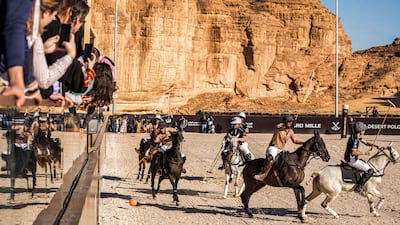
A chukka takes place against the spectacular mountain backdrop of AlUla. -
Spectators enjoy the action at the Unesco world heritage site. -
There were four matches in the specially designed arena. -
Members of the AlUla polo team celebrate their victory in the tournament. -

French entrepreneur Jean-Francois Decaux was among the invited competitors. -
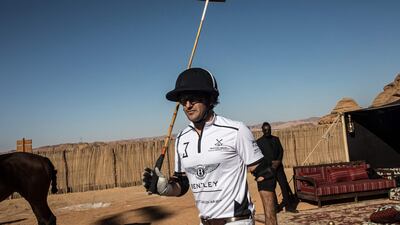
Uruguayan player David Stirling Jr prepares to take part in a match. -
Jean-Francois Decaux, right, in the thick of the action. -

Teams competing in the arena specially built for the event. -

David Stirling on his mount ready for a match in the desert of AlUla. -
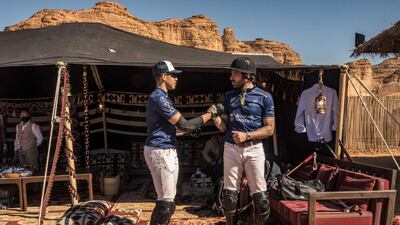
A team talk for Prince Salman Bin Mansour, left, and Hosam Zawawi.


He hopes his experience will inspire young Saudis to pursue sport and perhaps even represent their country someday.
Polo is relatively new to the kingdom but the country is already hosting prestigious international sporting events, such as Formula One, boxing and top-level football.
The AlUla event, the world's only modern polo tournament to be staged in the desert, is an essential part of the Royal Commission for AlUla’s equestrian commitment to reinforce Saudi Arabia’s cultural relationship with the art and heritage of horsemanship.
The prince says there is mine of talent because the kingdom is investing in modern facilities and new teams, which is "incredible".
"It’s a historic moment for the sports industry in Saudi Arabia in general," he says.
Part of the kingdom's progress
The 'Polo Prince' spoke about the kingdom’s progress and changes he hopes to see.
"I’m really happy to see all of the new opportunities being created for the Saudi youth, which is driven by Saudi Vision 2030 led by Prince Mohammed bin Salman and implemented by the ministries and governmental organisations," he says.
He reserved special praise for the work of HH Prince Badr bin Abdullah, who as governor of the Royal Commission for AlUla has created opportunities in sport, culture and tourism, and HRH Prince Abdulaziz bin Turki as Minister of Sport, whose "great support for new sport and Saudi athletes has been excellent".
"This is the legacy I see from my family and to continue this will become my mission in life," says Prince Salman. "I hope to be able to do my part to help fellow young people across the country."
Prince Salman would "love" to excel as a sportsman and represent Saudi Arabia internationally in polo.
To achieve this goal, he is aware that he has to "keep improving if I am to become a professional athlete and be the best player in the country".
"That is my goal," he says.
In tandem with his polo career, the royal wants to continue his education in digital entrepreneurship and innovation "to further HRH Prince Mohammed bin Salman’s Saudi Vision 2030 and implement the plans through disruptive innovations that create opportunities for Saudi youth, create a sense of purpose and be part of this era of great change within the country".
Looking back at his proudest moment, he says it was the "first time I was invited to compete in a tournament with far more experienced players".
"It was really special to be chosen and showed that the hard work I had put in during practice sessions had been seen and that I considered good enough by the other players to be part of their team," he says.
That was in April 2021 at his first tournament in Riyadh, "and the team I was part of won the Saudi Polo Federation Silver Cup".
"Most recently, at the Richard Mille AlUla Desert Polo tournament, I was invited to be part of the Saudia team, alongside two very accomplished players," he says proudly.
Prince Salman won the most promising talent award at the desert event.
"To be recognised by the tournament committee was a really proud moment and shows I am on the right track to become successful in the sport," he says. "Both of these moments have shown me that hard work does get noticed and rewarded, and this has been huge motivation to continue to improve in all areas of my life and career."

