


Covid-19 mRNA vaccines are safe to use in pregnancy and pregnant women experience lower rates of health events post vaccination than similarly aged, non-pregnant vaccinated people, a study published in The Lancet Infectious Diseases journal reported.
Researchers found that the Covid-19 pandemic has disproportionately affected pregnant women, who are at a higher risk of severe Covid-19 compared with similarly aged non-pregnant people.
This study is one of the first to look at vaccine side effects in a group of vaccinated pregnant women, as well as unvaccinated pregnant women and a group of vaccinated non-pregnant people to enable comparisons between the three.
“In the early stages of the Covid-19 vaccine roll-out, there was low vaccine uptake among pregnant people due to concerns about data availability and vaccine safety,” said Dr Manish Sadarangani from the British Columbia Children's Hospital Research Institute and the first author on this study.
“There still is lower-than-average uptake among non-pregnant women of reproductive age.”
Information from the study will be used to inform pregnant women about the side effects they may experience in the week following vaccination, he added.
This study, from the Canadian National Vaccine Safety (Canvas) Network, looked at data from participants across seven Canadian provinces and territories between December 2020 and November 2021.
All vaccinated participants were asked to self-report any health events during the seven days following each dose of Covid-19 vaccine as part of the study. The unvaccinated pregnant group was asked to record any health problems over the seven days before they filled out the survey.
Coronavirus pandemic around the world — in pictures
-
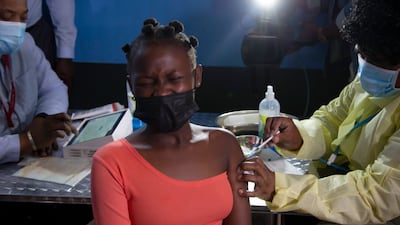
A young woman receives a Pfizer jab in Diepsloot Township near Johannesburg, South Africa. AP Photo -

A girl wearing a face mask rides on a merry-go-round at the Christmas market in Frankfurt, Germany. AP Photo -

People travel on a London underground tube train on the Jubilee Line, in London, during the pandemic. AP Photo -

People wait for the tram in Vienna, Austria, amid the crisis. AP Photo -

A woman passes by an empty terrace in the Marrolles quarter in Brussels, Belgium. AP Photo -

A teacher gives online lessons via webcam at the temporarily closed elementary school in the town of Trebisov, eastern Slovakia. TASR via AP -

Hairdressers and clients wear masks in Amsterdam, Netherlands. AFP -

A man disinfects seats for tourists at a beach in Kuta, Bali, Indonesia. EPA -
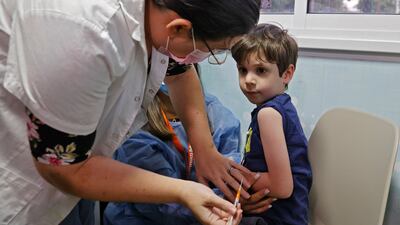
Israeli boy Itamar, 5, receives a dose of the Pfizer/BioNTech Covid-19 vaccine at the Meuhedet Healthcare Services Organisation in Tel Aviv. AFP -

A patient suffering from Covid-19 is admitted in the intensive care unit of the Basaksehir Cam and Sakura City Hospital in Istanbul, Turkey. Reuters -
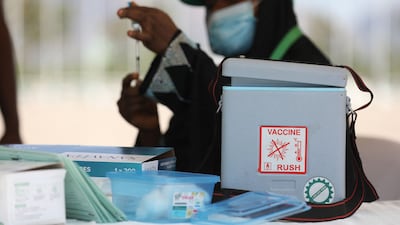
A health worker prepares to administer the AstraZeneca jab in Abuja, Nigeria. AFP


In total, 191,360 women aged 15-49 years with known pregnancy status completed the first-dose survey and 94,937 completed the second-dose survey.
Researchers defined a “significant health event” as a new or worse health event that was enough to cause the participant to miss school or work, require medical consultation and/or prevent daily activities.
A “serious health event” was defined as any event resulting in an emergency department visit and/or admission to hospital.
The researchers found that 4 per cent of mRNA-vaccinated pregnant women reported a significant health event within seven days after dose one of an mRNA vaccine, and 7.3 per cent after dose two.
The most common significant health events after dose two in pregnant women were a general feeling of being unwell, headache or migraine and respiratory tract infection.
In comparison, 3.2 per cent of pregnant unvaccinated participants reported similar events in the seven days before survey completion.
In the vaccinated non-pregnant control group, 6.3 per cent of participants reported a significant health event in the week after dose one and 11.3 per cent after dose two.
Inside a Covid-19 ward at King's College Hospital in London — video
Serious health events were rare in all groups — fewer than 1 per cent — and occurred at similar rates in vaccinated pregnant people, vaccinated non-pregnant people and unvaccinated participants after dose one and dose two.
Miscarriage and stillbirth were the most frequently reported adverse pregnancy outcomes, with no significant difference between the rates in vaccinated and unvaccinated women.
From the unvaccinated pregnant women group, 2.1 per cent and 1.5 per cent of vaccinated pregnant women experienced a miscarriage or stillbirth within seven days after dose one of any mRNA vaccine.
“The lower rate of significant health events amongst vaccinated pregnant people, compared with vaccinated non-pregnant individuals, is unexpected and requires more research,” said Dr Julie Bettinger, also from the British Columbia Children’s Hospital Research Institute and senior author on the paper.
“Further studies of non-Covid-19 mRNA vaccines are required to identify if the reduced side effects observed in pregnant people in this study is a feature of the mRNA vaccine platform or of these specific vaccines.”
The authors caution that most participants who reported ethnicity in this study were white and the data may therefore not be fully generalisable to other populations.
In addition, the study focused on health events occurring within the first seven days following vaccination and so cannot conclude anything about longer-term reactions. However, longer-term follow-up of this cohort is ongoing.
A further limitation of this study is that data are based on self-reports from study participants, without verification by medical records.
World leaders with Covid-19 — in pictures
-

US President Joe Biden tested positive for Covid-19 in July 2022. Reuters -

Former US president Donald Trump gives the thumbs-up after leaving the Walter Reed Medical Centre in Bethesda, Maryland, where he was treated for Covid-19 in October 2020. AFP -

Mr Trump removes his mask after returning to the White House from hospital in October 2020. AFP -

Algerian President Abdelmadjid Tebboune spent a month in Germany in January 2021, where he had surgery after developing complications linked to Covid-19. AFP -

Britain's Queen Elizabeth II had Covid-19 in February 2022, months before her death. AFP -

Britain's Prime Minister Boris Johnson caught Covid-19 in March 2020. AFP -

Canadian Prime Minister Justin Trudeau tested positive for Covid-19 a second time in July 2022, six months after he first contracted the virus. Reuters -
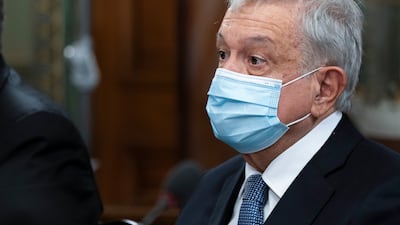
Mexican President Andres Manuel Lopez Obrador tested positive for Covid-19 in January 2022, after having first contracted the coronavirus in early 2021. AP -

Brazil's President Jair Bolsonaro tested positive for Covid-19 in July 2020. Reuters -

Departing Italian Prime Minister Mario Draghi contracted the virus that causes Covid-19 in April 2022. EPA


“These findings are consistent with and add to the growing body of evidence that Covid-19 mRNA vaccines are safe during pregnancy,” said Dr Sascha Ellington and Dr Christine Olson from the Centres for Disease Control and Prevention in the US, who were not involved in the project.
“Covid-19 vaccination among pregnant people continues to be lower than among non-pregnant females of reproductive age.”
They went on to note that given the risks of significant illness and adverse pregnancy outcomes, it is imperative that medical professionals continue to collect and disseminate data on the safety and effectiveness of Covid-19 vaccination in pregnancy.
It was also noted that it is important to encourage healthcare providers to promote vaccination during all trimesters of pregnancy.

