


Dubai has topped the list of cities with the highest spending by international visitors this year, pulling ahead of Doha and London in the top three places, the World Travel and Tourism Council (WTTC) said.
The Gulf tourism and finance hub has raked in $29.4 billion in international visitor spending so far this year, overtaking Doha where tourists spent $16.8 billion and London with $16.1 billion, WTTC said in its latest Cities Economic Impact report.
The cities that have recovered best, compared to pre-pandemic levels of 2019 in terms of international visitor spending, are Doha with a 21 per cent rise in tourist spend, Orlando, Florida, with a 19 per cent increase and Antalya in Turkey with 15 per cent.
"It was in 2022 that cities began their true recovery, as travel restrictions were lifted and demand for international travel returned," said Julia Simpson, president and chief executive of the WTTC.
"As tourism recovers, overcrowding in some destinations is a risk. It is, therefore, important for cities to have the right policies in place to address it. Such policies ought to be enacted in advance before the problem comes to fruition."
The report, which was released at the WTTC global summit in Riyadh this week, analysed 82 international city destinations and found that their tourism sectors' recovery was well under way after the Covid-19 pandemic that paralysed travel for nearly three years.
According to the report, 10 of the 82 cities analysed are projected to exceed pre-pandemic levels in terms of direct travel and tourism gross domestic product contribution to their economies this year.
Doha is forecast for the largest increase from 2019, in terms of travel and tourism sector's contribution to the city’s GDP, with an expected increase of 21 per cent.
In Europe, Warsaw is expected to record a significant 14 per cent increase, while in the US, Orlando is projected to post a 10 per cent increase over the same period.
The cities forecast to record the largest direct travel and tourism contribution to GDP this year are Paris with $36 billion, Beijing with $33 billion and Orlando with $31 billion, the report showed.
The travel and tourism sector will directly generate up to 8 per cent of all jobs by 2032 in the cities analysed, up from 6.6 per cent in 2019 and a low of 5.1 per cent in 2020, underscoring the importance of city tourism in driving economic growth, the WTTC said.
This year, direct jobs in travel and tourism are expected to return to 2019 levels in 11 cities including Rio de Janeiro with 18 per cent growth, followed by Johannesburg and Chicago with 13 per cent growth each.
The travel and tourism industry will generate 126 million jobs globally over the next decade, becoming a critical driver of economic growth with its contribution to GDP growing faster than other sectors, according to the WTTC.
-
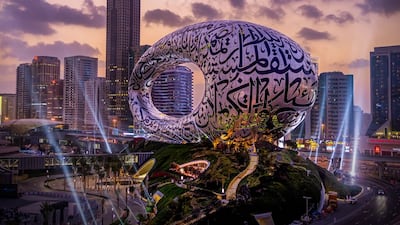
The Museum of the Future, with its remarkable architecture, has quickly become a highlight for visitors to Dubai. Photo: DTCM -
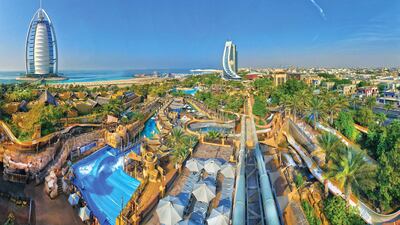
The Wild Wadi Waterpark in Jumeirah is one of the attractions that make Dubai a family-friendly destination. Photo: Wild Wadi -

The shops, cafes, bars and restaurants along Jumeirah Beach Residence in Dubai are popular among tourists. Photo: Reuters -
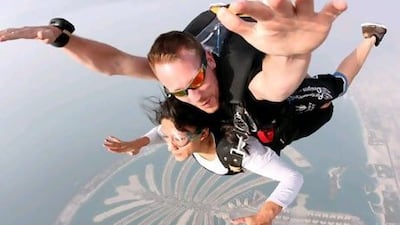
A jump at Skydive Dubai has become a must-do for daredevil visitors. Photo: Skydive Dubai -
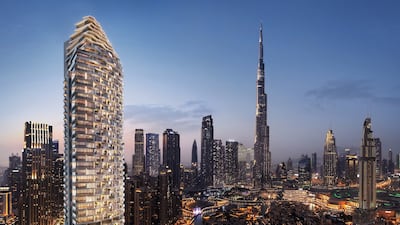
Admirers will say that the Burj Khalifa, the tallest tower in the world at about 830 metres, is Dubai's most famous tourist attraction. Photo: Dar Al Arkan -
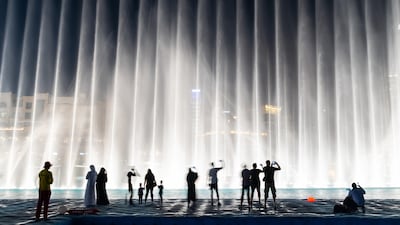
Visitors can enjoy an almost immersive experience of water and light at the Dubai Fountain. Photo: Alamy -

A visit to Dubai often involves a trip to Al Fahidi Fort, with its dhow installation to celebrate the Gulf's maritime history. Photo: Alamy -
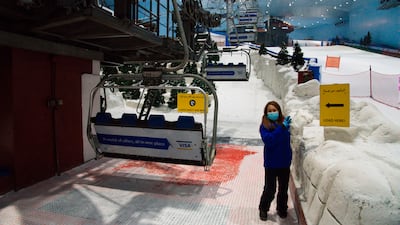
The ski lift at Ski Dubai inside the Mall of the Emirates. With its 22,500 square metres of skiiing, the centre is arguably one of the Gulf region's most eye-catching and unexpected attractions. Photo: AP -

Bluewaters Island, where the Ain Dubai wheel is located. Photo: Reuters -
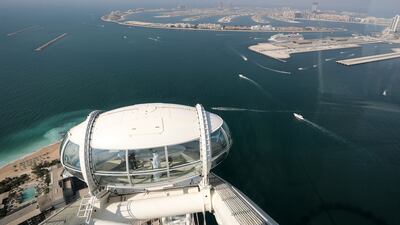
One of the pods on the Ain Dubai that offer visitors sweeping views of the city and Arabian Gulf waters. Chris Whiteoak / The National -
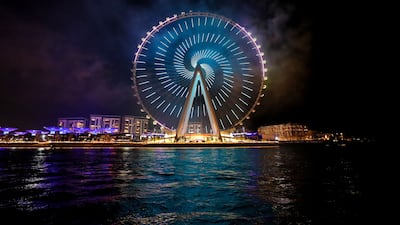
The Ain Dubai lights up. Chris Whiteoak / The National -

The Lost Chambers Aquarium at Atlantis, The Palm. Photo: Atlantis, The Palm


From this year to next, the strongest annual average growth in direct travel and tourism GDP is expected to be concentrated in the Asia-Pacific with Hong Kong, Bangkok and Jakarta being the top performers, the report suggested.
The Saudi Arabian cities of Riyadh and Jeddah are also expected to register strong growth, according to the report.
"For millions of tourists around the world, major cities remain iconic global destinations. There’s still a strong appetite to experience the history, culture and energy that cities offer travellers," Ms Simpson said.
“This year cities are recovering around the world, and we forecast that cities will continue to grow and thrive over the next decade."

