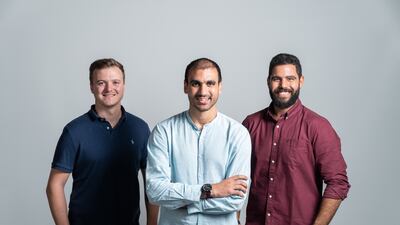
(From left) Joan Manuel, Mohmmed El Sonbaty and Abdelrahman Ayman, co-founders of Educatly. Photo: Educatly

Generation Start-up: How Educatly is creating the LinkedIn of the education sector


Sarmad Khan
  • English
  • Arabic

Mohmmed El Sonbaty is a risk-taker who tasted success and failure at an early age. He succeeded in running a successful outdoor advertising business in bustling Cairo when he was 19 and later launched a small tourism venture on the Red Sea coast of Egypt.

However, he did not succeed in lifting his fashion business, selling Pink Floyd-branded merchandise, off the ground.

Every venture was an experience for young Mr Sonbaty, shaping his life and maturing him as an entrepreneur along the way. However, none of those experiences was as transformative as his quest for higher education after he graduated from Egypt's Ain Shams University as an electrical engineer in 2013.

Despite having the money saved up from his entrepreneurial pursuits, the struggles he faced, the procedural hiccups he had to go through, and the sheer information overload he encountered while searching for appropriate courses and universities online, was overwhelming, he says.

After sifting through hundreds of universities, Mr Sonbaty eventually picked Italy’s Politecnico di Milano for his master's degree in engineering management.

It was there that he realised something was needed to ease the pain and anxiety students faced when making one of the biggest decisions of their lives, and the idea of launching Educatly was born.

“I witnessed myself the kind of challenges that you have to face as a student, to answer the most important questions: what to study and where to study,” Mr Sonbaty says.

“I really wished that I could make that easier so I started working on the first version of it [Educatly] … which is the company that we have right now.”

  • Mohmmed El Sonbaty, founder and chief executive of Educatly. All photos: Educatly
    Mohmmed El Sonbaty, founder and chief executive of Educatly. All photos: Educatly
  • In5 tech headquarters
    In5 tech headquarters
  • The founding team
    The founding team
  • Mohmmed El Sonbaty, founder and chief executive
    Mohmmed El Sonbaty, founder and chief executive
  • The Educatly team at the World Youth Forum
    The Educatly team at the World Youth Forum

Today, Educatly is disrupting the highly-fragmented higher education ecosystem. The education technology platform allows students to make informed decisions about their future, and at the same time brings the cost down for educational institutions that spend a considerable amount on marketing to attract students.

The AI-driven digital platform aims to empower students, schools and recruitment partners, helping them interact in the digital world, cutting costs and hassle for all involved.

The launch of Educatly in 2020, however, was not easy, and Mr Sonbaty says he “did the hard yards” before he could lift the company off the ground.

After completing his education, Mr Sonbaty joined LinkedIn, where he nurtured the idea and saved money to fund the venture.

“So actually the company [Educatly] was a side project inside LinkedIn,” he says. “And then afterwards when the time was right, when we almost secured an investment round, it kicked off from there.”

It was at LinkedIn that Mr Sonbaty met Educatly co-founder Joan Manuel, and they were then joined by Abdelrahman Ayman as the company was launched in Ireland before their eventual move to Dubai.

“We started the company initially in Ireland mainly because our first investor was the government of Ireland’s Enterprise Ireland,” he says.

“Then because our operation focuses on supporting students in the Mena region, we set up an office in Dubai to tackle this whole region, and then in Egypt from an operational point of view.”

There are about 235 million students enrolled in universities around the world, according to the UN Educational, Scientific and Cultural Organisation (Unesco). Yet despite the boom in demand, the overall enrolment ratio is 40 per cent, with large differences between countries and regions, the UN body data says.

The growth in the number of students seeking higher education is increasing exponentially in the Mena region and data suggests that nine out of 10 students search online for higher education options, and are overwhelmed by the sheer scale of what is on offer, Mr Sonbaty says.

“If you think only about the first top 100 universities, they have over 100,000 programmes and that leaves you with a lot of information that is very hard for a young kid,” he says.

Educatly aims to transform the entire journey by digitally mapping and integrating the world education ecosystem on to a single platform.

“So in very simple terms, we're trying to build for the education [ecosystem] what LinkedIn is for jobs. Think of the impact of LinkedIn on the jobs market and this is exactly what we want to do on the educational side,” he says.

Educatly collates data from different educational institutions, including information on their programmes in different disciplines and admission requirements. It presents that information in a “more structured format” and has in-house counsellors to offer advice and help students make faster and more informed decisions.

“We have 500 university partners” and that pool of education institutions across regions is expanding fast, he says.

Educatly's university partners are spread across English-speaking countries. It works mostly with institutes in the US, UK, Canada, Australia and most countries in Europe.

In the future, it plans to expand its partnership pool and include community colleges, high schools and even institutions that offer only online degrees.

“We started … I think with a bunch of like maybe five universities that I reached out to personally … and then we grew this in the first year to 100-plus universities,” Mr Sonbaty says.

“We were estimating that by end of next year, we will be at the benchmark of 1,500 institutions.”

The number of the students that have used Educatly has also grown exponentially, from 38,000 at development stage to about a million last year.

COMPANY%20PROFILE
%3Cp%3E%3Cstrong%3ECompany%3A%20%3C%2Fstrong%3EEducatly%3Cbr%3E%3Cstrong%3EStarted%3A%20%3C%2Fstrong%3E2020%3Cbr%3E%3Cstrong%3EBased%3A%20%3C%2Fstrong%3EUAE%3Cbr%3E%3Cstrong%3EFounders%3A%20%3C%2Fstrong%3EMohmmed%20El%20Sonbaty%2C%20Joan%20Manuel%20and%20Abdelrahman%20Ayman%3Cbr%3E%3Cstrong%3EIndustry%3A%20%3C%2Fstrong%3EEducation%20technology%3Cbr%3E%3Cstrong%3EFunding%20size%3A%20%3C%2Fstrong%3E%242%20million%3Cbr%3E%3Cstrong%3EInvestors%3A%20%3C%2Fstrong%3EEnterprise%20Ireland%2C%20Egypt%20venture%2C%20Plus%20VC%2C%20HBAN%2C%20Falak%20Startups%3C%2Fp%3E%0A

Most users are from the Mena region, but “we have people that use the platform across over 120 countries”, he says.

In the past year and a half, the company has placed more than 5,000 students with its university partners and it plans to hit 15,000 placements by the end of this year.

The company does not charge students to use its database and generates revenue from educational institutions.

“Universities pay us according to every student we enrol in their programmes,” he says, adding that the percentage the company receives varies, depending on the different universities.

Based out of in5 Tech, a business incubator set up by Tecom Group, Educatly last year raised $1 million. It is edging towards the close of its latest funding round, and plans to use the funds raised to further develop its technology.

The higher global education system is one of the sectors that has been least disrupted from a digital perspective. However, Covid-19 was the watershed moment and education institutions are now thinking about how they can move faster in a digital environment, Mr Sonbaty says.

“That's bringing a lot of opportunity,” he says.

The company that started with just its co-founders has now grown to 35 employees. Mr Sonbaty expects to hire more talent this year and increase the headcount to more than 100.

Q&A with Mohmmed Seif, chief executive and co-founder of Educatly

Who is your role model and what is your mantra of success?

My ultimate role model in life is Prophet Mohammed, someone I look up to every day to achieve a balanced life. I believe that success is an easy formula that combines belief and actions.

Are you a risk-taker or a cautious entrepreneur?

I am a big risk-taker! Since the early days, I have always been associated with high-risk activities. When I was 19 years old, I launched my first business and risk-taking continued when I quit my high-paying job at LinkedIn. I believe that the higher the risk, the bigger the reward. As we evolve and mature, we shape our risk strategies to minimise negative outcomes. Leaving a stable job to launch my start-up at in5 in Dubai is an example.

What successful start-ups do you wish you had started and why?

My mission in life is to help advance people’s access to knowledge. This is something I realised during my entrepreneurial journey over the past 10 years, and since then I have been funnelling all my energy into it. Educatly is a manifestation of that mission, and I couldn’t imagine doing anything other than this.

Where do you see the company in five years from now?

I envision building a global education network where we digitally map and integrate the world's education ecosystems. While LinkedIn built a global professional network and brands like Facebook, TikTok and others built global social networks, we aim to build a global educational network. We want to bring every school in the world and every programme or scholarship they offer on one platform. We are also creating a database of every student, alumni and professor, using the power of technology to connect them.

In the coming five years, we will expand the reach of our platform and the network we are building. This will include geographical expansion, investment in technology and strengthening our network. We are fortunate that in5 links us to some of Dubai’s biggest tech and education communities and having such a framework to turn to makes our journey less daunting.

What mistakes would you like to correct?

The biggest learning I received through mistakes is not to settle with average or dispassionate people while building something remarkable. Great ideas require great people, and it’s important to realise this at the earliest.

What new skills have you learnt while launching the company?

My journey has been a rollercoaster of self-development. Some of the most important skills I learnt during this journey are leadership, consistency and patience. They are fundamental skills for any entrepreneur.

Vision is something that is also needed as without it you can’t go beyond what you see in the short term.

Company Profile

Company: Educatly

Started: 2020

Based: UAE

Founders: Mohmmed El Sonbaty, Joan Manuel and Abdelrahman Ayman

Industry: Education technology

Funding size: $2 million

Investors: Enterprise Ireland, Egypt venture, Plus VC, HBAN, Falak Startups

Mercer, the investment consulting arm of US services company Marsh & McLennan, expects its wealth division to at least double its assets under management (AUM) in the Middle East as wealth in the region continues to grow despite economic headwinds, a company official said.

Mercer Wealth, which globally has $160 billion in AUM, plans to boost its AUM in the region to $2-$3bn in the next 2-3 years from the present $1bn, said Yasir AbuShaban, a Dubai-based principal with Mercer Wealth.

Within the next two to three years, we are looking at reaching $2 to $3 billion as a conservative estimate and we do see an opportunity to do so,” said Mr AbuShaban.

Mercer does not directly make investments, but allocates clients’ money they have discretion to, to professional asset managers. They also provide advice to clients.

“We have buying power. We can negotiate on their (client’s) behalf with asset managers to provide them lower fees than they otherwise would have to get on their own,” he added.

Mercer Wealth’s clients include sovereign wealth funds, family offices, and insurance companies among others.

From its office in Dubai, Mercer also looks after Africa, India and Turkey, where they also see opportunity for growth.

Wealth creation in Middle East and Africa (MEA) grew 8.5 per cent to $8.1 trillion last year from $7.5tn in 2015, higher than last year’s global average of 6 per cent and the second-highest growth in a region after Asia-Pacific which grew 9.9 per cent, according to consultancy Boston Consulting Group (BCG). In the region, where wealth grew just 1.9 per cent in 2015 compared with 2014, a pickup in oil prices has helped in wealth generation.

BCG is forecasting MEA wealth will rise to $12tn by 2021, growing at an annual average of 8 per cent.

Drivers of wealth generation in the region will be split evenly between new wealth creation and growth of performance of existing assets, according to BCG.

Another general trend in the region is clients’ looking for a comprehensive approach to investing, according to Mr AbuShaban.

“Institutional investors or some of the families are seeing a slowdown in the available capital they have to invest and in that sense they are looking at optimizing the way they manage their portfolios and making sure they are not investing haphazardly and different parts of their investment are working together,” said Mr AbuShaban.

Some clients also have a higher appetite for risk, given the low interest-rate environment that does not provide enough yield for some institutional investors. These clients are keen to invest in illiquid assets, such as private equity and infrastructure.

“What we have seen is a desire for higher returns in what has been a low-return environment specifically in various fixed income or bonds,” he said.

“In this environment, we have seen a de facto increase in the risk that clients are taking in things like illiquid investments, private equity investments, infrastructure and private debt, those kind of investments were higher illiquidity results in incrementally higher returns.”

The Abu Dhabi Investment Authority, one of the largest sovereign wealth funds, said in its 2016 report that has gradually increased its exposure in direct private equity and private credit transactions, mainly in Asian markets and especially in China and India. The authority’s private equity department focused on structured equities owing to “their defensive characteristics.”

ETFs explained

Exhchange traded funds are bought and sold like shares, but operate as index-tracking funds, passively following their chosen indices, such as the S&P 500, FTSE 100 and the FTSE All World, plus a vast range of smaller exchanges and commodities, such as gold, silver, copper sugar, coffee and oil.

ETFs have zero upfront fees and annual charges as low as 0.07 per cent a year, which means you get to keep more of your returns, as actively managed funds can charge as much as 1.5 per cent a year.

There are thousands to choose from, with the five biggest providers BlackRock’s iShares range, Vanguard, State Street Global Advisors SPDR ETFs, Deutsche Bank AWM X-trackers and Invesco PowerShares.

Ten tax points to be aware of in 2026

1. Domestic VAT refund amendments: request your refund within five years

If a business does not apply for the refund on time, they lose their credit.

2. E-invoicing in the UAE

Businesses should continue preparing for the implementation of e-invoicing in the UAE, with 2026 a preparation and transition period ahead of phased mandatory adoption. 

3. More tax audits

Tax authorities are increasingly using data already available across multiple filings to identify audit risks. 

4. More beneficial VAT and excise tax penalty regime

Tax disputes are expected to become more frequent and more structured, with clearer administrative objection and appeal processes. The UAE has adopted a new penalty regime for VAT and excise disputes, which now mirrors the penalty regime for corporate tax.

5. Greater emphasis on statutory audit

There is a greater need for the accuracy of financial statements. The International Financial Reporting Standards standards need to be strictly adhered to and, as a result, the quality of the audits will need to increase.

6. Further transfer pricing enforcement

Transfer pricing enforcement, which refers to the practice of establishing prices for internal transactions between related entities, is expected to broaden in scope. The UAE will shortly open the possibility to negotiate advance pricing agreements, or essentially rulings for transfer pricing purposes. 

7. Limited time periods for audits

Recent amendments also introduce a default five-year limitation period for tax audits and assessments, subject to specific statutory exceptions. While the standard audit and assessment period is five years, this may be extended to up to 15 years in cases involving fraud or tax evasion. 

8. Pillar 2 implementation 

Many multinational groups will begin to feel the practical effect of the Domestic Minimum Top-Up Tax (DMTT), the UAE's implementation of the OECD’s global minimum tax under Pillar 2. While the rules apply for financial years starting on or after January 1, 2025, it is 2026 that marks the transition to an operational phase.

9. Reduced compliance obligations for imported goods and services

Businesses that apply the reverse-charge mechanism for VAT purposes in the UAE may benefit from reduced compliance obligations. 

10. Substance and CbC reporting focus

Tax authorities are expected to continue strengthening the enforcement of economic substance and Country-by-Country (CbC) reporting frameworks. In the UAE, these regimes are increasingly being used as risk-assessment tools, providing tax authorities with a comprehensive view of multinational groups’ global footprints and enabling them to assess whether profits are aligned with real economic activity. 

Contributed by Thomas Vanhee and Hend Rashwan, Aurifer

The Settlers

Director: Louis Theroux

Starring: Daniella Weiss, Ari Abramowitz

Rating: 5/5

Bundesliga fixtures

Saturday, May 16 (kick-offs UAE time)

Borussia Dortmund v Schalke (4.30pm) 

RB Leipzig v Freiburg (4.30pm) 

Hoffenheim v Hertha Berlin (4.30pm) 

Fortuna Dusseldorf v Paderborn  (4.30pm) 

Augsburg v Wolfsburg (4.30pm) 

Eintracht Frankfurt v Borussia Monchengladbach (7.30pm)

Sunday, May 17

Cologne v Mainz (4.30pm),

Union Berlin v Bayern Munich (7pm)

Monday, May 18

Werder Bremen v Bayer Leverkusen (9.30pm)

Arabian Gulf Cup FINAL

Al Nasr 2

(Negredo 1, Tozo 50)

Shabab Al Ahli 1

(Jaber 13)

Winners

Ballon d’Or (Men’s)
Ousmane Dembélé (Paris Saint-Germain / France)

Ballon d’Or Féminin (Women’s)
Aitana Bonmatí (Barcelona / Spain)

Kopa Trophy (Best player under 21 – Men’s)
Lamine Yamal (Barcelona / Spain)

Best Young Women’s Player
Vicky López (Barcelona / Spain)

Yashin Trophy (Best Goalkeeper – Men’s)
Gianluigi Donnarumma (Paris Saint-Germain and Manchester City / Italy)

Best Women’s Goalkeeper
Hannah Hampton (England / Aston Villa and Chelsea)

Men’s Coach of the Year
Luis Enrique (Paris Saint-Germain)

Women’s Coach of the Year
Sarina Wiegman (England)

Pathaan
%3Cp%3E%3Cstrong%3EDirector%3A%3C%2Fstrong%3E%20Siddharth%20Anand%C2%A0%3C%2Fp%3E%0A%3Cp%3E%3Cstrong%3EStars%3A%3C%2Fstrong%3E%20Shah%20Rukh%20Khan%2C%20Deepika%20Padukone%2C%20John%20Abraham%C2%A0%3C%2Fp%3E%0A%3Cp%3E%3Cstrong%3ERating%3A%3C%2Fstrong%3E%203%2F5%3C%2Fp%3E%0A
COMPANY%20PROFILE
%3Cp%3E%3Cstrong%3ECompany%3A%20%3C%2Fstrong%3EEducatly%3Cbr%3E%3Cstrong%3EStarted%3A%20%3C%2Fstrong%3E2020%3Cbr%3E%3Cstrong%3EBased%3A%20%3C%2Fstrong%3EUAE%3Cbr%3E%3Cstrong%3EFounders%3A%20%3C%2Fstrong%3EMohmmed%20El%20Sonbaty%2C%20Joan%20Manuel%20and%20Abdelrahman%20Ayman%3Cbr%3E%3Cstrong%3EIndustry%3A%20%3C%2Fstrong%3EEducation%20technology%3Cbr%3E%3Cstrong%3EFunding%20size%3A%20%3C%2Fstrong%3E%242%20million%3Cbr%3E%3Cstrong%3EInvestors%3A%20%3C%2Fstrong%3EEnterprise%20Ireland%2C%20Egypt%20venture%2C%20Plus%20VC%2C%20HBAN%2C%20Falak%20Startups%3C%2Fp%3E%0A
Updated: January 09, 2023, 4:30 AM