

For the asset-wealthy, retirement offers an immense opportunity for freedom. Recent research from insurer Zurich revealed that 30 per cent of Middle East respondents wanted to travel the world and 22 per cent pursue a passion in retirement.
However, we live in volatile times. High inflation and rising costs persist as does increased geopolitical instability. Climate change and disruptive technology such as Generative AI will have unpredictable effects on the world’s businesses, economies and asset portfolios.
It is, therefore, imperative to manage wealth very carefully now so that it is preserved for your retirement and futureproofed in an era of uncertainty.
Secure your future
Given increased longevity, retirement can often last 30 years or more. It takes careful planning to maintain your wealth and spending power for such an extended period.
Crucial to this is drawing the correct amount of income from your capital. The ‘4 per cent rule’ has been a widely-used guideline since financial adviser Bill Bengen published his findings on the subject 30 years ago.
The rule says that retirees can withdraw 4 per cent of their portfolio in the first year of retirement and then adjust that amount annually for inflation over at least 30 years.
Retired investors may seek to draw income from dividends alone and leave their capital intact.
However, another option is to take a ‘total return’ approach, where you combine dividend income with capital gains.
Because of the greater efficiency of many tax regimes relating to capital gains, a total return approach is becoming popular as a way of maximising income in retirement.
It is also important to ensure the wealth that generates your income delivers a positive return in real terms after inflation, tax and fees.
High-net-worth individuals (HNWIs) have access to a host of investments that other people cannot access due to high minimum investments.
These include real assets such as infrastructure and real estate and areas such as private equity and private credit, which have historically delivered above-average returns.
Reduce investment risk
Traditionally, financial theory advocated that you should reduce investment risk as you approach retirement.
This has often been equated with putting money into bonds, which are deemed less volatile but have lower returns.
However, with investors living longer, investment horizons have grown, opening up the option to include some high-growth stocks within your wealth portfolio that offer exciting risk-reward possibilities.
The Middle East, particularly, is a region rich in high-growth investment opportunities that wealthy retirees can explore.
While diversification is well known at the asset class level, globalising assets to reduce the effect of geopolitical risk is critical.
Most people living in a specific region may be heavily exposed to that region through their homes and assets, so it is important to spread your wealth and look for safe-haven investments in other geographical areas such as US Treasury bills or European property.
However, it is worth noting that a trend towards increased tax for non-domiciled owners of property in some countries is making it harder to benefit from such investments.
While the Middle East is known as a low-tax region, those returning to their home countries to retire should seek guidance from qualified and licensed tax advisers who can optimise taxation by using multi-jurisdictional tax planning, leveraging allowances and harnessing dual taxation systems, residency and domicile rules.
Health care costs are also a vital consideration given these can spiral with age. Some Middle East countries have sophisticated health care systems but these can be expensive.
Investing in a comprehensive health insurance plan or health savings account can cover future medical expenses so they do not eat into your wealth.
When thinking about the next generation, estate planning is crucial. It ensures the smooth transfer of assets to beneficiaries.
This may involve creating a will, establishing trusts, succession planning within a family business and considering inheritance laws in the country of residence or domicile.
Ensuring the orderly inheritance of assets is vital to preserve wealth beyond your lifetime.
Wealth preservation in retirement requires consideration of the complex interplay between personal goals, external factors and global economic uncertainty.
A private banker with the right technical expertise as well as regional knowledge can help you preserve your wealth for the long term, monitoring your investments and adjusting your portfolio in response to market volatility.
This will ensure you live your best retirement, achieve your goals and pass your wealth on to the beneficiaries that matter most to you.
Samir Atitallah is chief executive of Mirabaud Middle East
-

Tokyo ranked as the best global city to retire in a new retirement index compiled by Veolar. Ryo Yoshitake/ Unsplash -

Wellington, New Zealand, was ranked as the second best global city to retire. Leyvaine Davids/ Unsplash -
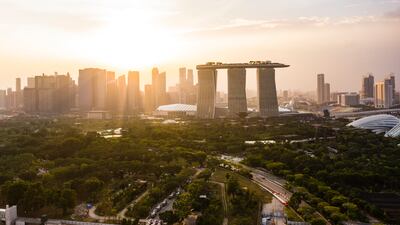
Singapore ranked third and scored well in the categories of legacy management and quality of public transport. Kirill Petropavlov/ Unsplash -

Paris is the fourth best city to retire and scored well in the liveability sub-index, driven by its museums and restaurants. Leonard Cotte/ Unsplash -

Vienna ranked fifth globally for offering the best retirement living standards for senior people. Jacek Dylag/ Unsplash -
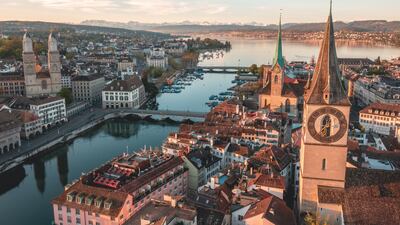
Zurich, in sixth position, ranked high for safety and quality of health care. Henrique Ferreira/ Unsplash -
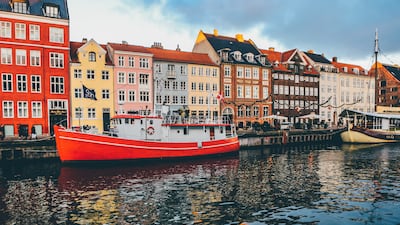
Copenhagen was ranked seventh, driven by its safety, mobility and accessibility to health care. Nick Karvounis/ Unsplash -
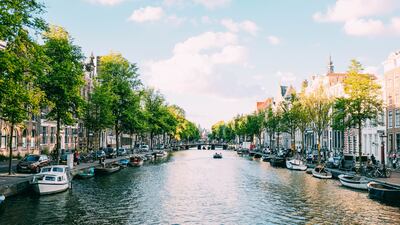
Amsterdam is the eighth best city to retire globally, Veolar said. Adrien Olichon/ Unsplash -

Osaka in Japan placed ninth, earning high scores in the quality and accessibility of health care and health longevity sub-indices. Ramon Kagie/ Unsplash -

Lausanne in Switzerland is the 10th best city globally in terms of retirement living standards, the index showed. Mark de Jong/ Unsplash



