

A year of negative press and scandalous headlines has put the cryptocurrency market on the radar of many governments across the globe.
The spectacular FTX collapse, the insider trading scandal at Coinbase and the $40bn collapse of TerraUSD and sister token Luna, among others, made 2022 quite a year for the crypto market.
These events, and the fact that cryptocurrencies and the underlying blockchain technology are becoming a pervasive force in the global economy, make a compelling case for greater regulation of the market.
A World Economic Forum report shows the increasing acceptance and decentralised nature of digital currencies pose unprecedented challenges for capital markets, investors, financial regulators and tax authorities globally.
Concerned about the elevated risk investors face, authorities have been stepping up cryptocurrency regulation. Watchers warn that more stringent crypto regulation may be just around the corner.
For crypto investors, it has become imperative to understand what regulation may look like and how to navigate a more regulated cryptosphere.
But first, let’s dive into why the market needs regulation.
Does crypto need regulation?
Crypto experts insist digital is the future of finance. Hence, the industry must be regulated in the same way as the traditional financial system.
“Within crypto, regulation can play a critical role to safeguard customer assets, protect investor interests and significantly limit cases of fraud,” says Joseph Dallago, co-founder and chief executive of Rain Financial, which operates the Rain cryptocurrency exchange that is licensed by the Central Bank of Bahrain.
The decisions of governments to regulate crypto must be championed, says Nigel Green, chief executive and founder of deVere Group.
Digital currencies should be held to the same standards as the rest of the financial system, he adds.
Crypto has come of age and there is no greater proof of its mainstreaming than “the news that digital currencies are being brought into the regulatory tent in one of the world’s largest economies and most highly-regulated markets”, says Mr Green, citing the UK government’s recent decision to regulate the industry.
Since cryptocurrencies are set to have a bigger impact on the global financial system, “a strong regulatory framework will help protect investors, tackle criminality and reduce the potential possibility of disrupting financial stability”, he says.
Greater transparency and regulation of crypto will also “help attract the businesses of tomorrow — and the jobs they create — as effective regulation gives them the confidence they need to think and invest long-term”, Mr Green adds.
In March last year, Dubai adopted the Dubai Virtual Asset Regulation Law, which aims to create an advanced legal framework to protect investors and provide international standards for virtual asset industry governance that promotes responsible business growth in the emirate.
It also established the Virtual Asset Regulatory Authority (Vara) as an independent body to regulate the sector throughout the emirate, including special development zones and free zones, but excluding the Dubai International Financial Centre.
Last September, the Financial Services Regulatory Authority (FSRA), the regulator of Abu Dhabi's financial hub, the Abu Dhabi Global Market (ADGM), published guiding principles on its approach to virtual asset regulation and supervision to outline its expectations for the asset class and service providers in the sector.
The principles will complement ADGM’s regulatory framework for spot virtual asset activities, the financial regulator said at the time.
The face of crypto regulation
Investors are eager to know whether cryptocurrency should be regulated like securities or with new regulations specifically for digital currencies.
There is a pathway for cryptocurrency regulation through either central banks or capital market authorities, says Mr Dallago.
“This model can create a regulatory umbrella for use cases of crypto that go beyond securitisation of assets, investments or technological advances,” he says.
“We see great potential for synergies also between crypto asset regulations and capital market regulations.”
chief executive and founder, deVere Group
This model works in the GCC, specifically in Bahrain through the Central Bank of Bahrain and in the UAE's ADGM through the FSRA, Mr Dallago says.
Mr Green says new rules must be written and implemented for the crypto market, a relatively new asset class built on fast-changing technology.
“Older regulations, designed for other asset classes in the last century, are likely not adequate,” he says.
He also singles out meme coins, such as Dogecoin and Shiba Inu, for regulatory action.
“Regulation would also help crack down on useless meme tokens, which undermine the credibility of the crypto sector,” he says.
“More robust, enforceable regulation is the answer for crypto.”
He places particular emphasis on the importance of regulating crypto exchanges.
It is argued that if crypto transactions flowed through regulated exchanges, it would be much easier to thwart and prevent potential wrongdoing, such as money laundering, crypto hacks and tax evasion.

Regulation should first tackle concerns surrounding anti-money laundering and counter terrorist financing, says Mr Dallago.
Crypto analysts also emphasise the need for regulators to join hands with leading industry participants to ensure new rules don’t stifle innovation.
Navigating the crypto regulation
Regulation of crypto is a matter of when, not if. The sooner investors accept it, the better.
Many fraudulent activities in the crypto space last year could have been avoided if there was regulatory oversight of crypto asset platforms in unregulated markets, says Mr Dallago.
“Greater crypto regulation would not impede investment in this space, but rather encourage it as there are regulatory mechanisms to safeguard investor interests and protect their capital,” he adds.
After a year of crypto company collapses, accusations of top-level fraud and prison sentences for wrongdoing, there’s no denying that greater scrutiny would help protect investors, says Mr Green.
“Regulation could provide a potential long-term, sustainable economic boost to those countries which introduce it, as crypto is widely regarded as the future of finance,” he adds.
Crypto watchers, though, warn of increased market volatility as new rules are rolled out.
A shakeout of the market, as a result, would see many unproven coins with little utility fall to the ground.
Investors should also expect a large-scale industry consolidation when crypto regulation becomes a reality.
Therefore, crypto assets that have strong developer communities, security safeguards and infrastructure are the safest bets.
Is regulation bad for crypto prices?
Many investors mistakenly believe greater regulatory scrutiny is harmful for crypto prices.
Mr Dallago says growing regulation is a positive sign for crypto.
“As the industry grows, we are seeing more and more regulators jumping on the ship to regulate it,” he says.
“This means, beneath the rhetoric, governments recognise the value of this technology and the benefits it can unlock for their constituents,” he adds.
However, for regulation to be a positive force for the industry, it should focus on key risks without crimping customer access or adoption.
Growing regulatory oversight is the mark of a maturing industry.
“Regulation will further shore up the crypto sector and instil trust and confidence among investors,” says Mr Green.
Cryptocurrencies — in pictures
-
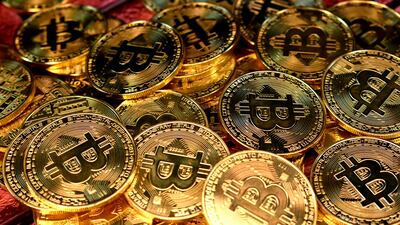
The crypto market, which includes currencies such as Bitcoin, pictured, has lost $2 trillion of its value in six months. Unsplash -
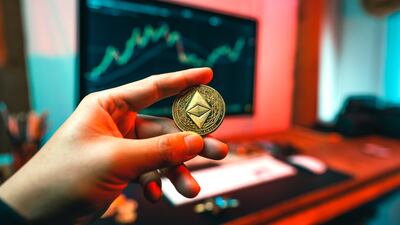
The price of Ethereum, the second largest cryptocurrency by market size, has fallen by 70 per cent this year. Investors and analysts are watching to see if it will dip below $1,000. Unsplash -
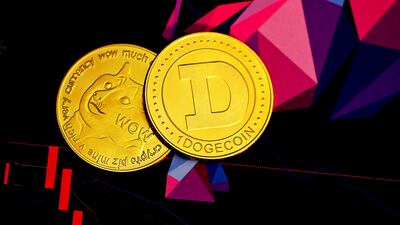
Dogecoin, supported by Elon Musk, is about 90 per cent down from May last year, yet it is outperforming Bitcoin and Ethereum in the current crash. Unsplash -
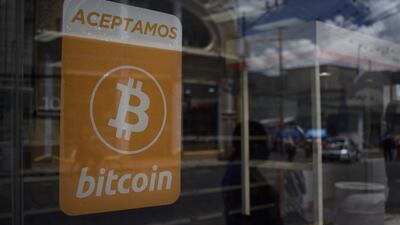
The government of El Salvador has invested $105 million in Bitcoin. President Nayib Bukele's embrace of the cryptocurrency as legal tender is being questioned as the market crashes. Getty -

Changpeng Zhao, founder of crypto exchange giant Binance, has compared the current market turmoil to the dotcom bubble of the early 2000s. Still, the company is aggressively pursuing licensing in international jurisdictions and introducing new products. Getty -
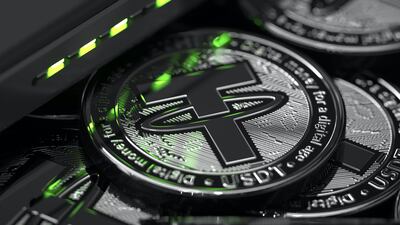
Tether is the biggest issuer of stablecoins, a type of cryptocurrency pegged to a traditionally stable asset like the US dollar. Most stablecoins are meant to maintain a constant price of $1 and are backed by real reserve funds, making it easy to convert crypto investments into cash. But Tether's financial statements show that may not be true, leaving the issuer and its investors vulnerable. Unsplash -

The recent crypto crash can in part be attributed to the collapse of TerraUSD, a stablecoin pegged to the US dollar through algorithms and linked to a "sister" cryptocurrency named Luna. When the price of Luna plummeted, TerraUSD also fell, creating a “death spiral” to practically zero for both coins. Unsplash -

On June 12 crypto lender Celsius Network said it had paused customer withdrawals, saying it needed “to stabilise liquidity and operations”. Investors are still waiting, with no signs that the current meltdown will let up. Getty


A regulated crypto industry will attract more institutional investors — including pension funds, mutual funds, investment banks, commercial trusts and hedge funds — as well as individual investors.
“This will have a beneficial impact on the price trajectory longer term,” says Mr Green.
Regulation is key to creating an environment for crypto that adheres to robust standards, safeguards customers’ interests and creates a platform for the private sector to grow.
“All of this will ultimately reflect upwards on price as adoption increases and use-cases for crypto materialise,” Mr Dallago adds.

