

Last week, the US Department of Treasury's Office of Foreign Assets Control (OFAC) imposed sanctions on Tornado Cash, a cryptocurrency mixing service that it says has links with North Korean hacking group Lazarus.
The move means that anyone who has come into contact — sometimes unintentionally — with Tornado’s sanctioned smart contracts faces serious consequences, including up to 30 years in federal prison.
In response to the ruling, Circle — the central issuer of the USDC stablecoin — froze 75,000 USDCs linked to Tornado Cash. This effectively locks any user of Tornado out of their money, regardless of whether they are accused of committing a crime.
This is an unprecedented situation in blockchain and cryptocurrency that has left many questioning what is happening in an industry that was originally founded to be a globally decentralised ecosystem, but where it now seems not even the most basic of human rights are being upheld.
Privacy is a legitimate use case
The privacy use-case for Tornado Cash in a blockchain-based system, in which any transaction we make is fully visible to anyone with our wallet address, is clear.
After the ruling, Ethereum co-founder Vitalik Buterin publicly outed himself as a user of Tornado Cash, which he claimed to have used to donate anonymously to Ukraine and hide his identity from the Russian government.
According to Chainalysis, only 11 per cent of funds transacted through Tornado were stolen, while only 18 per cent came from sanctioned entities (largely hit with sanctions after the transaction).
If this data proves correct, 71 per cent of Tornado Cash’s traffic comes from users who use the tool for privacy matters — a legitimate use-case protected by Article 12 of the Universal Declaration of Human Rights.
-

Changpeng Zhao, founder and chief executive of Binance, is the world’s richest crypto billionaire with a net worth of $65 billion. Bloomberg -

Sam Bankman-Fried, founder and chief executive of FTX cryptocurrency exchange, ranked as the second-wealthiest crypto billionaire with a personal fortune of $24bn. Bloomberg -
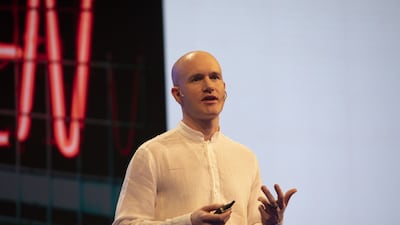
Brian Armstrong, co-founder of Coinbase, is the third-wealthiest crypto billionaire with a net worth of $6.6bn. Bloomberg -

Gary Wang, co-founder of FTX cryptocurrency exchange, ranked fourth with a net worth of $5.9bn. FTX -
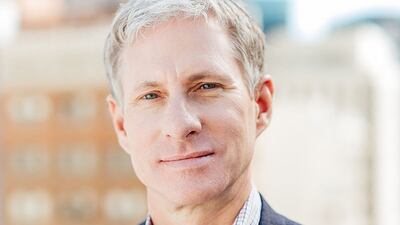
Chris Larsen, executive chairman of Ripple’s board of directors and former chief executive and co-founder of Ripple, rounded out the list of top five wealthiest crypto billionaires with a fortune of $4.3bn. Ripple -

Song Chi-hyung, founder of Upbit, the largest cryptocurrency exchange in South Korea, has a net worth of $3.7bn. Courtesy: Dunamu -

Tyler Winklevoss, chief executive and co-founder of Gemini Trust, left, and Cameron Winklevoss, president and co-founder of Gemini Trust, have a net worth of $4bn each. Bloomberg -

Barry Silbert, founder and chief executive of Digital Currency Group, has a net worth of $3.2bn. Bloomberg -

Jed McCaleb, founder and chief architect of the Stellar Development Foundation and co-founder of Ripple, has a net worth of $2.5bn. Courtesy: Stellar Development Foundation


The risks of centralised stablecoins
Most concerning is Circle’s part in this case, as it was not technically compelled to freeze those funds according to the language of the sanctions.
Neither was this the first time it froze USDCs in response to law enforcement actions. This highlights the inherent risks associated with centralised stablecoins.
The largest stablecoins by market capitalisation are issued by centralised entities Tether (USDT), Circle (USDC) and Binance (BUSD).
Together, they account for $169 billion of cryptocurrency’s $1 trillion market cap and, as it currently stands, Tether, Circle and Binance have the power to strip individuals of their digital property without due process.
Article 17 of the Universal Declaration of Human Rights states that “everyone has the right to own his property, either alone or in community with others”.
“No one shall be arbitrarily deprived of his property,” it says.
Reflecting upon these key tenets of human freedom, Circle’s recent action should serve as a wake-up call to the cryptocurrency industry.
Decentralised stablecoins protect the right to own property
Stablecoins are an important part of the inherently volatile cryptocurrency ecosystem. With their price remaining more or less fixed, they are used to generate income throughout the cryptocurrency ecosystem.
However, stablecoins do not need to be centralised. One of the oldest stablecoins — DAI — is decentralised. Governed by its community with a price peg dictated by a combination of fiat and crypto assets, DAI has held strong while many centralised projects that jumped on decentralised finance's (DeFi) success have crumbled.
DAI uses USDC as part of its asset mix. However, this is under review as a result of Circle’s decision to fall in line with US government sanctions.
Decentralised stablecoins have the ability to preserve and grow wealth in their own custody, without any risk of confiscation by a centralised entity. They are entirely the property of their owner — as any asset should be either in the “real” or cryptographic world.
More than this, though, decentralised stablecoins have the potential to innovate in ways that centralised, fiat-backed stablecoins do not.
As is the case with DAI, they can choose how and where they derive their value. Rather than a depreciating asset such as the US dollar, for example, their value could be pegged to the price of a basket of goods to track inflation, or to the value of gold or oil.
In this way, decentralised stablecoins can become a proxy for market values while remaining fully liquid: an invaluable asset to those whose livelihoods might be closer tied to commodity prices than the fickle US dollar.
With the right leadership and development, blockchain and DeFi can solve problems that traditional finance and fiat currency cannot. This could — and should — pave the way for a new era of economic progress that is more inclusive, equitable and free.
Stefan Rust is the founder of Laguna Labs, a blockchain development house, and former chief executive of bitcoin.com

