Shares of Tecom Group, the operator of business districts in Dubai, pared early gains to trade lower following the company's debut on the Dubai Financial Market on Tuesday.
Shares closed 8.61 per cent down at Dh2.44 on Tuesday, after rising by 1.12 per cent to Dh2.70 during early trade, compared with the listing price of Dh2.67. The company, trading under the symbol “TECOM” within the real estate sector, had a market capitalisation of Dh12.2 billion ($3.32bn).
Tecom raised Dh1.7bn from its initial public offering last month. The IPO was 21 times oversubscribed, with total gross demand at more than Dh35bn.
The UAE retail tranche of the deal was 40 times oversubscribed, making it the highest oversubscription multiple for listings on the DFM. The IPO drew "significant interest" from international investors and around 30 per cent of the qualified institutional offer was allotted to them, the company said.
“The listing of Tecom Group on the DFM is a "milestone event" for Dubai, Malek Al Malek, chairman of Tecom Group, said.
"As a publicly-traded company, Tecom Group will offer investors the opportunity to benefit from a central player in Dubai’s business hub proposition and from a company that is well-positioned to take advantage of Dubai’s market opportunities and its attractive underlying macroeconomy," he said.
"It will also help to further deepen Dubai’s growing capital markets," Mr Malek added.
Dubai Holding sold 625 million shares, or 12.5 per cent in Tecom, and will retain a stake of 86.5 per cent in the company.
The UAE Strategic Investment Fund and Shamal Holding are cornerstone investors in the IPO, with a total commitment of Dh283.75 million.
Last year, Dubai announced plans to list 10 state-owned companies as part of its strategy to double the size of its capital market to Dh3 trillion and attract foreign investment.
The emirate also unveiled plans to set up a Dh2bn market maker fund to encourage the listing of more private companies from sectors such as energy, logistics and retail.
The Dubai Electricity and Water Authority was the first government entity to list on the DFM in April. The utility, which listed shares in the largest public float in the Middle East and Europe since Saudi Aramco went public in 2019, raised Dh22.41bn from its IPO.
"Tecom Group’s successful public offering, as part of the government’s growth initiative, marks the second listing on the DFM within just three months," said Helal Al Marri, chairman of the DFM.
The move indicates "market participants’ deep confidence in DFM, which is clearly evident in the increased activity and improvement of numerous performance indicators recently", he said.
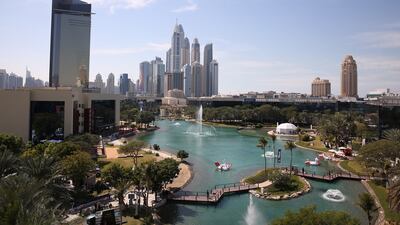
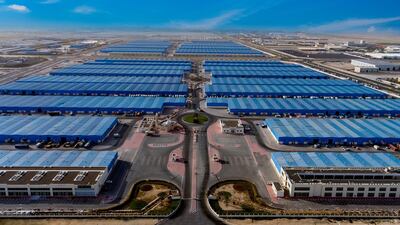
Tecom has a land bank of 375.3 hectares (40.4 million square feet) and access to additional land through an exclusive right of first offer with Dubai Holding Asset Management, which serves as a bedrock for future growth.
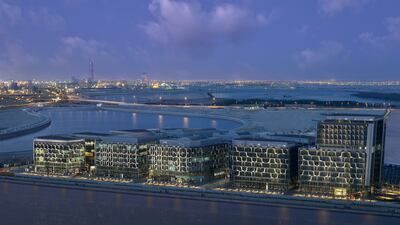
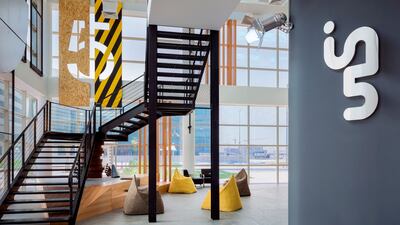
The group's 10 business districts are home to more than 7,800 companies. Nine of the districts are located in free zones that permit 100 per cent foreign ownership, with tenants including Meta, Google, Visa, BBC, CNN, Unilever and Dior.
The districts allow the complete repatriation of profits and employ more than 100,000 people in areas related to non-oil sectors that include technology, media, science, education, design and manufacturing.
Tecom has said it intends to pay dividends semi-annually — in October and April of each year, subject to the approval of its board and general assembly.
The company expects to pay a Dh800m dividend annually over the next three years through to October 2025, implying a yield of as much as 6.5 per cent.
Tecom recorded Dh485m in revenue for the first quarter of this year and Dh349m in earnings before interest, taxes, depreciation and amortisation (ebitda), with a 72 per cent ebitda margin.
“The listing of Tecom Group, which has an outstanding record in the developing and managing specialised business zones, reinforces DFM’s investment opportunities diversification strategy for the benefit of its large investor base of local and international investors as well as to reinforce market depth, liquidity and trading activities," said Hamed Ali, chief executive of DFM and Nasdaq Dubai.
"It also boosts our efforts to streamline companies’ access to DFM’s services that enable business owners to sell shares and provide an effective fund-raising platform, noting that our issuers have successfully raised Dh127bn through the market to implement their growth strategies."

THE BIO
Favourite author - Paulo Coelho
Favourite holiday destination - Cuba
New York Times or Jordan Times? NYT is a school and JT was my practice field
Role model - My Grandfather
Dream interviewee - Che Guevara
Global state-owned investor ranking by size
|
1.
|
United States
|
|
2.
|
China
|
|
3.
|
UAE
|
|
4.
|
Japan
|
|
5
|
Norway
|
|
6.
|
Canada
|
|
7.
|
Singapore
|
|
8.
|
Australia
|
|
9.
|
Saudi Arabia
|
|
10.
|
South Korea
|
More coverage from the Future Forum
The biog
Hometown: Cairo
Age: 37
Favourite TV series: The Handmaid’s Tale, Black Mirror
Favourite anime series: Death Note, One Piece and Hellsing
Favourite book: Designing Brand Identity, Fifth Edition
Dubai World Cup factbox
Most wins by a trainer: Godolphin’s Saeed bin Suroor(9)
Most wins by a jockey: Jerry Bailey(4)
Most wins by an owner: Godolphin(9)
Most wins by a horse: Godolphin’s Thunder Snow(2)
Heather, the Totality
Matthew Weiner,
Canongate
Unresolved crisis
Russia and Ukraine have been locked in a bitter conflict since 2014, when Ukraine’s Kremlin-friendly president was ousted, Moscow annexed Crimea and then backed a separatist insurgency in the east.
Fighting between the Russia-backed rebels and Ukrainian forces has killed more than 14,000 people. In 2015, France and Germany helped broker a peace deal, known as the Minsk agreements, that ended large-scale hostilities but failed to bring a political settlement of the conflict.
The Kremlin has repeatedly accused Kiev of sabotaging the deal, and Ukrainian officials in recent weeks said that implementing it in full would hurt Ukraine.
UAE currency: the story behind the money in your pockets
Key features of new policy
Pupils to learn coding and other vocational skills from Grade 6
Exams to test critical thinking and application of knowledge
A new National Assessment Centre, PARAKH (Performance, Assessment, Review and Analysis for Holistic Development) will form the standard for schools
Schools to implement online system to encouraging transparency and accountability
Mercer, the investment consulting arm of US services company Marsh & McLennan, expects its wealth division to at least double its assets under management (AUM) in the Middle East as wealth in the region continues to grow despite economic headwinds, a company official said.
Mercer Wealth, which globally has $160 billion in AUM, plans to boost its AUM in the region to $2-$3bn in the next 2-3 years from the present $1bn, said Yasir AbuShaban, a Dubai-based principal with Mercer Wealth.
“Within the next two to three years, we are looking at reaching $2 to $3 billion as a conservative estimate and we do see an opportunity to do so,” said Mr AbuShaban.
Mercer does not directly make investments, but allocates clients’ money they have discretion to, to professional asset managers. They also provide advice to clients.
“We have buying power. We can negotiate on their (client’s) behalf with asset managers to provide them lower fees than they otherwise would have to get on their own,” he added.
Mercer Wealth’s clients include sovereign wealth funds, family offices, and insurance companies among others.
From its office in Dubai, Mercer also looks after Africa, India and Turkey, where they also see opportunity for growth.
Wealth creation in Middle East and Africa (MEA) grew 8.5 per cent to $8.1 trillion last year from $7.5tn in 2015, higher than last year’s global average of 6 per cent and the second-highest growth in a region after Asia-Pacific which grew 9.9 per cent, according to consultancy Boston Consulting Group (BCG). In the region, where wealth grew just 1.9 per cent in 2015 compared with 2014, a pickup in oil prices has helped in wealth generation.
BCG is forecasting MEA wealth will rise to $12tn by 2021, growing at an annual average of 8 per cent.
Drivers of wealth generation in the region will be split evenly between new wealth creation and growth of performance of existing assets, according to BCG.
Another general trend in the region is clients’ looking for a comprehensive approach to investing, according to Mr AbuShaban.
“Institutional investors or some of the families are seeing a slowdown in the available capital they have to invest and in that sense they are looking at optimizing the way they manage their portfolios and making sure they are not investing haphazardly and different parts of their investment are working together,” said Mr AbuShaban.
Some clients also have a higher appetite for risk, given the low interest-rate environment that does not provide enough yield for some institutional investors. These clients are keen to invest in illiquid assets, such as private equity and infrastructure.
“What we have seen is a desire for higher returns in what has been a low-return environment specifically in various fixed income or bonds,” he said.
“In this environment, we have seen a de facto increase in the risk that clients are taking in things like illiquid investments, private equity investments, infrastructure and private debt, those kind of investments were higher illiquidity results in incrementally higher returns.”
The Abu Dhabi Investment Authority, one of the largest sovereign wealth funds, said in its 2016 report that has gradually increased its exposure in direct private equity and private credit transactions, mainly in Asian markets and especially in China and India. The authority’s private equity department focused on structured equities owing to “their defensive characteristics.”
The bio
Favourite book: Peter Rabbit. I used to read it to my three children and still read it myself. If I am feeling down it brings back good memories.
Best thing about your job: Getting to help people. My mum always told me never to pass up an opportunity to do a good deed.
Best part of life in the UAE: The weather. The constant sunshine is amazing and there is always something to do, you have so many options when it comes to how to spend your day.
Favourite holiday destination: Malaysia. I went there for my honeymoon and ended up volunteering to teach local children for a few hours each day. It is such a special place and I plan to retire there one day.
Uefa Nations League: How it works
The Uefa Nations League, introduced last year, has reached its final stage, to be played over five days in northern Portugal. The format of its closing tournament is compact, spread over two semi-finals, with the first, Portugal versus Switzerland in Porto on Wednesday evening, and the second, England against the Netherlands, in Guimaraes, on Thursday.
The winners of each semi will then meet at Porto’s Dragao stadium on Sunday, with the losing semi-finalists contesting a third-place play-off in Guimaraes earlier that day.
Qualifying for the final stage was via League A of the inaugural Nations League, in which the top 12 European countries according to Uefa's co-efficient seeding system were divided into four groups, the teams playing each other twice between September and November. Portugal, who finished above Italy and Poland, successfully bid to host the finals.
PRO BASH
Thursday’s fixtures
6pm: Hyderabad Nawabs v Pakhtoon Warriors
10pm: Lahore Sikandars v Pakhtoon Blasters
Teams
Chennai Knights, Lahore Sikandars, Pakhtoon Blasters, Abu Dhabi Stars, Abu Dhabi Dragons, Pakhtoon Warriors and Hyderabad Nawabs.
Squad rules
All teams consist of 15-player squads that include those contracted in the diamond (3), platinum (2) and gold (2) categories, plus eight free to sign team members.
Tournament rules
The matches are of 25 over-a-side with an 8-over power play in which only two fielders allowed outside the 30-yard circle. Teams play in a single round robin league followed by the semi-finals and final. The league toppers will feature in the semi-final eliminator.
Fresh faces in UAE side
Khalifa Mubarak (24) An accomplished centre-back, the Al Nasr defender’s progress has been hampered in the past by injury. With not many options in central defence, he would bolster what can be a problem area.
Ali Salmeen (22) Has been superb at the heart of Al Wasl’s midfield these past two seasons, with the Dubai club flourishing under manager Rodolfo Arrubarrena. Would add workrate and composure to the centre of the park.
Mohammed Jamal (23) Enjoyed a stellar 2016/17 Arabian Gulf League campaign, proving integral to Al Jazira as the capital club sealed the championship for only a second time. A tenacious and disciplined central midfielder.
Khalfan Mubarak (22) One of the most exciting players in the UAE, the Al Jazira playmaker has been likened in style to Omar Abdulrahman. Has minimal international experience already, but there should be much more to come.
Jassim Yaqoub (20) Another incredibly exciting prospect, the Al Nasr winger is becoming a regular contributor at club level. Pacey, direct and with an eye for goal, he would provide the team’s attack an extra dimension.