


It's another day and another rollercoaster ride for shares from Tesla chief executive and co-founder Elon Musk — this time after a US Securities and Exchange Commission filing revealed that the billionaire bought a 9.2 per cent passive stake in Twitter to become its largest single shareholder.
On Monday, shares of Twitter rose more than 27 per cent to close at $49.97. The stock went up another 1.1 per cent in after-hours trading to reach $50.52.
Mr Musk owns more than 73.4 million shares in Twitter, worth about $3 billion, the SEC filing shows.
It came two weeks after Mr Musk, who has more than 80 million followers on Twitter, criticised the microblogging platform in a series of tweets about its free speech principles.
Perhaps emboldened by his status as Twitter's largest shareholder, Mr Musk on Monday started a poll asking users if they want an edit button. By 12.10pm on Tuesday UAE time, more than 2.2 million users had voted.
Last month, Bitcoin, Ether and Dogecoin were given a quick boost after Mr Musk, whose net worth of $273bn makes him the world's richest person, tweeted that he owns the digital tokens and isn’t planning to sell.
Bitcoin, which had fallen as much as 2.9 per cent before Mr Musk’s tweet, wiped out its losses then retreated again. Ether was up as much as 2.3 per cent before giving up some gains, while Dogecoin rose 3.8 per cent.
In November, Tesla's shares fell as much as 4.5 per cent at the start of trading in New York, having dropped nearly 7 per cent in premarket trading after Mr Musk asked his followers whether he should sell 10 per cent of his holdings in the electric vehicle maker. A clear majority (58 per cent) of the 3.5 million Twitter users who voted said yes.
The attention-grabbing move was the latest in a long history of Mr Musk using Twitter to stoke interest in his ventures.
And it wasn’t the first time his Twitter musings have moved Tesla’s shares, with his “funding secured” tweet drawing the ire of authorities.
That resulted in Mr Musk, now 50, agreeing in 2018 to get approval from a Tesla lawyer before communicating material information to investors as part of a settlement with US securities regulators.
Here are six more occasions when Mr Musk's tweets have affected Tesla's shares:
1. Hertz Global Holdings' deal to buy Teslas
In 2021, Mr Musk cast doubt on Hertz Global Holdings’ deal to buy 100,000 Teslas for its rental car fleet by downplaying the $4.2bn agreement. Tesla’s stock dropped by 3 per cent the following day.
It wasn’t the first time Mr Musk had questioned the market’s reaction. On October 25, he tweeted that the change in Tesla’s valuation — the shares jumped 12 per cent — was strange because he said the company faces problems with production, not demand.
2. No possessions, no house, stock too high
In May 2021, Mr Musk unleashed a Twitter storm when he said he was selling almost all his possessions and would not own a house. He also voiced an unusual opinion for a chief executive: his company’s stock (then trading at a split-adjusted $156) was too high. The shares then slumped 10 per cent. However, the slide was short-lived, with all the losses recovered over the next three days.
3. Tesla production correction
In February 2019, Mr Musk corrected a prediction for how many cars Tesla would make that year, just hours after tweeting that annual production would reach about 500,000 vehicles. The electric-car pioneer said he intended to tweet that Tesla expects to be making cars at an annual rate of about 500,000 by the end of 2019.
The stock fell 3.7 per cent in response.
4. A private joke
Arguably Mr Musk’s most outrageous tweet was posted in August 2018, sparking weeks of fevered speculation about his intention to take Tesla private at $420 a share. They jumped by 11 per cent before erasing those gains in the following days as doubts mounted about his ability to pull off the deal.
In the end, it all appeared to be a rather obtuse joke. April 20, or 4/20 — $420, get it? — is a day among cannabis aficionados for celebrating marijuana culture.
Mr Musk ended up paying a $20m fine to settle fraud charges and had to step down as chairman for three years. Tesla also paid a $20m penalty. However, Mr Musk was unrepentant, later tweeting that the fine was “worth it” and continued to take potshots at the SEC.
As it turns out, it would have been the steal of a lifetime. The “offer” valued Tesla at $82bn, a fraction of the $1.17 trillion market cap it now commands.
5. Musk brings in the 'big guns'
Amid the frenzied speculation about the taking Tesla private offer, Mr Musk tweeted that he’d pulled in the big guns from Goldman Sachs Group and renowned Silicon Valley buyout firm Silver Lake Management as advisers.
Still, that did little to silence the doubters, and Tesla shares continued their downwards trajectory, leading to a four-day, 15 per cent slide.
6. An April Fool
In an April Fools’ joke that fell flat, Mr Musk’s tweet that Tesla was “completely and totally bankrupt” followed a run of bad news for the car maker, including production shortfalls, regulatory scrutiny over its driver-assistance system Autopilot and a credit rating downgrade further into junk by Moody’s Investors Service.
All that combined to send the stock down as much as 8.1 per cent.
-
-
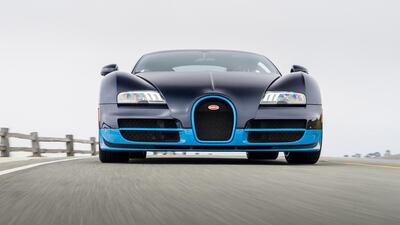
The new Tesla matches the 2015 Bugatti Veyron Grand Sport Vitesse from 0 to 60mph. Courtesy Bugatti -
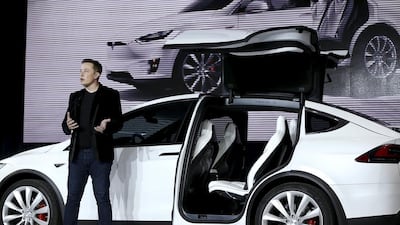
Tesla Motors' chief executive Elon Musk unveils the falcon wing door on the Model X electric 4x4. The 'offroader' outpaces the McLaren 675LT. Stephen Lam / Reuters -
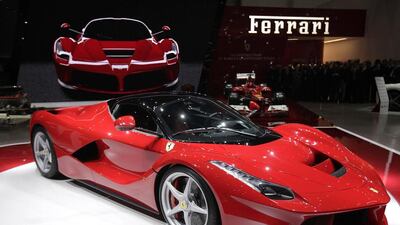
The LaFerrari hybrid car at the Geneva motor show. It just pips Tesla's new Model S in the speed stakes. Denis Balibouse / Reuters -
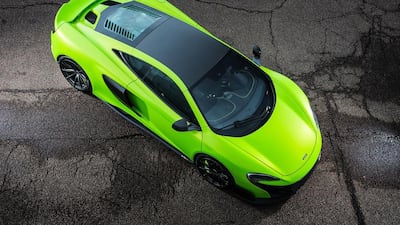
Slouch. 2016 McLaren 675LT cannot match the Tesla Model X in acceleration. Courtesy McLaren -
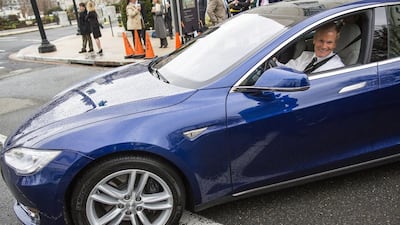
The Tesla Model S 90D has been usurped by the faster P100D. Al Drago / CQ -
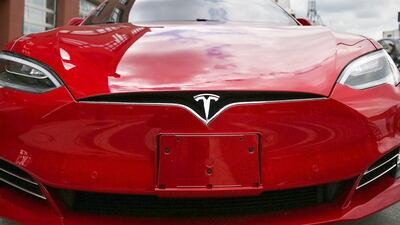
Tesla's Model S is the electric car maker's most luxurious model. Spencer Platt / Getty


— With agencies

