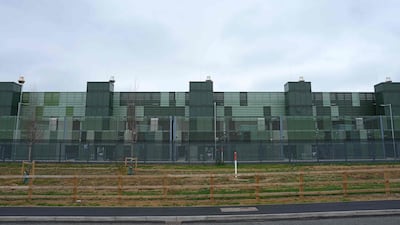

More than eight in 10 energy industry decision-makers expect artificial intelligence to drive electricity demand beyond current forecasts, raising concerns about whether there's enough global infrastructure to power the rapid expansion of data centres.
A global survey commissioned by Adipec, Abu Dhabi's annual energy conference, found that 81 per cent of energy industry insiders believe AI-driven electricity consumption will exceed existing projections, with 32 per cent expecting demand to be significantly higher.
Only 3 per cent expect demand to fall below current forecasts, according to Adipec's Global Energy Report 2026 released on Thursday.
The findings come as technology companies accelerate investment in energy-intensive data centres, creating opportunities for power producers while putting additional pressure on electricity networks.
The International Energy Agency (IEA) expects data centres to consume about 950 terawatt-hours of electricity by 2030, roughly double the 2025 level, according to figures cited in the report.
The growth in data centre power demand has become an increasingly important consideration for energy producers and governments.
At Abu Dhabi Sustainability Week in January, Dr Sultan Al Jaber, Minister of Industry and Advanced Technology and managing director and group chief executive of Adnoc, said global electricity requirements from data centres could increase fivefold by 2040.
The report's findings build on the “power is knowledge” message that was the theme of discussions at ADIPEC last year, as The National reported. The relationship between AI and electricity remains a central focus of this year's event, which will take place at Adnec Centre Abu Dhabi from November 2 to 5, 2026.
Technology companies reign
The expansion of AI is also expected to change the balance of influence within the energy industry.
About 43 per cent of respondents believe technology and AI companies will gain the most influence over the sector, compared with 15 per cent who selected governments and regulators.
Financial institutions were also selected by 15 per cent, followed by international oil companies at 14 per cent and national oil companies at 9 per cent.
The findings reflect the increasingly close relationship between AI and energy, as technology companies become major drivers of investment in electricity generation and infrastructure.
For oil and gas companies, the shift is creating new commercial opportunities.
While gas and liquefied natural gas growth currently ranks as the biggest commercial opportunity among oil and gas insiders, AI-driven efficiency is expected to take the top position over the next decade.
About 27 per cent identify AI-driven efficiency as a leading opportunity in 10 years, while 25 per cent point to supplying power for AI and data centres.
The report also found that 81 per cent of oil and gas insiders believe adopting AI will become essential to remaining profitable over the next decade.
The findings are particularly relevant to the UAE, where Abu Dhabi is developing a 5-gigawatt AI campus that will house the Stargate UAE computing cluster, expected to cost more than $30 billion.
However, a quarter of energy insiders believe the industry is unprepared for AI-driven electricity demand, with grid delays among the biggest obstacles. At Adipec last year, Dr Al Jaber called for massive energy investment to meet growing requirements.
The Adipec report, conducted by global strategic communications consultancy Kekst CNC between August and October 2026, surveyed 1,832 energy industry decision-makers across 78 countries and included 17 executive interviews. Its findings reflect industry expectations rather than independently verified demand forecasts.

