

Iraq plans to offer gas exploration blocks to US companies during a trip by Oil Minister Hayan Abdel Ghani, as Opec's second-largest producer seeks to boost domestic oil and gas production.
The Oil Ministry is preparing to offer about 10 gas blocks in a new licensing round, as these have not yet attracted company interest, Mr Ghani was reported as saying by the Iraqi News Agency on Saturday.
“The Ministry of Oil plans to offer these gas investment opportunities to specialised companies and we have a visit to the US soon for this purpose, as we plan to offer them to global American companies,” Mr Ghani said.
-

Yazidi men clean the grounds of the Lalish temple ahead of a tribute to victims of ISIS from the village of Kocho, in northern Iraq, in 2018. AFP -

Nobel Peace Prize laureate Nadia Murad visits one of the Nadia Initiative's building projects in Sinjar, northern Iraq, in 2022. Photo: Nadia Murad -
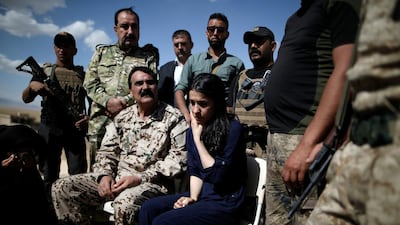
Ms Murad in Kocho for the first time since the ISIS attack. Reuters -
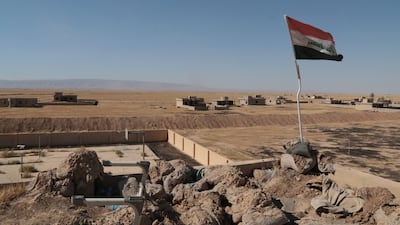
A view of Mount Sinjar from the roof of Kocho's school, which was once occupied by ISIS but is now abandoned. Florian Neuhof for The National -

Ashwaq Haji from Kocho visits the Lalish temple to pay tribute to villagers who were victims of ISIS. AFP -
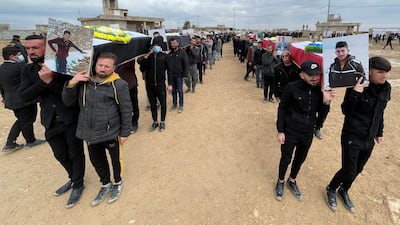
Mourners carry coffins of victims from Kocho in February 2021, after their remains were exhumed from a mass grave. Reuters -
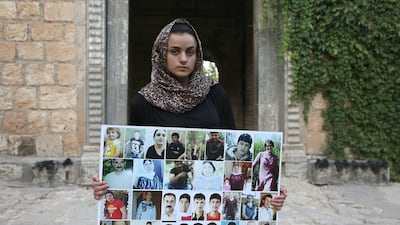
Ms Haji with pictures of dead and missing relatives from Kocho. AFP -
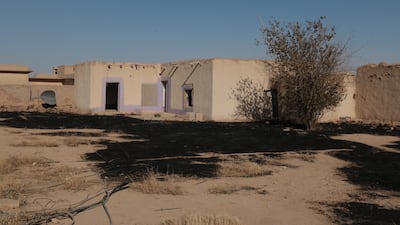
An abandoned house in Kocho. Florian Neuhof for The National -
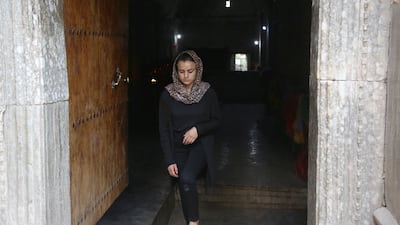
Ms Haji passes through the doorway of the Lalish temple to pay tribute to villagers who were victims of ISIS. AFP -
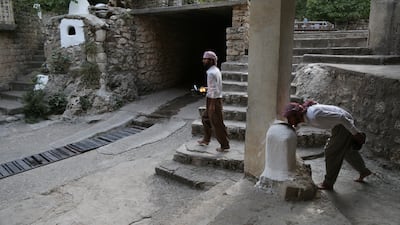
Yazidi men light candles at the Lalish temple in tribute to victims of ISIS from Kocho. AFP


The fifth supplementary and sixth licensing rounds include 29 blocks and oilfields, with contracts finalised for 14 of them.
Mr Ghani said Iraq will start a new gas project at Al Faiha oilfield in the south.
This project will produce 125 million cubic metres of gas per day and is part of the country’s efforts to boost its energy infrastructure.
He also said the ministry had started drilling an exploratory well in Al Anz oil and gas block in Iraq's Al Anbar governorate, while the Halfaya project is underway in the southern Maysan province, about 300km south of Baghdad.
"The Halfaya gas investment project was opened with a capacity of 300 cubic metres, and it is hoped to launch the gas investment project in the Al Faiha oilfield by the end of this year," Mr Ghani said.
Iraqi Prime Minister Mohammed Shia Al Sudani in June inaugurated the Halfaya processing project, which uses flared gas during oil extraction.
The latest announcement comes after China, the biggest buyer of Iraqi crude, secured most of the available oilfields in previous licensing rounds.
China, the world's second-largest economy, imports about 1.18 million barrels per day from Iraq, which is more than a third of the latter's total crude exports, according to S&P Global.
In 2021, China’s state-run Sinopec energy company won a deal to develop a major gasfield in eastern Iraq. A contract was signed to develop the 4.5 trillion cubic feet Mansuriya field for 25 years.
Iraq began to attract international oil companies after the security situation in the country stabilised in 2008. Among them were ExxonMobil, Shell, BP, China’s CNPC and Russia’s Lukoil.
Since then, Iraq has awarded dozens of oil deals to develop major fields that hold more than half of its 145.02 billion barrels of proven reserves. Deals to tap natural gas resources have also been agreed on.
Iraq’s Oil Ministry plans to increase production to 6 million bpd in the next five years, from about 4 million bpd currently. It exports about 3.3 million bpd.

