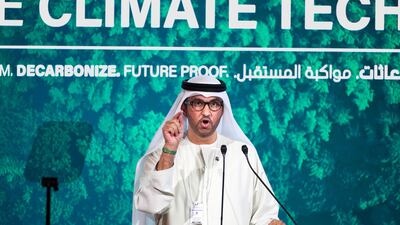
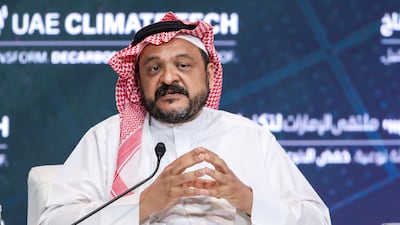
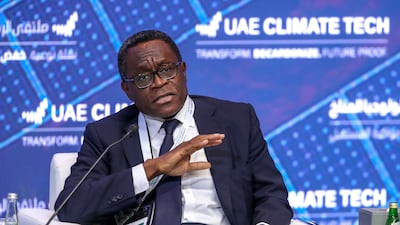
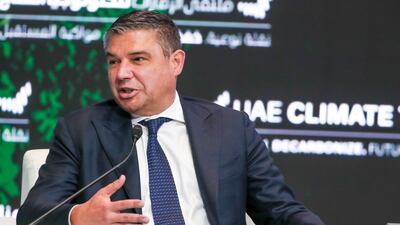
Dr Sultan Al Jaber, President-designate of the Cop28 summit, at the UAE Climate Tech forum in Abu Dhabi. Victor Besa / The National

More investments needed in climate technology to support energy transition


Fareed Rahman
  • English
  • Arabic

More investments are needed in climate technologies, which can help create a new economic development model focused on cutting emissions while ensuring growth, Dr Sultan Al Jaber, President-designate of the Cop28 summit, has said.

"With the right policies stimulating the right investments, climate technologies could at least double their contribution to global growth, while removing 25 billion tonnes of carbon emissions annually,” Dr Al Jaber said at the inaugural UAE Climate Tech forum on Wednesday.

Clean tech investments broke the $1 trillion barrier for the first time last year and clean, mature and emerging technologies “could change the game for progress", he told the event, which was attended by executives, experts and government officials.

“I have seen what can happen, what can unfold when government, finance and technology work together.

“Right here in the United Arab Emirates, when we established Masdar in 2006, there were just six gigawatts of solar energy installed on the whole planet, but now, globally, six gigawatts are added every two weeks. In 2006, the cost of a kilowatt hour of solar energy was over $2, today, it is under two cents," he said.

Dr Al Jaber, who is also the UAE's Minister of Industry and Advanced Technology and special envoy on climate change, said hydrogen as well as other carbon capture technologies can play a major role in the fight against climate change.

“Hydrogen needs to be scaled up and commercialised to make a real impact in the energy system."

Hydrogen, which can be produced using renewable energy and natural gas, is expected to play a key role in the coming years as economies and industries switch to a low-carbon world to mitigate climate change.

French investment bank Natixis estimates that investment in hydrogen will exceed $300 billion by 2030.

Carbon capture technologies are also useful in curbing emissions, Dr Al Jaber added.

“The most recent IPCC [Intergovernmental Panel on Climate Change] report clearly states that applying carbon capture technologies to heavy emitting industries is a critical enabler in the race to net zero," he said.

“Cost remains the main barrier and we need policymakers to incentivise technology companies to help commercialise all kinds of carbon capture, from storage to direct air to mineralisation."

He also urged the industry to use the technology to turn the captured carbon into products with "practical applications that have commercial value".

Global investments in energy transition technology must quadruple to $35 trillion by 2030 to stay in line with commitments made under the Paris climate agreement, according to a report by the International Renewable Energy Agency.

The time is running short and the stakes for our planet are high
Dr Sultan Al Jaber,
President-designate of Cop28

Investments in renewable energy technology reached a record $1.3 trillion last year but that figure must rise to about $5 trillion a year to meet the target of limiting temperature increases to 1.5ºC above pre-industrial levels, the Abu Dhabi-based agency said.

Technologies such as artificial intelligence, robotics and blockchain must be applied to “increase the efficiency of the energy we use today across every sector", Dr Al Jaber said.

In terms of sectors, food systems and agriculture are among the main sources of greenhouse gases, representing more than one third of global emissions.

Technology companies need to focus on this space, he said.

“Along with the United States, the UAE has launched Aim for Climate, a 50-country coalition aimed at maximising the use of commercial technology to reduce emissions and increase the availability of nutritious food around the world.”

Aim for Climate seeks to support small-scale farmers, especially women, and communities in lower-income countries most susceptible to the world's changing climate.

It includes investment to boost the use of vertical farming, hydroponics and aquaculture. The UAE has invested heavily in local companies to grow crops in one of the world's most arid countries.

Dr Al Jaber also called on the oil and gas industry to cut methane emissions by 2030 and align around comprehensive net zero plans by or before 2050.

“The goal for this industry and all industries to me is crystal clear. We need to phase out emissions from all sectors including transportation, agriculture, and heavy industry fossil fuels while investing in technologies.

"For this to happen faster, we need to reimagine the relationship between producers and consumers from one based purely on supply and demand to a relationship that is focused on co-creating the future," he said.

A combined effort is needed to support the goal of an inclusive energy transition, he said.

“We must create an active partnership between the largest producers of energy, the biggest industrial consumers, technology companies, the finance community, government, NGOs [non government organisations] and civil society."

By working together, the goal would be an "accelerated, pragmatic, practical and just energy transition that leaves no one behind, a transition that creates zero carbon pathways for growth", Dr Al Jaber said.

Last year, developing economies, which represent 70 per cent of the world's population, received only 20 per cent of the clean tech investments.

“Technology is essential for helping the most vulnerable communities build capacities and leapfrog into a low-carbon economic development model. But to maximise technology adoption in these countries, we need public, multilateral and private sectors to supercharge climate finance making it much more available, much more accessible and of course, much more affordable.”

The UAE will be hosting Cop28 later this year and Dr Al Jaber said the upcoming event will be “of practical action and pragmatic results".

It will be a "Cop of solutions ... and a Cop for all", he said, adding that "the time is running short and the stakes for our planet are high".

  • Day one of the UAE Climate Tech forum in Abu Dhabi. All photos: Victor Besa / The National
    Day one of the UAE Climate Tech forum in Abu Dhabi. All photos: Victor Besa / The National
  • Dr Sultan Al Jaber delivers the keynote address at the UAE Climate Tech forum.
    Dr Sultan Al Jaber delivers the keynote address at the UAE Climate Tech forum.
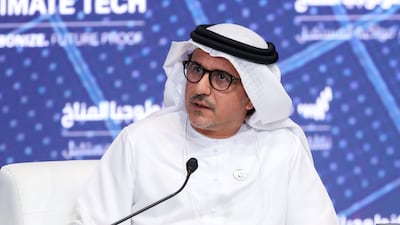
  • Musabbeh Al Kaabi, head of Adnoc's international growth directorate, speaks at the forum
    Musabbeh Al Kaabi, head of Adnoc's international growth directorate, speaks at the forum
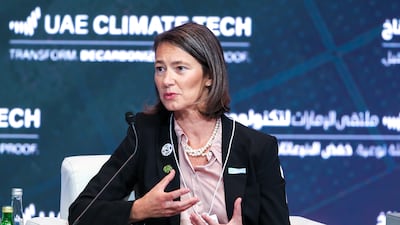
  • Adnoc's chief technology officer Sophie Hildebrand takes part in a panel discussion at the forum
    Adnoc's chief technology officer Sophie Hildebrand takes part in a panel discussion at the forum
  • Ms Hildebrand and other panelists discussed the commercial case for decarbonisation
    Ms Hildebrand and other panelists discussed the commercial case for decarbonisation
  • Aramco's chief technical officer Ahmad Al Khowaiter speaks during a discussion on technology's role in ensuring energy security and climate action
    Aramco's chief technical officer Ahmad Al Khowaiter speaks during a discussion on technology's role in ensuring energy security and climate action
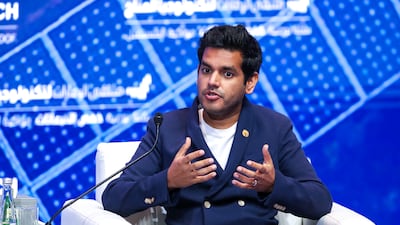
  • Talal Hassan, chief executive of 44.01, takes part in the panel discussing the commercial case for decarbonisation
    Talal Hassan, chief executive of 44.01, takes part in the panel discussing the commercial case for decarbonisation
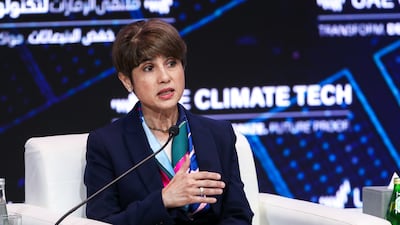
  • Dr Pratima Rangarajan, chief executive of OGCI Climate Investments, at the forum
    Dr Pratima Rangarajan, chief executive of OGCI Climate Investments, at the forum
  • Abdulnasser bin Kalban, chief executive of Emirates Global Aluminum, addresses delegates at the forum
    Abdulnasser bin Kalban, chief executive of Emirates Global Aluminum, addresses delegates at the forum
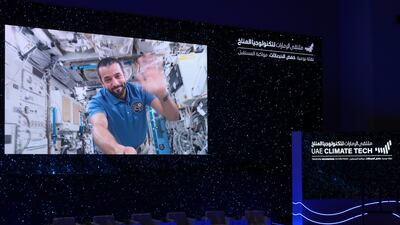
  • UAE astronaut Sultan Al Neyadi gives some words of encouragement from space during the forum
    UAE astronaut Sultan Al Neyadi gives some words of encouragement from space during the forum
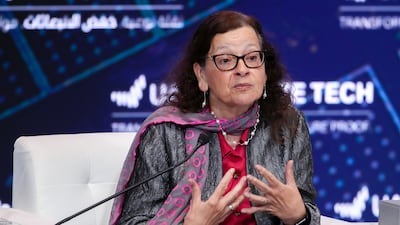
  • Dr Jennifer Holmgren, chief executive of Lanza Tech, at the forum
    Dr Jennifer Holmgren, chief executive of Lanza Tech, at the forum
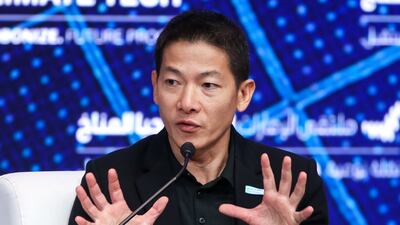
  • Peng Xiao, group chief executive of G42, speaks on how innovation could support energy security and climate action
    Peng Xiao, group chief executive of G42, speaks on how innovation could support energy security and climate action
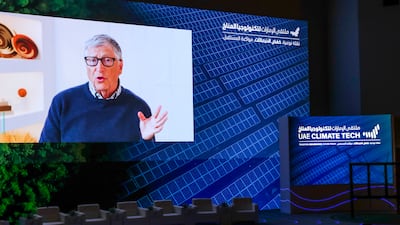
  • Bill Gates addresses delegates at the forum
    Bill Gates addresses delegates at the forum
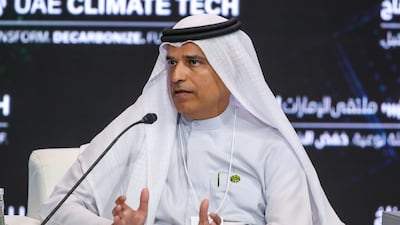
  • Mohamed Al Hammadi, managing director and chief executive of Enec, takes part in a panel discussion
    Mohamed Al Hammadi, managing director and chief executive of Enec, takes part in a panel discussion
  • Bernard Mensah, president of the International Bank of America, at the forum
    Bernard Mensah, president of the International Bank of America, at the forum
  • Lorenzo Simonelli, chairman and chief executive of Baker Hughes, at the forum
    Lorenzo Simonelli, chairman and chief executive of Baker Hughes, at the forum
TO%20CATCH%20A%20KILLER
%3Cp%3E%3Cstrong%3EDirector%3A%20%3C%2Fstrong%3EDamian%20Szifron%3C%2Fp%3E%0A%3Cp%3E%3Cstrong%3EStars%3A%3C%2Fstrong%3E%20Shailene%20Woodley%2C%20Ben%20Mendelsohn%2C%20Ralph%20Ineson%3C%2Fp%3E%0A%3Cp%3E%3Cstrong%3ERating%3A%3C%2Fstrong%3E%202%2F5%3C%2Fp%3E%0A
MATCH INFO

Southampton 0
Manchester City 1
(Sterling 16')

Man of the match: Kevin de Bruyne (Manchester City)

Analysis

Members of Syria's Alawite minority community face threat in their heartland after one of the deadliest days in country’s recent history. Read more

In numbers: China in Dubai

The number of Chinese people living in Dubai: An estimated 200,000

Number of Chinese people in International City: Almost 50,000

Daily visitors to Dragon Mart in 2018/19: 120,000

Daily visitors to Dragon Mart in 2010: 20,000

Percentage increase in visitors in eight years: 500 per cent

Mercer, the investment consulting arm of US services company Marsh & McLennan, expects its wealth division to at least double its assets under management (AUM) in the Middle East as wealth in the region continues to grow despite economic headwinds, a company official said.

Mercer Wealth, which globally has $160 billion in AUM, plans to boost its AUM in the region to $2-$3bn in the next 2-3 years from the present $1bn, said Yasir AbuShaban, a Dubai-based principal with Mercer Wealth.

Within the next two to three years, we are looking at reaching $2 to $3 billion as a conservative estimate and we do see an opportunity to do so,” said Mr AbuShaban.

Mercer does not directly make investments, but allocates clients’ money they have discretion to, to professional asset managers. They also provide advice to clients.

“We have buying power. We can negotiate on their (client’s) behalf with asset managers to provide them lower fees than they otherwise would have to get on their own,” he added.

Mercer Wealth’s clients include sovereign wealth funds, family offices, and insurance companies among others.

From its office in Dubai, Mercer also looks after Africa, India and Turkey, where they also see opportunity for growth.

Wealth creation in Middle East and Africa (MEA) grew 8.5 per cent to $8.1 trillion last year from $7.5tn in 2015, higher than last year’s global average of 6 per cent and the second-highest growth in a region after Asia-Pacific which grew 9.9 per cent, according to consultancy Boston Consulting Group (BCG). In the region, where wealth grew just 1.9 per cent in 2015 compared with 2014, a pickup in oil prices has helped in wealth generation.

BCG is forecasting MEA wealth will rise to $12tn by 2021, growing at an annual average of 8 per cent.

Drivers of wealth generation in the region will be split evenly between new wealth creation and growth of performance of existing assets, according to BCG.

Another general trend in the region is clients’ looking for a comprehensive approach to investing, according to Mr AbuShaban.

“Institutional investors or some of the families are seeing a slowdown in the available capital they have to invest and in that sense they are looking at optimizing the way they manage their portfolios and making sure they are not investing haphazardly and different parts of their investment are working together,” said Mr AbuShaban.

Some clients also have a higher appetite for risk, given the low interest-rate environment that does not provide enough yield for some institutional investors. These clients are keen to invest in illiquid assets, such as private equity and infrastructure.

“What we have seen is a desire for higher returns in what has been a low-return environment specifically in various fixed income or bonds,” he said.

“In this environment, we have seen a de facto increase in the risk that clients are taking in things like illiquid investments, private equity investments, infrastructure and private debt, those kind of investments were higher illiquidity results in incrementally higher returns.”

The Abu Dhabi Investment Authority, one of the largest sovereign wealth funds, said in its 2016 report that has gradually increased its exposure in direct private equity and private credit transactions, mainly in Asian markets and especially in China and India. The authority’s private equity department focused on structured equities owing to “their defensive characteristics.”

Five films to watch

Castle in the Sky (1986)

Grave of the Fireflies (1988)

Only Yesterday (1991)

Pom Poki (1994)

The Tale of Princess Kaguya (2013)

Who's who in Yemen conflict

Houthis: Iran-backed rebels who occupy Sanaa and run unrecognised government

Yemeni government: Exiled government in Aden led by eight-member Presidential Leadership Council

Southern Transitional Council: Faction in Yemeni government that seeks autonomy for the south

Habrish 'rebels': Tribal-backed forces feuding with STC over control of oil in government territory

Timeline

2012-2015

The company offers payments/bribes to win key contracts in the Middle East

May 2017

The UK SFO officially opens investigation into Petrofac’s use of agents, corruption, and potential bribery to secure contracts

September 2021

Petrofac pleads guilty to seven counts of failing to prevent bribery under the UK Bribery Act

October 2021

Court fines Petrofac £77 million for bribery. Former executive receives a two-year suspended sentence 

December 2024

Petrofac enters into comprehensive restructuring to strengthen the financial position of the group

May 2025

The High Court of England and Wales approves the company’s restructuring plan

July 2025

The Court of Appeal issues a judgment challenging parts of the restructuring plan

August 2025

Petrofac issues a business update to execute the restructuring and confirms it will appeal the Court of Appeal decision

October 2025

Petrofac loses a major TenneT offshore wind contract worth €13 billion. Holding company files for administration in the UK. Petrofac delisted from the London Stock Exchange

November 2025

180 Petrofac employees laid off in the UAE

The burning issue

The internal combustion engine is facing a watershed moment – major manufacturer Volvo is to stop producing petroleum-powered vehicles by 2021 and countries in Europe, including the UK, have vowed to ban their sale before 2040. The National takes a look at the story of one of the most successful technologies of the last 100 years and how it has impacted life in the UAE. 

Read part four: an affection for classic cars lives on

Read part three: the age of the electric vehicle begins

Read part two: how climate change drove the race for an alternative 

Updated: May 10, 2023, 11:05 AM