
Dubai’s non-oil private sector economy grew in February as the emirate's rapid Covid-19 vaccine campaign fuelled optimism and boosted employment and output.
The seasonally adjusted IHS Markit Dubai Purchasing Managers' Index rose from 50.6 in January to 50.9 in February as operating conditions improved for the third consecutive month.
A reading above 50 indicates economic expansion while one below that points to a contraction.
There was output growth for key sectors such as construction, wholesale and retail, according to the survey.
However, travel and tourism bucked the trend with a further decline in activity as a result of coronavirus-induced restrictions.
IHS Markit economist David Owen said companies' hopes for growth in business activity over the coming 12 months received a boost from the successful distribution of Covid-19 vaccines in the emirate and around the UAE.
“However, the near-term outlook could be choppy as cases remain high and other parts of the world continue to restrict activity and travel,” he said.
The third successive monthly improvement in the business conditions was helped by the UAE's continued roll out of vaccines to control the spread of the pandemic.
More than 312 million vaccines have been administered in 116 countries at a daily rate of 8.08 million doses, according to Bloomberg's vaccine tracker.
The UAE was in third place after the Seychelles and Israel on Monday, with a daily rate of 58.5 doses administered for every 100 people.
Dubai, the commercial and the tourism hub of the Middle East, unveiled four stimulus packages worth Dh6.8 billion ($1.85bn) to soften the economic blow of the pandemic and support businesses and people.
The emirate's economy is forecast to expand 4 per cent in 2021 driven by its effective response to Covid-19, according to government projections released in December.
The latest PMI survey showed that sales in the non-oil sector fell for the first time since May as the government introduced new restrictions to control the pandemic.
However, the trend was softer compared with when the health crisis began last year.
Despite weaker sales, Dubai companies remain optimistic that the disruption will be temporary and expect the emirate's vaccine campaign to drive a sharp rebound in output later in the year.
Employment numbers picked up for the second consecutive month as the emirate’s economy continued to recover from the pandemic.
Dubai residents receive vaccine – in pictures
-
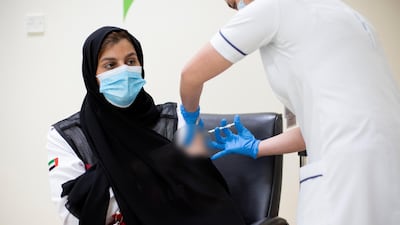
A Dubai ambulance worker is vaccinated with the Pfizer-BioNtech vaccine in Dubai. -
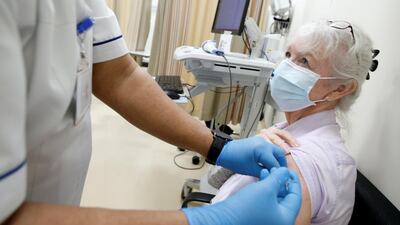
An older resident receives her first shot at Zabeel Health Centre on December 27, 2020. -
The vaccine is expected to be rolled out to all age groups once people in the essential categories have been vaccinated. -
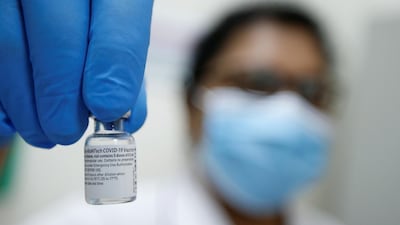
A nurse holds a dose of the Pfizer-BioNTech vaccine, which was approved for use by Dubai's emergency and crisis authority and the federal Ministry of Health. -
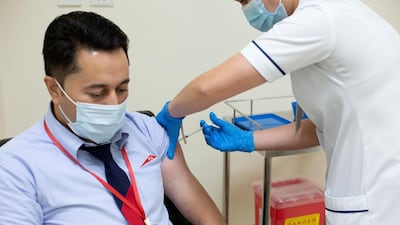
An employee from Roads and Transport Authority receives a dose of the Pfizer-BioNTech vaccine in Dubai. -
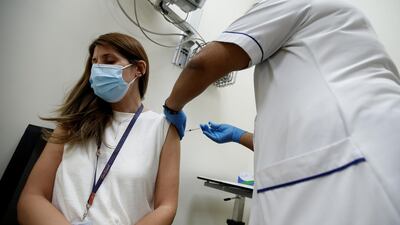
A woman receives a dose of the Pfizer-BioNTech vaccine at Zabeel Health Centre in Dubai on 27 December, 2020. -
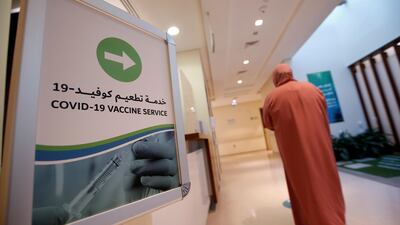
The city has six vaccine centres where the Pfizer-BioNTech shot is available. -
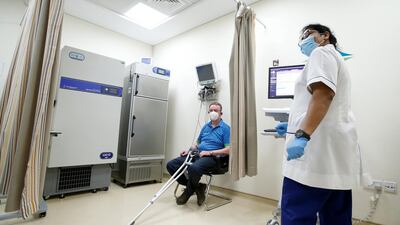
A man waits to receive the first of two doses at Zabeel Health Centre in Dubai on 27 December, 2020. -
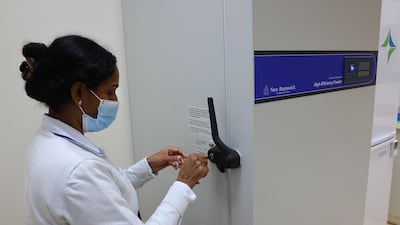
A nurse opens a freezer at Barsha Health Centre. The Pfizer-BioNTech vaccine must be kept at minus 70C when transported. -
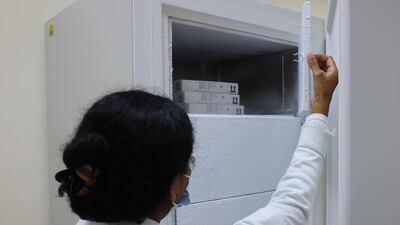
A nurse opens a freezer at Barsha Health Centre. The Pfizer-BioNTech vaccine must be kept at minus 70C when transported. -
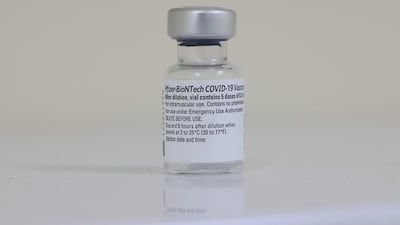
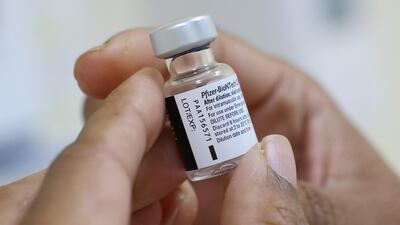
A vial of the vaccine is seen at Barsha Health Centre. AFP -
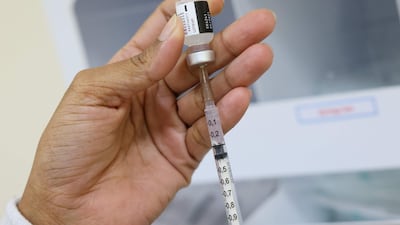
A nurse prepares a dose of the Pfizer-BioNTech vaccine at al-Barsha Health Centre in Dubai. AFP



