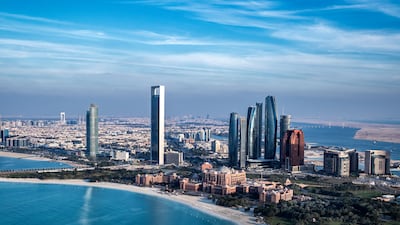
Abu Dhabi has extended the period for which entrepreneurs can operate without an office by a year, under its Tajer licensing programme. The move will cut one of the biggest upfront costs for small businesses, as the emirate steps up efforts to attract investment and expand its non-oil economy.
The Abu Dhabi Department of Economic Development said Tajer licence holders will now have more time to establish and grow their businesses before taking on the cost of commercial premises, as part of a broader package of measures aimed at reducing costs and making it easier to conduct business in the emirate.
The changes come as demand for the programme continues to grow. New Tajer Abu Dhabi licences rose 8 per cent in the first half of this year after increasing by nearly a quarter last year, while the number of business activities covered has risen to more than 1,200 from only 30 when the programme was launched in 2017.
The measures are part of wider government efforts to support businesses. One of those measures includes exempting economic establishments from outstanding fines incurred due to delays in renewing or cancelling economic licences.
That initiative benefitted 7,823 commercial and industrial establishments and contributed to business continuity, said the department's under-secretary, Hamad Al Mazrouei.
“We remain committed to supporting entrepreneurship, one of the key pillars of our innovation-driven economy, for its vital role in accelerating economic growth and diversification, and enhancing the competitiveness and resilience of various sectors,” he added.
The department has also extended the validity of new industrial licences called Rowad, which are aimed at providing greater flexibility for investors during establishment and construction stages.
Rowad is now valid for three years, up from the previous two, before the start of construction phases, while licences for projects under construction have been extended from three to four years until production.
“These measures related to Tajer Abu Dhabi licence and industrial licences are part of initiatives we have developed based on discussions and dialogue with the private sector, as well as studies conducted by our specialised teams to empower entrepreneurs,” Mr Al Mazrouei said.
Abu Dhabi has continued its shift away from oil and has taken several measures to attract international investors, boost its competitiveness and improve the ease of conducting business.
New economic licences issued in the UAE capital in the first quarter of 2025 increased by 21 per cent year-on-year, as the emirate continues to attract businesses despite the uncertainty caused by the Iran war, government data showed in June.
Abu Dhabi and Dubai were named as “cities to watch” and “contenders” to reshape the global economic landscape due to their economic models, Oxford Economics said in a report last week.
In the broader UAE, the Arab world's second-biggest economy, business activity in the non-oil private sector during August improved at its fastest pace since December 2024 in a clear sign of recovery, as companies shook off the impact of the Iran war, the seasonally adjusted S&P Global UAE Purchasing Managers' Index showed this month.
“Abu Dhabi … continues its efforts and initiatives to support investments and empower companies to achieve growth and create opportunities, further strengthening Abu Dhabi’s position as an attractive destination for talent, businesses and investment,” Mr Al Mazrouei said.

