


The International Monetary Fund on Wednesday urged Saudi Arabia to continue the “impressive strides” the kingdom has made with its structural reforms, regardless of oil-price fluctuations.
At the conclusion of its annual Article IV consultation with Saudi Arabia, the Washington-based multilateral lender noted Riyadh's transformation into a more diversified economy away from such heavy reliance on oil is progressing well.
Vision 2030 is the kingdom's plan to shift from dependence on oil to generating revenue through other sectors. Major projects such as King Salman Park and the futuristic city of Neom are estimated to cost tens, if not hundreds, of billions of dollars.
“It's important to continue that, irrespective of what's happening in fluctuations in oil prices,” Amine Mati, the IMF's mission chief to Saudi Arabia, said at a virtual briefing.
“And this should be done through continued efforts to improve governance, increase investment efficiency, accelerate digitalisation and further reform labour markets.”
Non-oil growth in Saudi Arabia is projected to increase to 4.4 per cent in the medium term after moderating to 3.5 per cent year. This is mostly driven by stronger demand as the kingdom implements its Vision 2030 plan, the International Monetary Fund said.
Saudi Arabia's economy is projected to grow to 4.7 per cent in 2025 before averaging at 3.7 per cent in the following years.
Non-oil gross domestic product grew by 3.8 per cent last year, driven by private consumption and non-oil investment.
The kingdom's real GDP declined 0.4 per cent on an annual basis in the second quarter of this year in what was its best reading since the third quarter of 2023, the General Authority for Statistics shows. Oil growth fell by 8.5 per cent, compared to 11.2 per cent the previous quarter.
Real GDP this year is forecast to grow by 1.7 per cent, before increasing to 4.7 per cent in 2025.
-
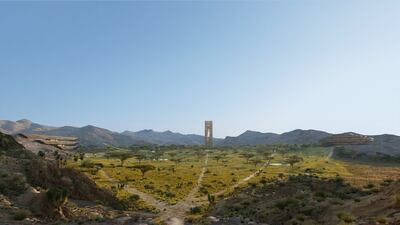
Luxury ecotourism destination Zardun is the latest project to be announced in Neom. All photos: Neom -
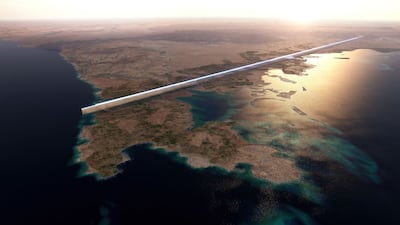
The Line was the first region announced within the megacity project in Saudi Arabia -
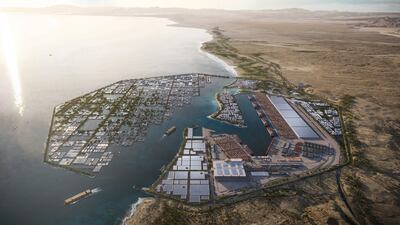
Oxagon is set to be the largest floating industrial complex -
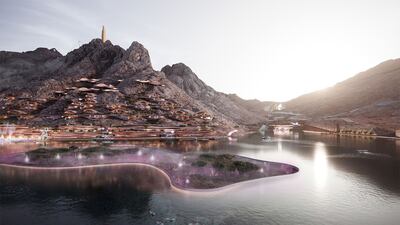
Trojena will be a new global destination for mountain tourism -
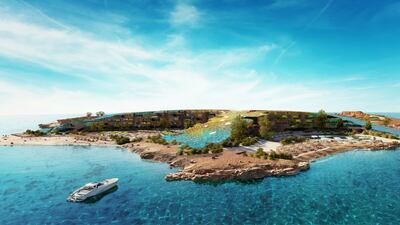
Seahorse-shaped Sindalah will be the megacity's first destination to open to tourists -

Sustainable tourism destination Leyja will be within a mountain valley -
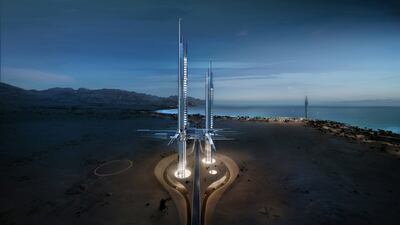
Epicon was another luxury coastal tourism destination announced last year -
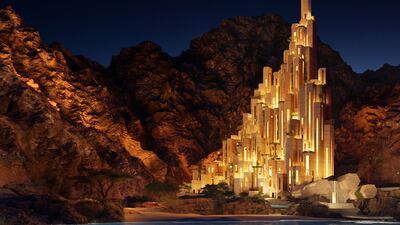
Hexagon-shaped luxury hotel Siranna will be home to 65 rooms and 35 exclusive residences -
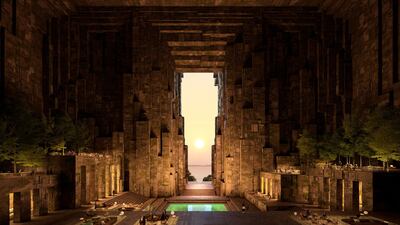
Utamo aims to be an immersive venue for art and entertainment -
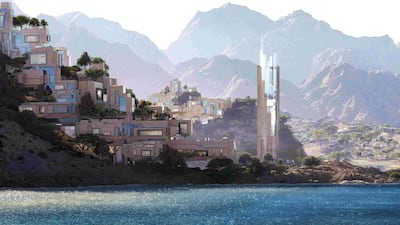
Norlana is set to be an active lifestyle community with capacity for 3,000 inhabitants -
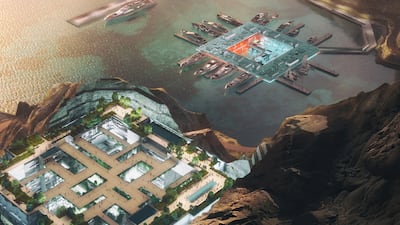
Aquellum will be a futuristic luxury and experiential space within the mountains


In June, Saudi Minister of Investment Khalid Al Falih said the kingdom was more than halfway through implementing Vision 2030. Finance Minister Mohammed Al Jadaan said this year the timetable and size of some of the projects under Vision 2030 would be adjusted owing to economic and geopolitical challenges.
The IMF previously said recalibrating these projects would help mitigate overheating risks and maintain fiscal sustainability.
It said Riyadh could anchor investors' expectations by boosting public communication over the objectives of the programme. Meanwhile, female labour participation rates are “comfortably above” the 30 per cent target of Vision 2030.
The IMF's executive board said it looked forward to continued efforts to boost female labour participation and reduce potential wage gaps. It also noted Saudi Arabia's efforts to accelerate digitalisation, another reform under the national strategy.
“Directors welcomed the robust non-oil economic activity, stable inflation, record low unemployment and ample fiscal and external buffers,” the fund said.
Annual inflation is projected to fall to 1.9 per cent by the end of the year, compared with 2.3 per cent last year. Despite this trend, rents continue to grow at a rate of about 10 per cent because of inflows of expatriate employees and redevelopment plans in Riyadh and Jeddah.
Meanwhile, risks to Saudi Arabia's economic outlook “remain broadly balanced amid high global uncertainty”.
Downside risks to the economy remain, including straying from its current reform agenda, subdued global activity, financial market activity and non-Opec supply growth. Accelerating shifts in the demand away from fossil fuels could also hamper growth.
Geopolitical events also remain a downside risk, although the IMF noted they have not had an effect on the Saudi economy so far. Upside risks include an accelerated introduction of reforms and investments.
The IMF recommended Saudi Arabia continue to maintain its strong fiscal buffers, ensure its monetary policy rate continues to move in line with the US Federal Reserve's and strengthen banking regulatory and supervisory frameworks.
The fund said “a number of directors” on the board stressed the need for additional efforts to support Saudi Arabia's 2060 net-zero targets.
The IMF also noted Saudi Arabia's debt-to-GDP ratio has increased to roughly 26 per cent of GDP. And while it anticipates the ratio to increase to 36 per cent by 2029, it is “still comfortably below” the 40 per cent GDP threshold Saudi authorities have.
Mr Mati said that number is still relatively low by other measures including net debt.
“So we think that fiscal buffers are still quite comfortable,” he said.

