


Sri Lanka, which is grappling with ballooning liabilities and soaring inflation amid its worst economic crisis in decades, needs to restructure its debt, analysts have said.
The South Asian country's debt is unsustainable, making restructuring necessary even if it secures an International Monetary Fund-backed loan programme in impending talks, Patrick Curran, senior economist at Tellimer Research, said in a note on March 29.
"A debt restructuring is inevitable even if Sri Lanka secures an IMF programme, as it will be unable to credibly place debt on a sustainable path without restructuring (and thus will have to restructure its debt to unlock IMF support, given its policy against lending to countries with an unsustainable debt burden)," Mr Curran said.
Protesters have taken to the streets across the Sri Lanka against the severe economic crisis, leading President Gotabaya Rajapaksa to declare a state of emergency and impose a nationwide curfew. The debt-laden country is faced with rising prices, shortages of essential goods and hours-long power cuts, triggered by its struggles to pay for imported fuel and other commodities due to a scarcity in foreign currency.
The Covid-19 pandemic hit the country hard, leading to a loss of tourism revenue and strict lockdowns. Deep tax cuts in 2019 and the effects of the coronavirus crisis resulted in fiscal deficits of 11.4 per cent of gross domestic product in 2021 and 12.8 per cent in 2020, raising public debt well above 100 per cent of the GDP.
Sri Lanka’s access to international capital markets was lost in 2020, prompting a decline of international reserves to critically low levels and large-scale direct lending to the government by the Central Bank of Sri Lanka (CBSL), the IMF said. External debt repayments and a widening current account deficit have led to foreign exchange shortages.
Inflation gathered speed in 2021, reflecting exchange rate depreciation, supply shortages, increases in administered fuel and food prices (due to higher international prices) and a recovery in demand. Headline inflation has breached the 4 per cent to 6 per cent target band of the CBSL and rose to 14.2 per cent in January 2022.
-

Sri Lankans participate in a protest in the capital Colombo, demanding the resignation of President Gotabaya Rajapaksa, shortly before the start of a nationwide curfew. AP -
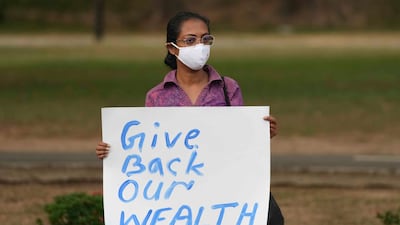
The three-day curfew was imposed by the government from Saturday evening as protests against food and fuel shortages were held in Sri Lanka. AP -

People queue for essentials at a shop before the beginning of the curfew, in Colombo. AP -
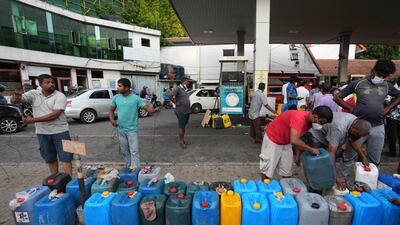
Sri Lankans flock to a fuel station to buy diesel. AP -
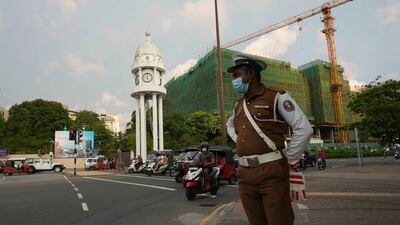
A Sri Lankan police officer stands in a street as curfew begins in Colombo, Sri Lanka. AP -

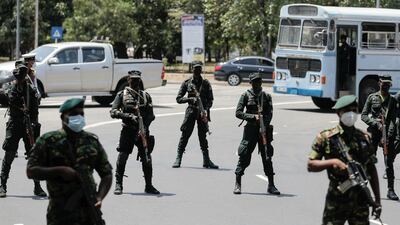
The military stand guard at a checkpoint in Colombo. AFP -
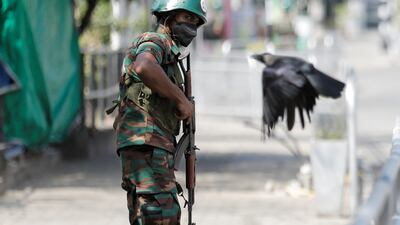
The curfew was imposed after a clash between police and protesters near Sri Lankan President Gotabaya Rajapaksa's residence. Reuters -
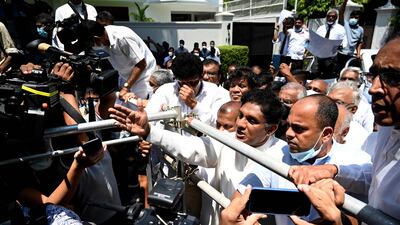
Sri Lanka's main opposition leader Sajith Premadasa (C) and MPs members shout during a protest in Colombo. AFP -
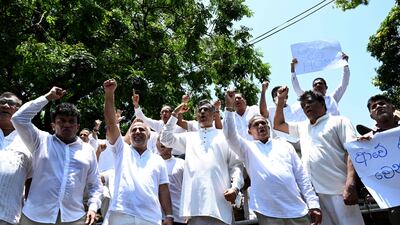
Sri Lankans have urged foreign tourists not to cancel travel plans as the South Asian island battles power cuts linked to soaring fuel prices. AFP -

The country is in the grips of its worst economic downturn in decades, sparked by a lack of foreign currency to pay for essential imports. AFP -
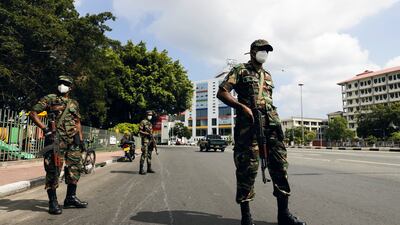
President Gotabaya Rajapaksa has invoked laws that allow the military to arrest and detain protesters without warrants. Reuters -

Tourism in Sri Lanka has been hit hard by the coronavirus pandemic. AFP -

The island welcomed 194,000 foreign tourists in 2021, down from 1.9 million in 2019 and 2.3 million in 2018. AFP -
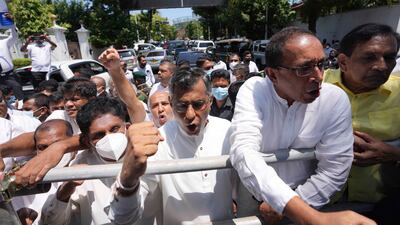
Sajith Premadasa (L) and other opposition politicians lead an anti government rally in Colombo. AP -
As fuel resources diminish, electricity rationing continues to be enforced and the cost of living rises, the shortages have led to a series power cuts. Reuters


The latest IMF staff consultation report concluded that Sri Lanka is facing solvency issues arising from debt that has reached unsustainable levels.
"Based on staff analysis, fiscal consolidation necessary to bring debt down to safe levels would require excessive adjustment over the coming years, pointing to a clear solvency problem," the IMF said in the report released in Washington on March 25.
Public debt is forecast to rise from 119 per cent of the GDP in 2021 (including public guarantees and external liabilities of the central bank) to 125 per cent of the GDP by 2026, the fund said.
"Rollover risk is very high," the IMF said. "FX debt service needs of $7 billion each year will require access to very large amounts of external financing at concessional rates and long maturities, sustained over many years."
Sri Lanka’s "debt overhang" combined with persistent fiscal and balance of payments financing shortfalls will "constrain growth and jeopardise macroeconomic stability in both the near and medium term", it said.
After the IMF staff report, a rally in oil prices and the loss of tourism revenue because of the Russia-Ukraine conflict worsened Sri Lanka's foreign exchange crisis, forcing the government to seek an aid package from the IMF.
senior economist at Tellimer Research
Sri Lanka's finance minister is due to visit Washington this month for talks with the fund over the loan programme.
As of February, the country was left with only $2.31bn in its reserves but faces debt repayments of around $4bn in 2022, including a $1bn international sovereign bond maturing in July.
"In staff’s view, public debt has become unsustainable and gross reserves are critically low and insufficient to cover near-term debt service needs. While the authorities’ efforts to raise new FX financing could provide breathing space in the short-term, it remains unclear how the large FX debt service obligations beyond 2022 can be met," the IMF report said.
A successful Covid-19 vaccination campaign has led to improved prospects for tourism, but the near and medium-term growth outlook is clouded by heightened macroeconomic imbalances, foreign exchange shortages and halting of non-priority imports, it said.
"The large public debt burden has subordinated monetary and exchange rate policies to fiscal needs and continues to hinder the CBSL from pursuing its price stability objective."
In its recommendations, the IMF outlined policies to restore macroeconomic stability and debt sustainability in the near and medium term.
These include "substantial" revenue-based fiscal consolidation with reforms focused on strengthening VAT and income taxes. Developing a comprehensive strategy to restore debt sustainability, near-term monetary policy tightening, restoring a market-determined and flexible exchange rate and stronger social safety nets are needed, the fund said.

