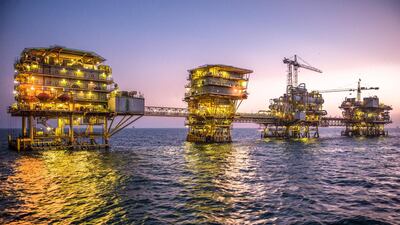
An oil complex on the coast of the Arabian Gulf. As countries emerge from Covid-19 containment, policy makers need to plan for a post-pandemic world, which underscores the need to create a new development model that reduces reliance on oil revenues, accelerates economic diversification, and fiscal consolidation. EPA
An oil complex on the coast of the Arabian Gulf. As countries emerge from Covid-19 containment, policy makers need to plan for a post-pandemic world, which underscores the need to create a new develop

How GCC countries can adapt policies for a post Covid-19 world


  • English
  • Arabic

Covid19 continues to be part of life as we know it. The GCC nations are gradually emerging from lockdown. There are nodes of optimism as the number of recoveries outpace the confirmed cases, including in the UAE.

Stimulus packages across the GCC included a number of common policy actions - rate cuts, liquidity enhancing measures, deferment of loans and credit card payments. Also noteworthy is the support extended to small and medium sizes enterprises (SMEs) and affected sectors impacted by the pandemic-induced lockdowns which include tourism, hospitality and aviation.

After almost 3 months of lockdowns, countries are phasing their recovery plans. As we gradually emerge from Covid-19 containment, policy makers need to plan for a transformed post-pandemic world, which underscores the need to create a new development model.

For the GCC countries, this means reviewing three broad policy measures related to monetary and fiscal policies as well as structural reforms.

Most GCC nations are pegged to the dollar except for Kuwait which pegs its dinar to a basket including the greenback. Hence, the countries follow the Fed’s interest rate moves, which may limit the use of other instruments of monetary policy and might restrict other policy moves from the central banks other than stimulus packages to increase liquidity.

So what can the central banks do to support their economies, while maintaining a peg or moving to a currency basket? Two innovative ways of providing support would be the establishment of GCC central bank swap lines and monetising new government debt issued for deficit financing.

The establishment of GCC central bank swap lines, with an option for the larger central banks (SAMA, UAE) to tap the Fed or People’s Bank of China (PBoC) would enable regional central banks to tap additional liquidity during times of market stress, support financial stability and provide a liquidity backstop.

Monetising new government debt issued for deficit financing can help avoid the crowding out of the private sector and inject liquidity, given the lack of developed local currency debt markets and central banks’ limited ability to conduct open market operations.

On the fiscal policy front as part of their pivot towards diversifying their economies and becoming less reliant on oil revenues, a move towards deficit financing along with the institution of fiscal rules for long-term fiscal sustainability can help accelerate the development of local currency debt and mortgage markets to finance housing and long-term infrastructure projects.

Rationalising government spending either by reducing the size of government, shifting activities to the private sector, and moving to targeted subsidies is another element of fiscal reform. In conjunction governments can issue long term debt that can be bought by central banks during a crisis period which is happening in the US and Europe today.

Diversify government revenues by improving the management of public commercial assets and increasing the efficiency of tax collection is an important element of fiscal reform. Consolidating the large number of fees and charges on consumers and businesses into fewer broad-based taxes, can help lower business and living costs.

The Covid pandemic is also an incentive for “Green New Deals” through investment in public health, domestic AgriTech for food security, renewable energy, clean cities and technologies, that will support job creation and economic diversification. Governments can take the first step to ensure a project pipeline, focusing on public-private partnerships, with targeted incentives for SME participation.

Accelerating the digitisation drive will also lower the cost of broadband internet and accessibility while speeding up the implementation of 5G.

The establishment of social safety nets and protection programs and pension schemes will also help reduce financial burdens that can come around in periods of crisis. For employees, a contribution towards a pension fund would ensure sufficient savings in the event of job losses or retirement and for employers, this provides them with an investment fund and support end-of-service or gratuity payments.

Structural reforms including the acceleration of privatisation, working closer with private sector participation is key. Developing insolvency frameworks to support out-of-court settlement, corporate restructuring and adequately protect creditors’ rights is another important element. Enhancing the environment that continues to attract and retain human capital through a permanent residency programme could help generate significant economic gains.

A positive side-effect of Covid-19 is the realisation that working from home is a feasible option. Companies can offer flexible work options, reduce office space and rents, while employees can stay at cheaper home locations, save on rents, and telecommute. To realise these benefits, requires removing barriers by amending labour laws and liberalising voice over Internet Protocol (VoIP).

The Covid-19 perfect storm is an unprecedented opportunity for the GCC countries for a policy reset, to steer toward a new development model for a post-pandemic world and move away from business as usual.


Company%20profile%20
%3Cp%3E%3Cstrong%3EName%3A%20%3C%2Fstrong%3EYodawy%3Cbr%3E%3Cstrong%3EBased%3A%3C%2Fstrong%3E%20Egypt%3Cbr%3E%3Cstrong%3EFounders%3A%20%3C%2Fstrong%3EKarim%20Khashaba%2C%20Sherief%20El-Feky%20and%20Yasser%20AbdelGawad%3Cstrong%3E%3Cbr%3ESector%3A%20%3C%2Fstrong%3EHealthTech%3Cbr%3E%3Cstrong%3ETotal%20funding%3A%20%3C%2Fstrong%3E%2424.5%20million%3Cbr%3E%3Cstrong%3EInvestors%3A%20%3C%2Fstrong%3EAlgebra%20Ventures%2C%20Global%20Ventures%2C%20MEVP%20and%20Delivery%20Hero%20Ventures%2C%20among%20others%3Cstrong%3E%3Cbr%3ENumber%20of%20employees%3A%3C%2Fstrong%3E%20500%3Cbr%3E%3C%2Fp%3E%0A
Who was Alfred Nobel?

The Nobel Prize was created by wealthy Swedish chemist and entrepreneur Alfred Nobel.

  • In his will he dictated that the bulk of his estate should be used to fund "prizes to those who, during the preceding year, have conferred the greatest benefit to humankind".
  • Nobel is best known as the inventor of dynamite, but also wrote poetry and drama and could speak Russian, French, English and German by the age of 17. The five original prize categories reflect the interests closest to his heart.
  • Nobel died in 1896 but it took until 1901, following a legal battle over his will, before the first prizes were awarded.
Formula Middle East Calendar (Formula Regional and Formula 4)
Round 1: January 17-19, Yas Marina Circuit – Abu Dhabi
 
Round 2: January 22-23, Yas Marina Circuit – Abu Dhabi
 
Round 3: February 7-9, Dubai Autodrome – Dubai
 
Round 4: February 14-16, Yas Marina Circuit – Abu Dhabi
 
Round 5: February 25-27, Jeddah Corniche Circuit – Saudi Arabia
PROFILE BOX

Company name: Overwrite.ai

Founder: Ayman Alashkar

Started: Established in 2020

Based: Dubai International Financial Centre, Dubai

Sector: PropTech

Initial investment: Self-funded by founder

Funding stage: Seed funding, in talks with angel investors

UAE%20v%20West%20Indies
%3Cp%3EFirst%20ODI%20-%20Sunday%2C%20June%204%20%0D%3Cbr%3ESecond%20ODI%20-%20Tuesday%2C%20June%206%20%0D%3Cbr%3EThird%20ODI%20-%20Friday%2C%20June%209%26nbsp%3B%3C%2Fp%3E%0A%3Cp%3EMatches%20at%20Sharjah%20Cricket%20Stadium.%20All%20games%20start%20at%204.30pm%0D%3Cbr%3E%0D%3Cbr%3E%3Cstrong%3EUAE%20squad%3C%2Fstrong%3E%0D%3Cbr%3EMuhammad%20Waseem%20(captain)%2C%20Aayan%20Khan%2C%20Adithya%20Shetty%2C%20Ali%20Naseer%2C%20Ansh%20Tandon%2C%20Aryansh%20Sharma%2C%20Asif%20Khan%2C%20Basil%20Hameed%2C%20Ethan%20D%E2%80%99Souza%2C%20Fahad%20Nawaz%2C%20Jonathan%20Figy%2C%20Junaid%20Siddique%2C%20Karthik%20Meiyappan%2C%20Lovepreet%20Singh%2C%20Matiullah%2C%20Mohammed%20Faraazuddin%2C%20Muhammad%20Jawadullah%2C%20Rameez%20Shahzad%2C%20Rohan%20Mustafa%2C%20Sanchit%20Sharma%2C%20Vriitya%20Aravind%2C%20Zahoor%20Khan%0D%3C%2Fp%3E%0A
INVESTMENT PLEDGES

Cartlow: $13.4m

Rabbitmart: $14m

Smileneo: $5.8m

Soum: $4m

imVentures: $100m

Plug and Play: $25m

Timeline

2012-2015

The company offers payments/bribes to win key contracts in the Middle East

May 2017

The UK SFO officially opens investigation into Petrofac’s use of agents, corruption, and potential bribery to secure contracts

September 2021

Petrofac pleads guilty to seven counts of failing to prevent bribery under the UK Bribery Act

October 2021

Court fines Petrofac £77 million for bribery. Former executive receives a two-year suspended sentence 

December 2024

Petrofac enters into comprehensive restructuring to strengthen the financial position of the group

May 2025

The High Court of England and Wales approves the company’s restructuring plan

July 2025

The Court of Appeal issues a judgment challenging parts of the restructuring plan

August 2025

Petrofac issues a business update to execute the restructuring and confirms it will appeal the Court of Appeal decision

October 2025

Petrofac loses a major TenneT offshore wind contract worth €13 billion. Holding company files for administration in the UK. Petrofac delisted from the London Stock Exchange

November 2025

180 Petrofac employees laid off in the UAE

Company profile

Company: Rent Your Wardrobe 

Date started: May 2021 

Founder: Mamta Arora 

Based: Dubai 

Sector: Clothes rental subscription 

Stage: Bootstrapped, self-funded 

COMPANY%20PROFILE
%3Cp%3E%3Cstrong%3EName%3A%20%3C%2Fstrong%3ESmartCrowd%0D%3Cbr%3E%3Cstrong%3EStarted%3A%20%3C%2Fstrong%3E2018%0D%3Cbr%3E%3Cstrong%3EFounder%3A%20%3C%2Fstrong%3ESiddiq%20Farid%20and%20Musfique%20Ahmed%0D%3Cbr%3E%3Cstrong%3EBased%3A%20%3C%2Fstrong%3EDubai%0D%3Cbr%3E%3Cstrong%3ESector%3A%20%3C%2Fstrong%3EFinTech%20%2F%20PropTech%0D%3Cbr%3E%3Cstrong%3EInitial%20investment%3A%20%3C%2Fstrong%3E%24650%2C000%0D%3Cbr%3E%3Cstrong%3ECurrent%20number%20of%20staff%3A%3C%2Fstrong%3E%2035%0D%3Cbr%3E%3Cstrong%3EInvestment%20stage%3A%20%3C%2Fstrong%3ESeries%20A%0D%3Cbr%3E%3Cstrong%3EInvestors%3A%20%3C%2Fstrong%3EVarious%20institutional%20investors%20and%20notable%20angel%20investors%20(500%20MENA%2C%20Shurooq%2C%20Mada%2C%20Seedstar%2C%20Tricap)%3C%2Fp%3E%0A
ELIO

Starring: Yonas Kibreab, Zoe Saldana, Brad Garrett

Directors: Madeline Sharafian, Domee Shi, Adrian Molina

Rating: 4/5