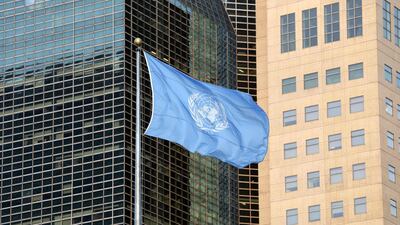

This week should be one of the most significant in the history of the United Nations. As it celebrates its 75th birthday, the UN’s secretariat sought to use this year’s meeting of the world’s leaders in the General Assembly to champion multilateralism and reinforce the need for them to work together.
As polarisation increases and competition between the world’s major leaders rises, global challenges like climate change, widening income gaps and the proliferation of violent non-state actors need global co-operation under the banner of the UN.
-

A Palestinian worker from the United Nation Relief and Works Agency (UNRWA) handles food supplies, in Gaza City. EPA -
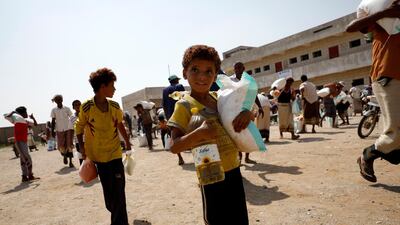
Displaced Yemenis get emergency food aid provided by a local relief group, Mona Relief Yemen in the western province of Hajjah, Yemen. EPA -
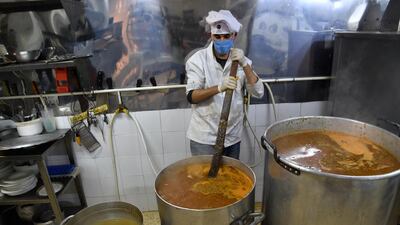
A volunteer of the "Nass el-Khir" association prepares food for meals to be distributed among those in need in Algeria's capital Algiers. AFP -
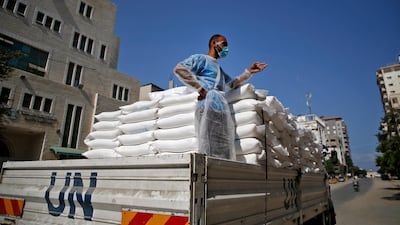
A worker of the United Nations Relief and Works Agency for Palestine Refugees stands in the back of a truck delivering food aid to families in need in Gaza City. AFP -
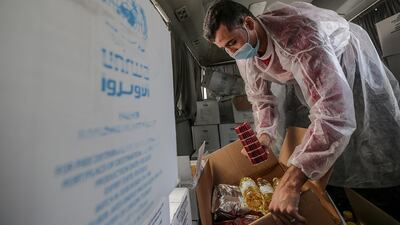
A Palestinian worker at the United Nation Relief and Works Agency (UNRWA) distributes food aid rations for refugee families, in Gaza City. EPA -
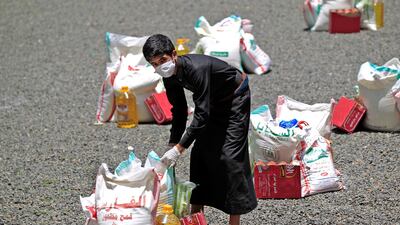
A Yemeni boy carries a portion of food aid, distributed by Yadon Tabney development foundation, in Yemen's capital Sanaa. AFP -

A Palestinian worker at the United Nation Relief and Works Agency distributes food aid rations for refugee families, in Gaza City. EPA -
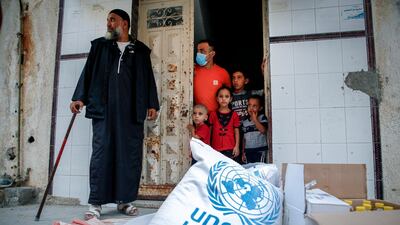
Members of a Palestinian family stand through the door of their home as they receive food aid provided by the United Nations Relief and Works Agency for Palestine Refugees in Gaza City. AFP -
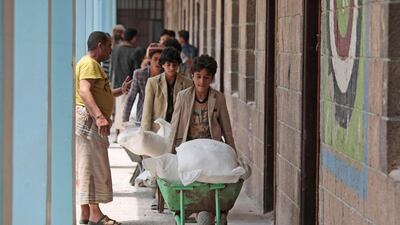
Displaced Yemenis receive food supplies provided by the World Food Programme, at a school in Sanaa, Yemen. AP Photo -
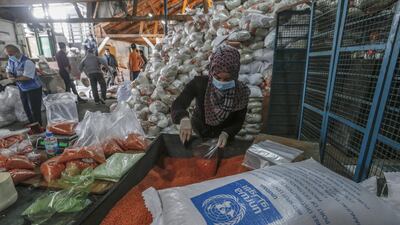
Palestinian employees at the United Nations Relief and Works Agency for Palestinian Refugees prepare food aid rations. AFP


The UN General Assembly High-Level Debate that kicks off today and goes on for a week was meant to be a pivotal moment to recommit to the Sustainable Development Goals. It occurs a decade ahead of the deadline to meet the 17 targets the world agreed upon in 2015. The 75th anniversary was to be a moment to take stock, celebrate and learn from past mistakes.
Then Covid-19 happened. And just like everyone else, the UN’s plans had to change, too. Suddenly, the protocol and ceremony of world leaders descending upon New York was replaced by virtual calls being set up – some tailored to suit other time zones – for the first time in the history of these meetings.
Unlike any other September in decades, the UN’s iconic building will stand largely empty, impacted greatly by the pandemic. There will be few speeches from the UN General Assembly Hall’s famous podium, and off-the-cuff conversations in the corridors of the UN building and swanky New York hotels will be replaced with virtual teleconference discussions, scripted and formal to avoid officials talking over one another.
Without the need to be physically present in New York, many diplomats will be going about their work outside of the UN. For example, US Special Representative for Syria Engagement and Special Envoy to the Global Coalition to Defeat ISIS James Jeffrey and American Special Envoy for Syria Joel Rayburn are embarking on a trip to Syria, Iraq and Germany this week, rather than their usual presence in New York to meet counterparts and seek UN-endorsed solutions. The reality is that to succeed, diplomacy, like learning, has to be a social experience. Building trust requires social interaction and looking your interlocutor in the eye – it cannot be a solely transactional experience.

While the mechanics of the annual UN meeting have been greatly altered due to Covid-19, the world still needs the annual gathering of the international leaders – perhaps now more than ever. UN Secretary General Antonio Guterres said last week that the Covid-19 pandemic “has shown the enormous fragility of the world”. Fragility coupled with economic and social strains mean heightened tensions.
In March, Mr Guterres called for a ceasefire by all sides involved in armed conflicts around the world, stressing the importance of joint efforts to combat Covid-19. While a worthy idea and concept, it was not heeded. And while multilateral co-operation is vital in tackling Covid-19 and all of its ramifications, the leaders of too many countries are set on going it alone.
There are, however, bright spots worth focusing on. For example, Unicef and Unesco are coming together to help finance connectivity for children in underdeveloped schools in order to ensure their continued education. Furthermore, countries like the UAE have taken a lead in providing medical aid to countries and healthcare practitioners around the world.
This week will provide an opportunity for countries to come up with more areas of collaboration, and how to avoid leaving behind whole countries and societies that are not as well connected. Long before Covid-19 struck, concerns about a growing divide in access to technology was rising. The events of this year have made it even more evident.
In addition to securing the right to digital access for all, the UN continues to have an important role to play in peace building and in upholding the responsibility to protect, even though that concept has been greatly damaged with gross violations of human rights in Myanmar, Syria and beyond.
Yesterday, September 21, was ‘’peace day”, designated by the UN in 1981 as a day to advocate for peace and justice. Today marks 40 years since the Iraq-Iran war kicked off and lasted eight long years until Iran accepted the terms of a negotiated settlement, as documented in UN resolution 598 on July 20, 1988, which came into effect August 8, 1988.
Today, the Arab world faces internal troubles in too many of its countries, leading to the establishment of UN political missions trying to resolve their problems, unfortunately will little success. The 75th anniversary should be a moment to reconfirm support for these UN missions, which have a fundamental role to play in protecting civilians and in preventing their countries from becoming failed states.
Meeting the Sustainable Development Goals was always going to be a challenge for all 193 member states of the UN. However, Covid-19 and the impact it has had on early education and health systems could deal a deathblow to meeting the targets, unless there are ample financial and diplomatic investments to compensate. Alternatively, Covid-19 might force co-operation between countries and allow the acceleration of new methods of work that leapfrog over the challenges of the old way of working. It is up to the leaders, diplomats and advocates meeting this week to decide which path the world will take.
Mina Al-Oraibi is editor-in-chief of The National

