


![Lata Mangeshkar: When she began her career, the playback singer Lata Mangeshkar was sniffed at because she came from the wrong part of India. “Her voice will smell of dal [lentils],” said Dilip Kumar. She didn’t take offence; she took lessons in Urdu diction. That she came from a family of classical musicians gave her a natural edge and with her sister, Asha Bhosle, she went on to rule the industry with an iron hand. The two of them created a monopoly that would last for nearly 40 years, with Lata taking the heroine’s songs and Asha going for the vamp’s seductive numbers.](https://www.thenationalnews.com/resizer/v2/RY2HMQVHHKP4WAHATJHNXE4NXU.jpg?smart=true&auth=623a920d76d150386a9b9780841c6474a1c1f5b852d35c9927c753d08729994f&width=800&height=450)


Text by Jerry Pinto; Illustrations by Mathew Kurian
-
-
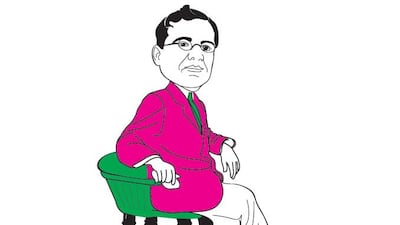
He came from a family of priests, but when D G Phalke saw a film on the life of Christ, he decided to turn this new medium into a vehicle for the stories of the subcontinent. He went to Germany to learn his craft and trained boys to play women’s roles when no one else would. When his son became ill during the shooting of the great epic Raja Harishchandra, Phalke simply placed him on a funeral pyre and shot a scene in which the king’s son dies. As in Harishchandra’s story, it all came out right in the end. The boy recovered, the film made history and Phalke fathered the film industry in India. The highest award the government of India bestows is named after him. -
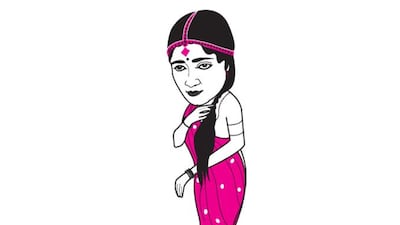
Billed as “Glorious Gohar”, she was not just a pretty face who could look like the drunkard’s wife in Typist Girl. Like so many of the women of the silent era, she had a shrewd sense of business, going on to form Jagdish Films and Ranjit Movietone. Gohar was a woman who understood that it was a man’s world but who knew that, if she was going to last, she would have to follow the money trail into production. -
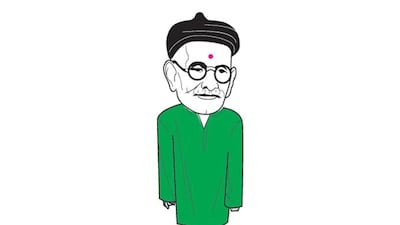
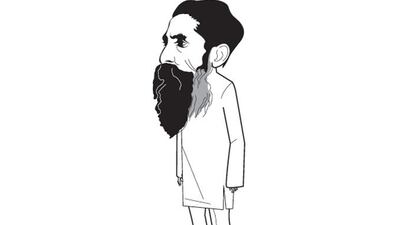
Harishchandra Sakharam:Bhatavdekar sold cameras and camera equipment, but he is also, almost certainly, the first of the Indian filmmakers. Like George Melies, he took his cues from what he saw around him, shooting the antics of monkeys and an Indian-style wrestling match. He stayed a documentarist and, as we all know, the documentary boys always take a back seat to the feature filmmakers. Bhatavdekar and others like him (such as Hiralal Sen) lost the race to Dhundiraj G Phalke. -
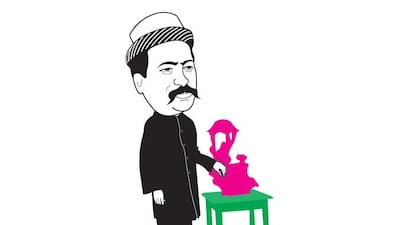
Jehangir Framji Madan: By 1905, J F Madan had two prominent theatre companies, the Elphinstone and the Khatau-Alfred, which he had bought down to the rights to their repertoires. This meant that when he got into the motion picture business – by 1902, some say, though the accepted date is 1905 – he had a ready stock of scenarios and plays. He was a distributor, too, and had the agency rights for Pathé. Madan & Sons, at its peak, had 172 theatres and accounted for half of India’s box office. -
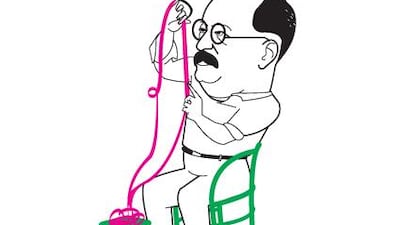
Ardeshir Irani: He is credited with the making of Bollywood’s first sound film, Alam Ara, in 1933 and with the making of its first indigenous colour film, Kisan Kanya, in 1937. He was an old-style movie mogul who is said to have made 250 movies. Half these were silents but when sound came, he made movies in nine languages including the first Farsi film, Dukhtar-e-Lur. Imperial Studios went into liquidation but that didn’t stop Irani from making a film or two afterwards. There’s a bridge in Mumbai named after him. -
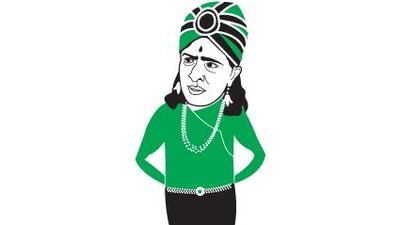
Himanshu Rai: Himanshu Rai came from a wealthy family in Kolkata who had their own private theatre; he studied with the Nobel Laureate Rabindranath Tagore, got a law degree and went to England, where he did some theatre and became a consultant on films with exotic Oriental themes. When he returned to India, it was to direct a cinematic version of Edwin Arnold’s Light of Asia. Problems with distribution? Rai took his film and showed it to the Windsors. He was that kind of man. He would set up Bombay Talkies with his wife, Devika Rani,in a marriage that was legendary in more ways than one. -
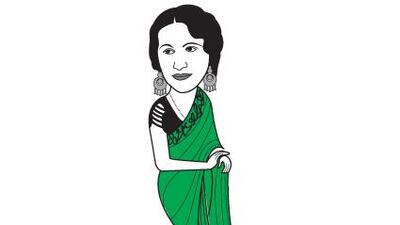
Patience Cooper: One of the quintessential products of the silent era, Patience Cooper was an Anglo-Indian whose first brush with fame was when she worked with J F Madan in one of his theatre companies. She probably didn’t speak any Hindi, but didn’t need to. She became one of the first true superstars. She was one of the first actors to ever play double roles; in Rani Sundari she played mother and daughter and in Patni Pratap she played twin sisters. (Both are now a standard of Bollywood. You’re not a star until you’ve played your own dad.) -

Sulochana: Her screen name was Sulochana, but her real name was Ruby Myers. Of Eurasian parentage, she entered the world of films as a stunt actress but soon became one of the highest-paid actors of her time. She worked with Irani’s Imperial Studios in a number of successful films. But her star turn was in Wildcat of Bombay, where she played eight roles. She won the Dadasaheb Phalke award, the highest honour the Indian government confers on film people, in 1973. -
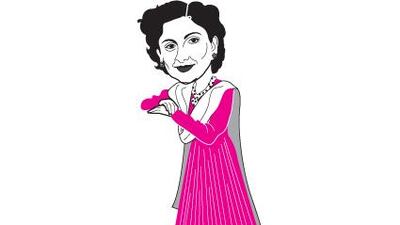
Zubeida: It is said Zubeida was born into Muslim royalty. But she became screen royalty soon enough. She made her debut in Kohinoor at 12 and worked through the silent era and into sound because she could speak the Hindustani-Urdu mix that was to become the language of “Hindi cinema”. She starred in Alam Ara. Oh, and as for lineage, Zubeida’s mum, Fatma Begum, became India’s first woman director while her granddaughter, Rhea Pillai, is a model. -
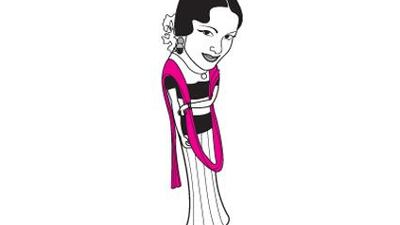
Devika Rani: When India gained independence in 1947, there was an unwritten rule that stars couldn’t kiss on screen. Devika Rani would have laughed; she kissed her husband, Himanshu Rai, on screen in Karma for a legendary four minutes. But, then, she was a mould-breaker. The grandniece of the poet laureate Rabindranath Tagore, Rani helped set up the studio Bombay Talkies, was also a jewellery collector, a bridgeplayer and accepted into the salons of Bombay’s comprador class. Five years after she was widowed, she met Svetoslav Roerich, the son of Nicholas Roerich, the Russian painter, fell in love and walked away. -
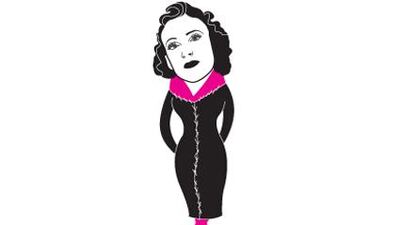
Fearless Nadia: Bollywood’s B-Grade cinema queen was an Australian-born woman who could barely speak Hindi. But that didn’t stop her because her fan base only wanted to see their heroine exercise with clubs, put on leather chaps and a mask and hunt down villains. And Mary Evans, who was rechristened Nadia by her director Homi Wadia (whom she later married, thus becoming, euphoniously, Nadia Wadia) obliged in film after film, playing a female version of Zorro with great success and providing a foil to the virginal, simpering coy heroines of the time. Fearless Nadia, her grandnephew’s film, is an affectionate portrayal of the actress and her era. -
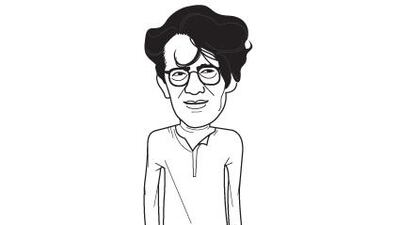
P C Baruah: One of the great tropes of Hindi cinema is that of Devdas, the young man who loses his love because of his inability to assert himself against his father, his social position and the decadence of society. P C Baruah was the first to see the potential of this story that has been told several times – with Dilip Kumar, Shah Rukh Khan and Abhay Deol playing the central character in the 1950s, 1990s and 2000s respectively. Baruah learnt his craft at Elstree Studios in England. -
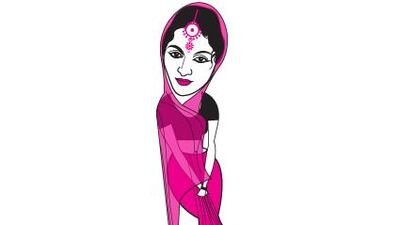
Shobhana Samarth: One of the great stars of the 1930s, Shobhana Samarth played Sita, the wife of Rama, in several cinematic versions of the great Indian epic, the Ramayana. She thus “became” Sita and generations of calendar and comic-book artists would use her face as a reference, whether consciously or unconsciously, to recreate the story in which Sita is abducted by Ravana and is rescued by Rama after a protracted search and battle. Her mother Rattan Bai was an actress and so were two of her daughters, Nutan and Tanuja. Two granddaughters (Kajol and Tanisha Mukherjee) also became actors as did her grandson, Monish Bahl. See? It is a family business. -
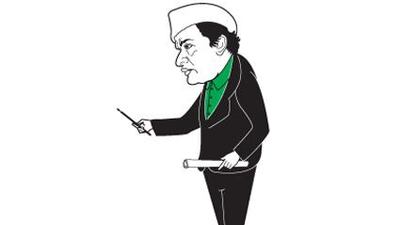
V Shantaram: Rajaram Vankudre Shantaram set up the Prabhat film company with Sheikh Fattelal and V S Damle who, like him, were highly regarded directors. Prabhat made magnificent films on socially relevant issues such as communal harmony and the caste problem. But Shantaram is remembered mainly for his song and dance routines, which he staged with gusto. Some of these starred Sandhya, who was noted for her dancing – if not acting – talent. His daughter Rajasree was also a film star. -

Ashok Kumar: He didn’t want to be an actor. Legend had it that he was conscripted into a film career and, in protest, shaved his head bald. But a wig was found and a career was born – and with it another film family. His brother Kishore Kumar would become to male playback singing what Lata Mangeshkar was to the voice of India’s women. A third brother, Anoop Kumar, would join the other two but with out much success. Ashok’s career would span 50 years, covering roles from suave thieves to randy old men. -

K L Saigal: Bollywood reserves the term superstar for a handful of men. The first of these was Kundan Lal Saigal, who was also the last of the great male singing stars. He was the first Devdas, playing the lover emasculated by society, patriarchy and indecision. His was the quintessential Bollywood story: he was a typewriter salesman when the producer and director B N Sircar took him on as a singer. He was not classically trained but aided by his diction and a voice that often seemed like some vast musical instrument in itself, Saigal pioneered a new way of singing that would be imitated for years to come. -
![Lata Mangeshkar: When she began her career, the playback singer Lata Mangeshkar was sniffed at because she came from the wrong part of India. “Her voice will smell of dal [lentils],” said Dilip Kumar. She didn’t take offence; she took lessons in Urdu diction. That she came from a family of classical musicians gave her a natural edge and with her sister, Asha Bhosle, she went on to rule the industry with an iron hand. The two of them created a monopoly that would last for nearly 40 years, with Lata taking the heroine’s songs and Asha going for the vamp’s seductive numbers.](https://www.thenationalnews.com/resizer/v2/RY2HMQVHHKP4WAHATJHNXE4NXU.jpg?smart=true&auth=623a920d76d150386a9b9780841c6474a1c1f5b852d35c9927c753d08729994f&width=400&height=225)
Lata Mangeshkar: When she began her career, the playback singer Lata Mangeshkar was sniffed at because she came from the wrong part of India. “Her voice will smell of dal [lentils],” said Dilip Kumar. She didn’t take offence; she took lessons in Urdu diction. That she came from a family of classical musicians gave her a natural edge and with her sister, Asha Bhosle, she went on to rule the industry with an iron hand. The two of them created a monopoly that would last for nearly 40 years, with Lata taking the heroine’s songs and Asha going for the vamp’s seductive numbers. -
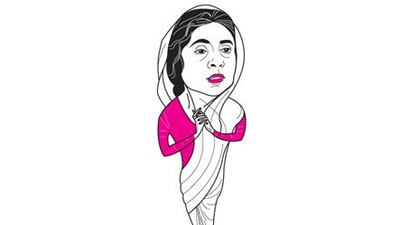
Leela Chitnis: The advertisements in the local newspapers described her as “the first graduate society-lady on the screen from Maharashtra”. Leela Chitnis’s career as an actor spanned 45 years, and during that time she went from playing a fineboned beauty who haunted men in their dreams to the mother of several great stars, including Bharat Bhushan and Raj Kapoor. She brought a new naturalism to her acting that was refreshing and exhilarating, and stood her ground against the changes that the decades were to bring. -
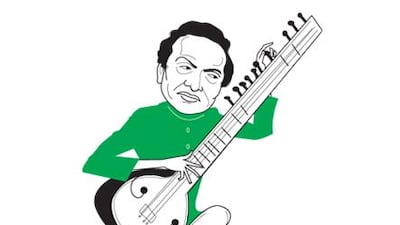
Naushad Ali: His tunes are still hummed by millions of Indians and are now being remixed by DJs and record companies, but Ali was also one of the first Indian music composers to introduce sound mixing. He is said to have put Lata Mangeshkar – who was his discovery – into a small room to get the right, haunting reverb for a song. He introduced huge orchestras with hundreds of musicians playing together. His scores for films such as Baiju Bawra, Mughal-e-Azam and Ganga Jamna are classics. -
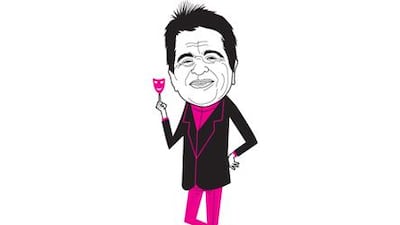
Dilip Kumar: The second superstar after K L Saigal, Kumar was one of 12 Pathan siblings from Peshawar. His birth name was Yusuf Khan but he adopted a Hindu pseudonym – a common practice in the day – and became Dilip Kumar. Devika Rani claimed to have discovered him but his first outing, Jwar Bhata, was not a hit, with the acidulous journalist Baburao Patel describing him as an anaemic, “illtreated convict who has escaped from jail”. But he went on to become the King of Tragedy, and the first film star to read Sartre on the sets. -
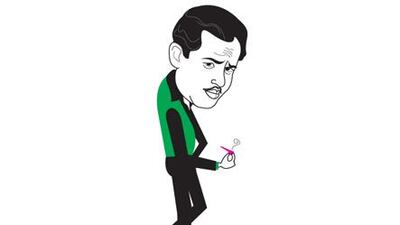
Guru Dutt: Guru Dutt’s Pyaasa was nominated by Time magazine as one of the 100 best movies of all time, and by Richard Corliss as one of the 10 most romantic movies. Romantic, in its literary sense, also defines Guru Dutt’s oeuvre. Whether meditating on decadence (in Saahib, Biwi Aur Ghulam) or on the ephemeral nature of fame (Kaagaz ke Phool) or society’s attitude to the creative spirit (Pyaasa), the tragic-romantic figure was always at the heart of his cinema. He was found dead in his apartment on October 10, 1964. He was 39. -
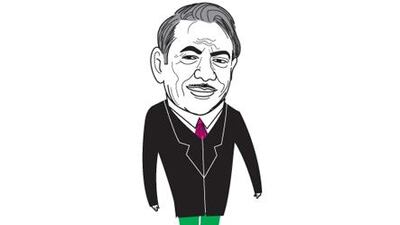
Mehboob Khan: One of Hindi cinema’s defining moments is Mother India, directed by Mehboob Khan. It is the powerful story of an Indian peasant who sacrifices maternal love for honour. Khan made the film twice. In 1940, he told the story as Aurat with Sardar Akhtar in the lead; in 1957, he made it in colour with Naushad as music director and it became a monster hit. The second version had Nargis in the lead role and it defined a certain vision for India, cementing the reputation of Mehboob Khan Studios. -
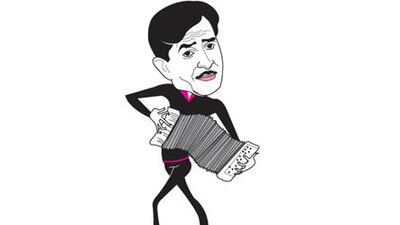
Raj Kapoor: His father, Prithviraj Kapoor, started the dynasty but it was Raj Kapoor who defined it. He was the Great Showman, but as long as he had Khwaja Ahmed Abbas writing his scripts, his films also showed a connect with the problems of India. (Abbas was a member of the Progressive Writers Association, which meant he was left-leaning, as almost every Indian intellectual was.) Kapoor was a superb storyteller, but he had an uncanny sense of music and an understanding of the pulse of the audience. He was still making successful movies into the 1980s. -
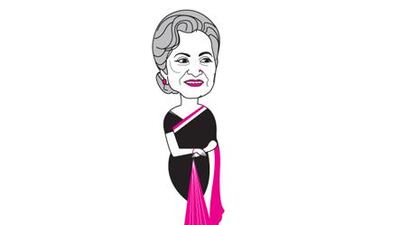
Waheeda Rehman: She was already an actor in Telugu cinema when Guru Dutt discovered her and brought her to Bombay. He first cast her in the somewhat unlikely role of a woman running a crime syndicate, but she went on to become his muse and they starred together in films that are now considered Bollywood classics: Pyaasa, Kaagaz Ke Phool and Saahib Biwi Aur Ghulam. After Dutt’s untimely death, Rehman went on to act with a number of top-line directors and now plays genteel granny roles in big-budget pictures. -
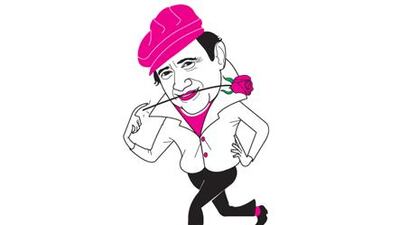
Dev Anand: By his own reckoning, Dev Anand was a star on the day he died in 2011; but that may have been because his greatest talent was self-deception. In the glory days however, between the 1950s and the 1970s, he was one of the great stars. The Dev Anand hero was a denizen of the city – of its underbelly. He was a noir hero, except that Bollywood morality would always demand a last-minute redemption, generally wrought by a woman. In the 1970s, he turned producer and director. -
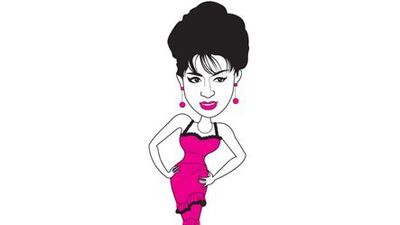
Helen: In most cinemas, female stars have a short shelf-life. And dancers? Perishable commodities. Helen bucked that trend. She was The Dancer for nearly 30 years. It wasn’t just her smile, her innate rhythm and her ability to look at home in satin, spangles, feathers and fur that made her a dancer who lasted in an industry that is brutal about throwing away what it doesn’t want; it was her ability to suggest that she was enjoying dancing for you that made her the go-to go-go girl. -
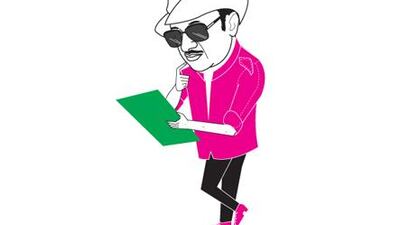
Manmohan Desai: Manmohan Desai was the neglected genius of classic Bollywood: the three-hour / six-song / catch-all action melodrama. His way was made smooth by his father and brother, both of whom were in the industry, but neither of whom made it out of the B-grade rut. Desai began his career with characteristic panache by casting Raj Kapoor and Nutan in Chhalia, which turned out to be a huge hit. But it was with the coming of Amitabh Bachchan that Desai was to come into his own. But ah, that’s a story that belongs to the 1970s. -
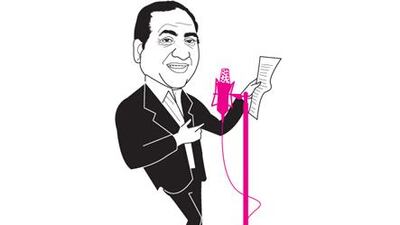
Mohammed Rafi: The 1960s were the cotton-candy decade of chiffon saris and romantic songs in the moonlight. And the man behind the hero, the man at the microphone was Mohammed Rafi, whose voice brought thousands of songs alive. He was a devout Muslim whose understanding of Islam prevented him from taking royalties. He had a falling out with the then top female playback singer Lata Mangeshkar, which led the way to the ascendancy of Kishore Kumar in the next decade. But in the 1960s, if there was a romantic song, a devotional song, or even a patriotic song, chances are, Rafi was the voice. -
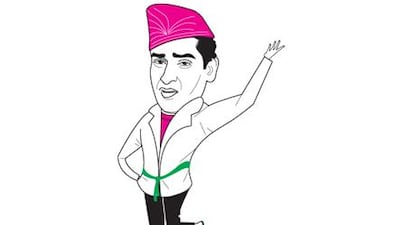
Shammi Kapoor: He was the man in the white tuxedo, the nightclub musician, the lost heir to the fortune. But most of all, Shammi Kapoor was known as the “Yahoo” guy, who brought a brand of irrepressible energy to his portrayals of young lovers who brooded intensely in scene one and imitated Elvis Presley in the next. This might have been his way of differentiating himself from his elder brother, the redoubtable Raj, or his younger brother, the beautiful Shashi. In his after-career, he took to religion and the internet. -
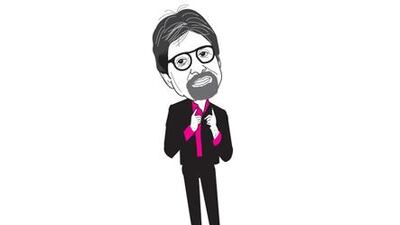
Amitabh Bachchan The son of a noted poet, Amitabh Bachchan arrived in Mumbai with a letter of introduction from Indira Gandhi. It didn’t even get him a job at the government-controlled All-India Radio. But when Dev Anand turned down Zanjeer — because there were no songs for the hero to sing — Bachchan grabbed it with both hands, pouring the anger he felt at rejection into the story of a cop chasing his parents’ killers. He was soon named the Angry Young Man. Since then, he’s grown larger and larger until he has now assumed the size and pomp of a patriarch. -
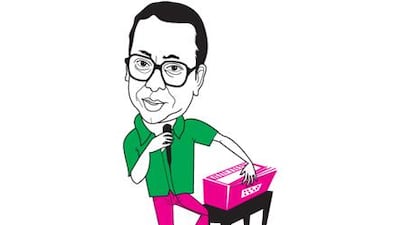
R D Burman: The son of a legendary music composer, Sachin Dev Burman, and thus royalty from the north-eastern state of Tripura, Rahul Dev Burman was the sound of the 1970s. He defined its revolutionary tone, its devil-may-care attitude, the beginning of Bollywood’s love affair with the West. He set the aural stage for Bachchan’s Angry Young Man and for the first of the ‘westernised’ heroines: Zeenat Aman and Parveen Babi. (This meant that they were at home in bikinis.) His music is finding new audiences even today, as remix after remix is created from his melodies. -
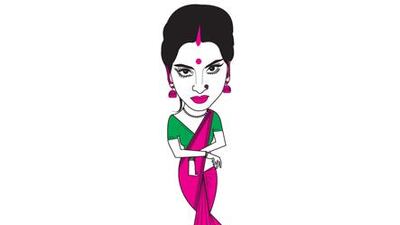
Rekha: She was the daughter of the South Indian film star Gemini Ganesan and Pushpavalli. When Rekha started out, she was overweight and the caked-on makeup couldn’t conceal her bad skin and facial hair. But nothing could conceal the joy with which she responded to the camera. And over the decade she transformed herself from a playful nymphet into the diva of lip gloss, who knew exactly how she wanted to be photographed. Rekha’s ruthless reinvention of herself continues and when she makes an appearance, it seems as if time hasn’t dared to touch her. -
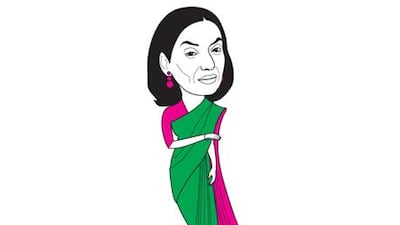
Shabana Azmi: There was another show in town, the alternative cinema, and Shabana Azmi was the face of that cinema along with Smita Patil, Naseeruddin Shah and Om Puri. She too was the daughter of a poet, Kaifi Azmi, and had grown up, at least for some years, in the kind of commune where one would like to have been a fly on the wall, such was its intellectual starpower. Azmi played rural women and city girls with equal integrity and made a small foray into the big bad world of Bollywood. -
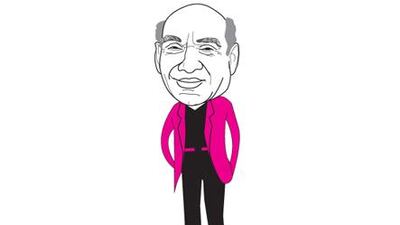
Yash Chopra: Last year, dengue claimed Yash Chopra, who made some of the most powerful films of the 1970s, many of them starring Amitabh Bachchan. His Deewaar was said to be based on the life of a gangster, Haji Mastan, who had by then reformed and complained that he had never been so violent. His Trishul developed the theme of the Oedipal struggle inaugurated in Devdas but it gave the victory to the son. And in the 1990s, Chopra took Bollywood international with his high-style romances starring Shah Rukh Khan. -
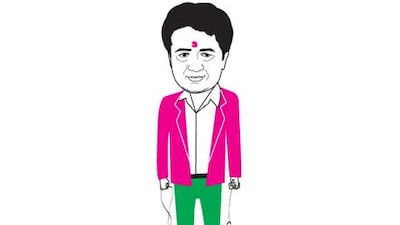
Gulshan Kumar: This is the man who reinvented the music industry. He took the music cassette out of the hands of the old guard company, HMV, and set it down in the souq with Super Cassettes. He churned out thousands of cheap tapes and insisted that they did not have to be sold in the traditional outlets; he took his prodigious output to cigarette shops, grocery outlets and whoever would stock them and made music for every religious occasion. He was shot outside a temple in Mumbai, allegedly because he had received funding from the underworld. -
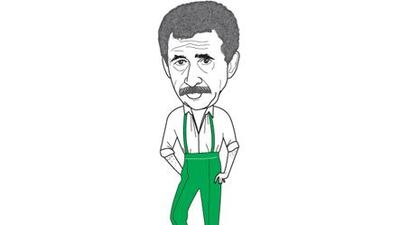
Naseeruddin Shah: It is said that François Truffaut once described Amitabh Bachchan as “a one-man industry”. If there ever was the equivalent for Indian art cinema, that title must go to Naseeruddin Shah. He has played blind school teachers and outcaste herdsmen; middle-class Parsi losers and drink-sodden cricketers; intent-on-rape tax collectors and principled police officers. In the 1980s, he made the transition to Bollywood and to everyone’s surprise turned out to be quite a box-office favourite, too. -
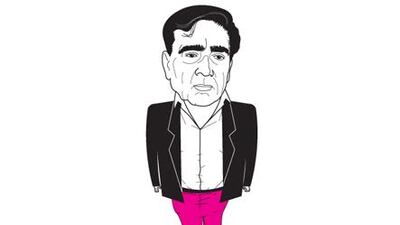
Prakash Mehra: When you want the kind of film in which a woman in a catsuit shares a nightclub floor with a large acrylic porcupine, you turn to Prakash Mehra’s cinema. He was one of the men who created the Amitabh Bachchan phenomenon with Zanjeer, but in the 1980s he was reduced to trying to remake the Dudley Moore hit Arthur in Hindi, with lashings of melodrama and a song sequence in which Bachchan flirts with several women in order to make his grandfather cry. No, really. -
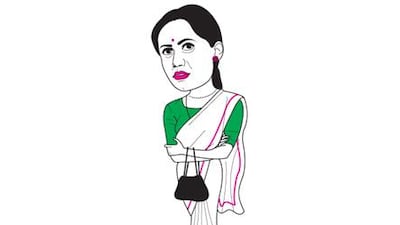
Smita Patil: Along with Shabana Azmi and Naseeruddin Shah, Smita Patil defined art cinema. She was discovered by the filmmaker Shyam Benegal. She was reading the news and her “fiery eyes” made the auteur seek her out and cast her in several films. Like Azmi and Shah, she, too, could not resist the lure of filthy lucre, backless blouses, song sequences in the rain and Prakash Mehra. It helped that the man she was in love with, Raj Babbar, was also a B-list Bollywood hero. Patil died young, in childbirth; her son Prateik Babbar has started acting. -
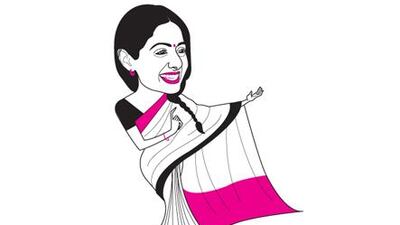
Sridevi: When Sridevi came to Bollywood from south India, she was described as Miss Thunder Thighs. She could not speak any Hindi and had to be dubbed. This did not prevent her from becoming one of the stars of the 1980s, appearing in a series of movies with Jeetendra, who danced well. And so the two pioneered the first dancercises, working lock-step routines on the beach with huge pots scattered about, or doing jumping jacks to express their love. An attempt to revive this “magic” has just failed at the box office. -
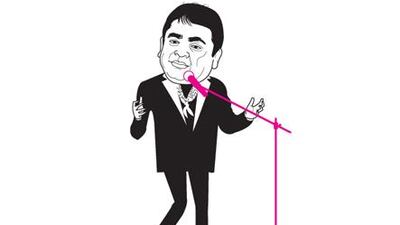
A R Rahman: Allah Rakha Rahman is known to the international community as the guy who made the music for Danny Boyle’s Slumdog Millionaire. At home, he’s the go-to guy for the New Sound – the A R Rahman sound, a bottom-feeder sound that reinvented Tamil cinema’s music and was soon to do the same in Bollywood. It was in 1992 that lorry drivers in Punjab started clicking their fingers to the music of Roja. With that film the pan-Indian phenomenon of A R Rahman was inaugurated. Aided by the director Mani Ratnam’s new style of editing songs – which was, in turn, defined by the arrival of the MTV-style music video – soon Rahman was in Bollywood and directing music for the biggest banners in town. -
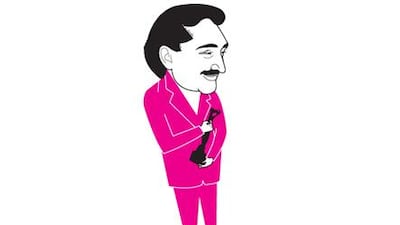
Aditya Chopra: Yash Chopra had two sons: Aditya and Uday. Uday has had a rather problematic career as an actor, but Aditya Chopra ensured his place in Bollywood’s cinematic history with his first directorial outing – Dilwaale Dulhaniya Le Jaayenge. This turned standard Bollywood practice on its head. In all films until then, the non-resident Indian (NRI) was a smoking-drinking-womanising ethical mess who could only be saved by a good dose of Indian values from the heartland. DDLJ was the first to suggest that NRIs could be good guys, too. And a new market was invented for Bollywood.
In pictures: A tribute to a century of Bollywood
Most popular today

