
Almost nine years ago, a 14-year-old Kylie Jenner posted her first Instagram picture. Despite her already lavish life, even as a teenager, the picture was simple, capturing a flame burning in a modest fireplace. It was grainy, off-centred and surrounded by an unsightly black border. “Rain day fire <3”, read the caption. Wholesome, perhaps, but nevertheless, mundane.
If you take a scroll back – all the way back – through your own Instagram feed, you’ll see a bit of yourself in that blurry, orange flame. For those were Instagram’s humble beginnings. The early days. Before influencers, before curated grids, before smartphones with cameras above three megapixels. A time when people posted with little thought or purpose, without heavy editing or as an #ad. A simpler time.
In the years that would follow, Jenner's Instagram game would evolve dramatically, helping her single-handedly drive a shift in beauty standards, launch a billion-dollar company and carve out an empire wholly separate from her famous family's reality TV show, instead becoming one of the most-watched people online, with 197.2 million Instagram followers (and counting).
An extreme example, perhaps, but one that encompasses Instagram’s journey from a modest smartphone pastime to cultural phenomenon.
The early days
It was a decade ago, in 2010, that Instagram was born. Creators Kevin Systrom and Mike Krieger initially launched the app as Burbn, and had intended it to be used as a geographical check-in tool. They quickly realised, however, that it was too similar to existing app Foursquare, and after noticing how many people were using the app’s option to add a photo to their check-in, refocused their attention. The app was renamed Instagram, born from a combination of “instant photo” and “telegram”, and on October 6, 2010, released on iOS.
"Birthdays are a good time to reflect on where we've been and where we're headed," Vishal Shah, Instagram's head of product, tells The National. "Since the earliest days of Instagram, we've been inspired by our community as they came to the app to connect with friends, visually express themselves, learn about new interests and people, and rally around causes and issues."
The initial app was simple. All photos had to fit Instagram's signature square sizing and there were a handful of filters on offer to jazz up users' grainy camera shots. The timing was perfect, too. Apple had just released its iPhone 4 which was seen as a huge step forward for smartphone photography, and existing photo-sharing apps such as Flickr and Imgur were losing interest. Within two months, one million users had signed up. Within a year, 10 million.
And it wasn’t just everyday users, either. Suddenly, people found themselves following their favourite celebrities, getting glimpses inside their homes, at what they were eating or where they had been on holiday. They didn’t need to rely on the pages of gossip magazines or for a friend request to be accepted; they were getting updates straight from the horse’s mouth. Systrom credits Snoop Dogg, who today has 52.7 million followers, as one of the earliest “celebrity adopters” of the app.
Users also loved the simplicity of it. They didn’t need to skim through dozens of statuses from Facebook friends oversharing, or have to navigate negative news stories. It was like browsing the paper just for the pictures. It also spoke to millennials in a way that desktop-focused Facebook and Twitter didn’t.
Instagram was designed first and foremost for mobile, fuelling the growing addiction to smartphones. Everything could be done in one fell swoop. Snapping, uploading, discovering. There was no need to upload from phone or camera to computer. It was instant gratification. By 2012, it had 40 million users and a $1 billion buyout offer from Facebook, which Systrom and Krieger accepted, joining the dark side of Big Tech.
The birth of the influencer
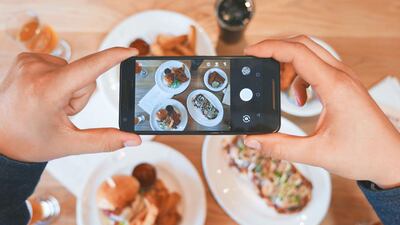
In the decade since it launched, Instagram has become more than just an app on a phone, it has become a way of life. As smartphone cameras improved, so, too, did the pride people took in the photos they posted. No longer were people just posting pictures of places they happened to be, or food they happened to be eating, they were actively seeking out things that they knew would look good on their pages. The phrase “doing it for the ‘gram” was added to Urban Dictionary in 2013, and became a mantra amongst the app’s most dedicated.
And thanks to the app's hashtag and location tag functionality, these aesthetically pleasing food and travel snaps were easy for people to discover, tearing users’ eyes away from their friends and celebrities, and towards glamorous strangers on the internet who appeared to lead a picture-perfect life. And so the influencer was born.
“The economy of social networks is around social status and influence, and if you think about that as just a phrase, influencers are the ultimate manifestation of that, where they have built status in order to monetise it, and you can’t fault them for it,” Krieger said in a 2019 talk.
However, people have faulted them for it. A lot. Influencer culture has gained mass criticism from many. Partly from fear of the unknown, partly from those who fail to see it as a real job, and partly from those who wished they had thought of it first. Like it or not, though, influencers are here to stay, and not only is it now a highly sought-after career choice among many young Instagram users, it’s an extremely lucrative one, too.
According to a 2019 study by influencer marketing software platform Klear, which surveyed more than 2,500 influencers, nano-influencers – those with between 500 and 5,000 followers – earn an average of between $41 to $472 per post, while big-time influencers with 500,000 followers or more earn an average of $3,138 or more. Travel influencers, according to the study, earn the most with the average sponsored post raking in $5,335. Unsurprising, when you consider how much Instagram and the travel industry go hand in hand.
Santorini, Bali, Positano, Cappadocia – interest in these destinations has sky-rocketed in recent years thanks to the endless Instagram opportunities they provide. Who could forget the travellers who went all the way to Bali's Gates of Heaven at Lempuyang Temple to take the same picture they had seen on Instagram posed by its "lake", just to discover that the lake was in fact a mirror placed under an iPhone by thrifty tour guides making money out of creating the perfect Instagram snap?
The darker side
But there’s a darker side to the impact of influencers. Not only was 2012 an important year for Instagram due to the Facebook buyout, it was also the year Kim Kardashian joined the platform, and the selfie started to reign supreme. Slowly but surely, content shifted from the landscapes and artistic shots Systrom and Krieger hoped would be its focus, towards a more narcissistic sentiment. No longer were young people wanting to look like the models they were seeing in the pages of magazines, but the girls they were seeing in their Instagram feeds every day, a much more attainable goal.
Remember Kylie Jenner’s single-handed shift of beauty standards? Her stream of selfies featuring newly plumped lips led to a surge of people trying to recreate the look at home with the #KylieJennerLipChallenge hashtag, which was a futile attempt as the star finally caved and admitted the plumping was achieved through filler.
In the US, plastic surgeons have reported a surge of 50 per cent more people undergoing the procedure since 2010. In the UK, enquiries were up by 70 per cent since the turn of the decade, cosmetic clinic chain Dr Leah Cosmetics reported in 2015.
The tide is starting to shift, though. Anti-influencer accounts, those focused on diversifying beauty standards and shattering picture-perfect illusions are gaining serious traction, while Instagram itself has made a number of changes in the past few years to address some of the more worrying sides of the platform.
In 2019, the platform began hiding like counts on pictures as a way to "remove pressure" people may feel to receive a certain number of interactions on their posts. At the time, Mia Garlick, Facebook Australia and New Zealand director of policy, said the move would help people "focus less on likes and more on telling their story". It also introduced a number of new moderation steps to combat the spread of hurtful comments left on posts.
Keeping up with the Joneses
So what will the next decade hold for Instagram? One thing’s for sure, it’s not going anywhere. In May 2019, the platform surpassed one billion monthly users, a number it has managed to cling on to even through 2020, which has taken away many of the traditional ‘gram content opportunities.
There have, of course, been other social media platforms that have stolen the spotlight over the past decade, but Instagram has always found a way to claw it back. After its launch in 2011, Snapchat was the golden child of social media thanks to its fun filters and temporary photo messages. But in 2016, Instagram launched Stories, allowing people to post snippets that disappear after 24 hours as well as send them in private messages, and Snapchat users were slowly drawn back.
IGTV launched in 2018 to take on YouTube, then came TikTok, which Instagram combatted with the launch of Reels in August this year. Whether or not it will be enough to lure back the TikTok-loving Gen-Z crowd remains to be seen, but for now, it’s certainly piqued the interest of Instagram’s loyal users.
"Over the past 10 years, we evolved with our key demographic – the young content creator," Shah says. "We have seen the enormous power of short-form videos amongst this segment and how they can educate, engage and entertain in equal measure. We have seen the importance of private messaging to people’s close relationships."
A decade after its launch, it seems Instagram is on a quest to become a one-stop app offering users everything they need in one place, and it's not done yet. "We will continue to build for the next generation of young people and creators to ensure that Instagram is the place where culture moves forward," Shah says. "We also have a few product updates planned to mark the occasion – we’re looking forward to sharing more soon."

