


These plants can be found in Emirati landscape designer Kamelia Zaal’s most recent garden design, which can be found at Canvas, a new development by Koa, adjacent to Al Barari. She uses indigenous and naturalised plant species and aims to craft a design that works with the prevailing environment, by consuming just 10 per cent to 20 per cent of the water required by conventional planting designs.
-
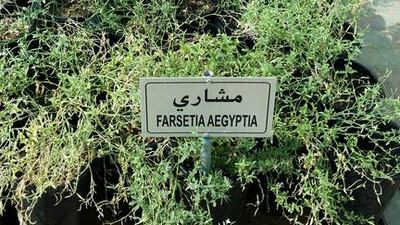
-
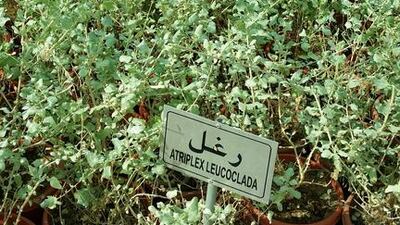
Atriplex leucoclada. Shrub (low). Indigenous to the Middle East. Courtesy of Melanie Hunt -
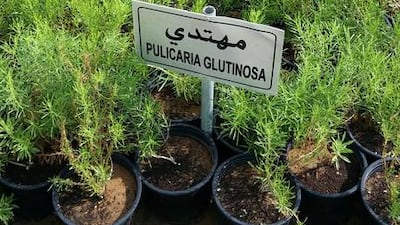
Pulicaria glutinosa. Shrub (low). Indigenous to the Middle East. Courtesy of Melanie Hunt -
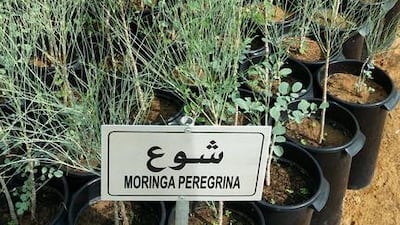
Moringa peregrina. Tree (small). Indigenous to North Africa and parts of the Middle East. Courtesy of Melanie Hunt -
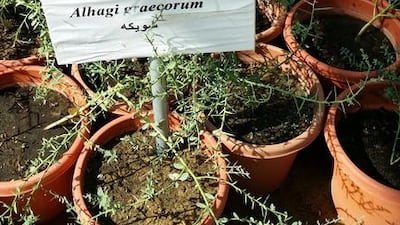
Alhagi graecorum. Ground cover. Indigenous to the Middle East. Courtesy of Melanie Hunt -
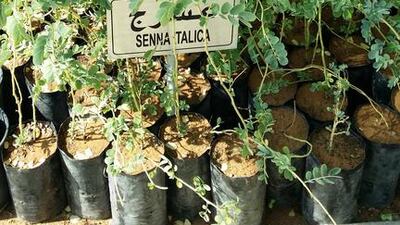
Senna italica. Shrub (medium). Indigenous to the Middle East and Africa. Courtesy of Melanie Hunt -
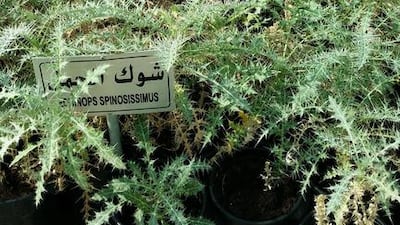
Echinops spinosissimus. Shrub (low). Indigenous to southern Europe, North Africa and Middle East. Courtesy of Melanie Hunt -
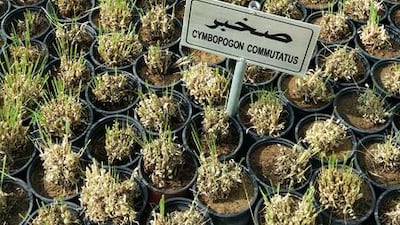
Cymbopogon commutatus. Grass. Indigenous to North Africa and parts of the Middle East. Courtesy of Melanie Hunt
Examples of indigenous plants being used by Kamelia Zaal - in pictures
Most popular today
8

