• A mud brick bearing a cuneiform inscription found during the Girsu Project's excavation at the ancient Sumerian city, now known as Tello, in Iraq in 2021. Recent excavations of the ancient complex have shed new light on the history and development of the city. AFP
    A mud brick bearing a cuneiform inscription found during the Girsu Project's excavation at the ancient Sumerian city, now known as Tello, in Iraq in 2021. Recent excavations of the ancient complex have shed new light on the history and development of the city. AFP
  • For decades, historians have believed that the Sumerians' mastery of irrigation led to their development. Now, the Girsu Project's discoveries suggest that irrigation was not the cause of these changes after all. AFP
    For decades, historians have believed that the Sumerians' mastery of irrigation led to their development. Now, the Girsu Project's discoveries suggest that irrigation was not the cause of these changes after all. AFP
  • A partial view shows the bridge in the city of Girsu. AFP
    A partial view shows the bridge in the city of Girsu. AFP
  • Archaeologists used new technologies to understand the development of the city, flying drones over the vast, 250-hectare site. AFP
    Archaeologists used new technologies to understand the development of the city, flying drones over the vast, 250-hectare site. AFP
  • The images they gathered show the extent to which the irrigation system was embedded throughout the city and its surrounds. AFP
    The images they gathered show the extent to which the irrigation system was embedded throughout the city and its surrounds. AFP
  • Members of the archaeological team at Girsu, southern Iraq, in autumn 2021. Photo: British Museum
    Members of the archaeological team at Girsu, southern Iraq, in autumn 2021. Photo: British Museum
  • A statue of King Gudea found in Girsu, dating from circa 2130 BC. The statue and other items from Iraq are currently on show as part of the Ancient Iraq: New Discoveries exhibition in Nottingham in the UK. Photo: British Museum
    A statue of King Gudea found in Girsu, dating from circa 2130 BC. The statue and other items from Iraq are currently on show as part of the Ancient Iraq: New Discoveries exhibition in Nottingham in the UK. Photo: British Museum
  • The new discovery indicates that the largest irrigation canals date to the prehistory of Mesopotamia. That means they are much older than the birth of the city, by about 1,000 years. AFP
    The new discovery indicates that the largest irrigation canals date to the prehistory of Mesopotamia. That means they are much older than the birth of the city, by about 1,000 years. AFP
  • Archaeologists believed that once the ancient Sumerians learnt to irrigate their crops, they were able to move from subsistence farming to building elaborate temples. But the Girsu Project’s discoveries show that they were living with well-watered plains for a full millennium before they began to build the temple complexes. AFP
    Archaeologists believed that once the ancient Sumerians learnt to irrigate their crops, they were able to move from subsistence farming to building elaborate temples. But the Girsu Project’s discoveries show that they were living with well-watered plains for a full millennium before they began to build the temple complexes. AFP
  • Cuneiform inscription is found during excavation at the ancient Sumerian city of Girsu. AFP
    Cuneiform inscription is found during excavation at the ancient Sumerian city of Girsu. AFP
  • Mud bricks bearing cuneiform inscriptions. AFP
    Mud bricks bearing cuneiform inscriptions. AFP
  • A cone bearing a cuneiform inscription. AFP
    A cone bearing a cuneiform inscription. AFP
  • Archaeologists and workers excavate the ancient Sumerian city of Girsu. AFP
    Archaeologists and workers excavate the ancient Sumerian city of Girsu. AFP
  • Working with archaeologists from five universities in Iraq, the British Museum team dug out shells and other material from the bottom level of the canals to be carbon-dated. AFP
    Working with archaeologists from five universities in Iraq, the British Museum team dug out shells and other material from the bottom level of the canals to be carbon-dated. AFP
  • The last time Girsu was excavated was in the 1960s, when now-standard technologies and archaeological practices were not in place. AFP
    The last time Girsu was excavated was in the 1960s, when now-standard technologies and archaeological practices were not in place. AFP
  • Sumerian scholars have been working off that era’s imperfect knowledge since then, as the US invasion in the 1990s and the ensuing unrest have stalled any archaeological excavation of the site. AFP
    Sumerian scholars have been working off that era’s imperfect knowledge since then, as the US invasion in the 1990s and the ensuing unrest have stalled any archaeological excavation of the site. AFP
  • When the archaeological team arrived in 2021, they found Girsu pockmarked, with depressions in the soil where looters dug up items. AFP
    When the archaeological team arrived in 2021, they found Girsu pockmarked, with depressions in the soil where looters dug up items. AFP
  • The archaeologists' goals were to research the site but also to practice what they call 'forensic archaeology', treating the dig like a crime scene. AFP
    The archaeologists' goals were to research the site but also to practice what they call 'forensic archaeology', treating the dig like a crime scene. AFP
  • A general view shows the excavation site at the ancient Sumerian city of Girsu, known as Tello, in Iraq. AFP
    A general view shows the excavation site at the ancient Sumerian city of Girsu, known as Tello, in Iraq. AFP
  • Young Iraqi archaeologists received training as part of the Girsu Project, headed by Sebastien Rey of the British Museum, centre. Photo: British Museum
    Young Iraqi archaeologists received training as part of the Girsu Project, headed by Sebastien Rey of the British Museum, centre. Photo: British Museum
  • The British Museum excavation team in the ancient city of Girsu. Photo: British Museum
    The British Museum excavation team in the ancient city of Girsu. Photo: British Museum

New discoveries in Iraq upend story of Mesopotamia


Melissa Gronlund
  • English
  • Arabic

New excavations of the ancient complex of Girsu in Iraq, led by the British Museum, have the potential to rewrite accepted histories of the development in Mesopotamia, according to archaeologist Sebastien Rey, after findings from the project have come to light.

For decades, historians have believed that the Sumerians' mastery of irrigation — or the ability to have regular and stable access to water — moved them from subsistence towards the extraordinary feats they are known for: writing, temple complexes, grouping into cities.

Now, the Girsu Project's discoveries suggest that irrigation was not the cause of these changes after all. But the question remains: what was it?

Rey, who is curator of Ancient Mesopotamia at the British Museum, was the lead archaeologist on the project. Girsu, or present-day Tello in southern Iraq, is a city and temple complex erected by the Sumerians in about 3000 to 2000 BC. A paper on the subject will be published later this year, and the British Museum has mounted the exhibition Ancient Iraq: New Discoveries, in Nottingham in the UK, to recontextualise existing artefacts from their collection that come from Girsu and other Sumerian cities.

Members of the archaeological team at Girsu, southern Iraq, in autumn 2021. Photo: British Museum

Rey and his team used new technologies to understand the development of the city, flying drones over the vast, 250-hectare site. The images they gathered show the extent to which the irrigation system was embedded throughout the city and its surrounds.

Heavy rainfall, a product of climate change, also washed away the top layer of the soil, making the outlines even more apparent.

Working with archaeologists from five universities in Iraq, led by Jaafar Jotheri of Al Qadisiyah, the British Museum team dug out shells and other material from the bottom level of the canals to be carbon-dated. The results were startling: the canals seem to have been dug in the fifth millennium BC. .

“The big surprise is that the largest irrigation canals date to the prehistory of Mesopotamia. That means they are much, much older than the birth of the city, by about 1,000 years," says Rey. "Traditionally, what you read is that development in Mesopotamia begins at the end of the fourth millennium, around 3300 BC. That’s when there was an important transition from pre-urban to urban and the invention of writing.

"But the canals that we have dated recently sets the date back to the fifth millennium, which means that irrigation is not the key, the spark that triggered the urban construction and the invention of writing. And that's a really important discovery.”

Before, archeologists believed that once the ancient Sumerians learnt to irrigate their crops, they were able to move from subsistence farming to the social and religious hierarchy that the elaborate temples of Girsu attest to.

But the Girsu Project’s discoveries, which Rey has written up for a paper that has passed peer review but which is still to be published, show that the Sumerians were living with well-watered plains for a full millennium before they began to build the temple complexes.

What changed? What moved the needle towards a more complex society?

Rey speculates that the shift was unrelated to the environment but rather owed to the pattern of thinking of those living in Girsu: an ideological transformation. Temples and administrative buildings allowed the powers ascribed to the gods to reside in one site, which was embedded into a larger social and political structure.

“It was a domestication of the power of the gods,” Rey says, in an adaptation of the phrase usually used for Sumerian development of the domestication of water.

A statue of King Gudea found in Girsu, dating from c. 2130 BC. The statue and other items from Iraq are currently on show as part of Ancient Iraq: New Discoveries in Nottingham in the UK. Photo: The Trustees of the British Museum

Girsu is accessible at last

The last time Girsu was excavated was in the 1960s, when now-standard technologies and archaeological practices were not in place. Sumerian scholars have been working off that era’s imperfect knowledge since then, as the US invasion in the 1990s and the ensuing unrest forestalled any archaeological excavation of the site.

In addition, particularly since the 2000s, Girsu had been badly looted. Cones, statues and other votive objects can be found on the black market across the world. In 2018, for instance, the British Museum returned symbolic cones that were used in the Sumerian temple of Girsu. They had been found as part of a raid on a London antiquities dealer.

When the archaeological team arrived last year, they found Girsu pockmarked, with depressions in the soil where looters dug up items. The looting has given the excavation team an added responsibility. Their goal was both to research the site but also to practice what Rey calls “forensic archeology”, treating the dig like a crime scene.

Archaeologists and workers excavate the ancient Sumerian city of Girsu, known as Tello. AFP

“We are trying to rescue the site from looting but also from late 19th century and early 20th-century excavations,” he explains. “And we are using Girsu as a case study to teach, and to learn also for ourselves, a method that will help the Iraqis restore their heritage first of all.

“By re-excavating the robber holes, you can find evidence of what the looters left behind — a trail you can work on for provenance, so that when Border Force in the UK contacts us and says we found these objects in a suitcase in Heathrow, we will have a data set to know which objects came from Girsu.”

Looters tend to take unbroken objects, which fetch the highest amount on the market. These undamaged artefacts account for roughly a 10th of all the cones, votive sculptures and artefacts that have lain in the ground for thousands of years.

By scrutinising the Sumerian inscriptions on the cones that have been left behind, however, archaeologists can make connections to those that have been taken, even if they are not fragments of the same object.

Mesopotamian clay cones bearing cuneiform inscriptions are displayed during a handover ceremony of a trove of looted Iraqi antiquities returned by the US in August 2021 at the Ministry of Foreign Affairs in Baghdad. Cones such as these were extensively looted from Girsu and other sites following the 2003 US invasion. AFP

The Girsu Project in context

The Girsu Project also had another goal: training and mentorship. Working in partnership with Iraq’s State Board of Antiquities and Heritage and five partner universities in Iraq — Mosul, Hillah, Al Qadisiyah, Al Simawa, and Dhi Qar — the project aims to train Iraqi archeologists and conservators and teach them the principles of surveying techniques, excavating artefacts and processing finds.

The two-year scheme, funded by a grant from the Getty, follows on from the British Museum’s previous Iraq Scheme, which likewise emphasised training. The five-year project, funded by the UK government, took place from 2016 to 2021, with an extra year because of Covid delays.

This aspect of the project is key, because in many ways little has changed in the archaeological landscape since the first age of European excavation, which began under colonialism in the late 1800s and early 1900s.

Most of Iraq's archaeological digs are still organised by Western countries, funded by Western countries, and then the information disseminated in Western journals — rarely, if ever, being translated into Arabic for the local Iraqi population to learn about the discoveries made on their watch.

Even the terms of archaeology — discovery, development and an emphasis on an object-based culture — are embedded in a European system of thought, as extensive academic work in the field of decolonising archeology has demonstrated.

Within this context, one of the most laudable elements of the Girsu Project is its ethical standards.

Jotheri, an eminent professor of geoarchaeology at Al Qasidiyah University who worked on the Girsu Project, highlights the importance of mentorship for Iraqi archeology. At Girsu, newly uncovered objects such as votive sculptures, figurines and carved cylinder seals, were conserved as they were being excavated, which gives trainee Iraqi archaeologists a chance to study the objects, rather than a situation where the knowledge gained from the site flows to European laboratories and archeologists. The objects were then given to the Iraq Museum in Baghdad.

Young Iraqi archaeologists received training as part of the Girsu Project, headed by Sebastien Rey of the British Museum, centre front. Photo: British Museum

“We have two sides: we have the internationals and we have the Iraqis,” says Jotheri. “From the Iraqi side, the archeologists require equipment, laptops, the training, accommodation and houses, and salaries. Unlike others, the Girsu Project actually engaged more Iraq universities, the local community. They did lots of workshops and attended conferences. They provided counterparts to the experts from the British side.”

However, Jotheri says, this is not the norm. In fact, for Iraq, where the State Board of Antiquities rarely enforces equal partnerships, there remains a two-tier situation for archaeology.

“From the international side, typically, they want everything,” he says. “It’s like colonialist times, they need Iraqi silence. We are their cheap slaves with no voice. They take everything. They treat the archeological site as an oil field. An oil field when the barrel is cheap.”

The Girsu Project might be making groundbreaking discoveries about the development of civilisation in Mesopotamia 5,000 years ago. But the project, and the Iraq Scheme before it, also shed light on the present, and are a reminder that some of the historical practices of archaeology might not be as far in the past as one might think.

Ancient Iraq: New Discoveries is on show at the Djanogly Gallery, Lakeside Arts, Nottingham, UK, until June 19. The exhibition recontextualises older works from the British Museum collection in the light of the Girsu Project's new findings.

Open-air museum in Thi Qar hopes to revive tourism - in pictures

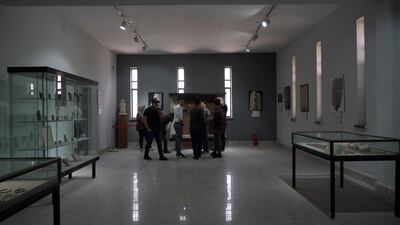
  • A view inside Thi Qar museum
    A view inside Thi Qar museum
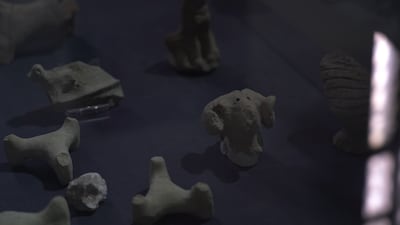
  • Artifacts inside Thi Qar museum
    Artifacts inside Thi Qar museum
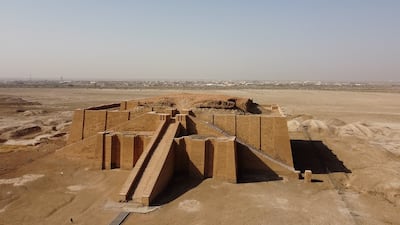
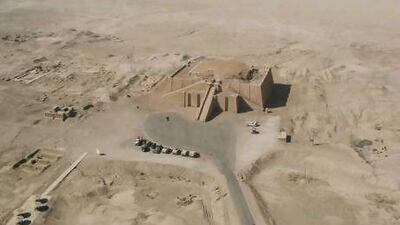
  • The Great Ziggurat temple, a massive Sumerian stepped mudbrick construction dedicated to the moon god Nanna which dates back to 2100 BC in the ancient city of Ur that falls now in southern Iraq's Dhi Qar province, 375 kilometers southeast of Baghdad.
    The Great Ziggurat temple, a massive Sumerian stepped mudbrick construction dedicated to the moon god Nanna which dates back to 2100 BC in the ancient city of Ur that falls now in southern Iraq's Dhi Qar province, 375 kilometers southeast of Baghdad.
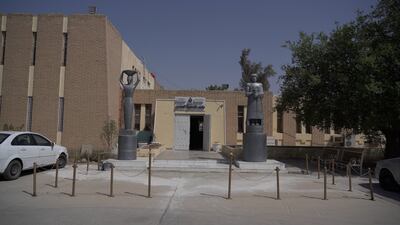
  • A view of Thi Qar museum entrance
    A view of Thi Qar museum entrance
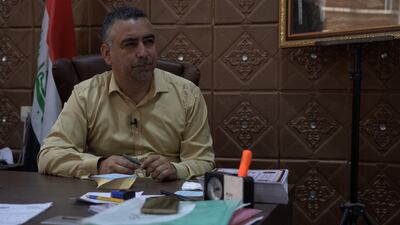
  • Amir Abdul-Razaq Al Zubaidi the general director of the provincial antiquities department.
    Amir Abdul-Razaq Al Zubaidi the general director of the provincial antiquities department.
  • The Great Ziggurat temple, a massive Sumerian stepped mudbrick construction dedicated to the moon god Nanna which dates back to 2100 BC in the ancient city of Ur that falls now in southern Iraq's Dhi Qar province, 375 kilometers southeast of Baghdad.
    The Great Ziggurat temple, a massive Sumerian stepped mudbrick construction dedicated to the moon god Nanna which dates back to 2100 BC in the ancient city of Ur that falls now in southern Iraq's Dhi Qar province, 375 kilometers southeast of Baghdad.
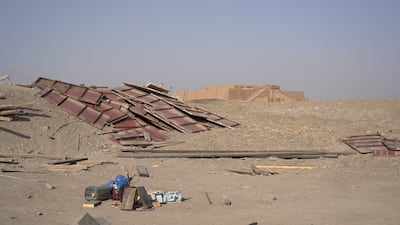
  • The monumental ziggurat at the ancient city of Ur located in the Thi Qar province, southern Iraq.
    The monumental ziggurat at the ancient city of Ur located in the Thi Qar province, southern Iraq.
COMPANY PROFILE
Name: Kumulus Water
 
Started: 2021
 
Founders: Iheb Triki and Mohamed Ali Abid
 
Based: Tunisia 
 
Sector: Water technology 
 
Number of staff: 22 
 
Investment raised: $4 million 
The specs

Engine: 2.0-litre 4cyl turbo

Power: 261hp at 5,500rpm

Torque: 405Nm at 1,750-3,500rpm

Transmission: 9-speed auto

Fuel consumption: 6.9L/100km

On sale: Now

Price: From Dh117,059

How tumultuous protests grew
  • A fuel tax protest by French drivers appealed to wider anti-government sentiment
  • Unlike previous French demonstrations there was no trade union or organised movement involved 
  • Demonstrators responded to online petitions and flooded squares to block traffic
  • At its height there were almost 300,000 on the streets in support
  • Named after the high visibility jackets that drivers must keep in cars 
  • Clashes soon turned violent as thousands fought with police at cordons
  • An estimated two dozen people lost eyes and many others were admitted to hospital 
Gifts exchanged
  • King Charles - replica of President Eisenhower Sword
  • Queen Camilla -  Tiffany & Co vintage 18-carat gold, diamond and ruby flower brooch
  • Donald Trump - hand-bound leather book with Declaration of Independence
  • Melania Trump - personalised Anya Hindmarch handbag
Company%C2%A0profile
%3Cp%3E%3Cstrong%3ECompany%20name%3A%20%3C%2Fstrong%3Eamana%3Cbr%3E%3Cstrong%3EStarted%3A%20%3C%2Fstrong%3E2010%3Cbr%3E%3Cstrong%3EFounders%3A%3C%2Fstrong%3E%20Karim%20Farra%20and%20Ziad%20Aboujeb%3Cbr%3E%3Cstrong%3EBased%3A%20%3C%2Fstrong%3EUAE%3Cbr%3E%3Cstrong%3ERegulator%3A%20%3C%2Fstrong%3EDFSA%3Cbr%3E%3Cstrong%3ESector%3A%20%3C%2Fstrong%3EFinancial%20services%3Cbr%3E%3Cstrong%3ECurrent%20number%20of%20staff%3A%20%3C%2Fstrong%3E85%3Cbr%3E%3Cstrong%3EInvestment%20stage%3A%20%3C%2Fstrong%3ESelf-funded%3Cbr%3E%3C%2Fp%3E%0A
The%20specs
%3Cp%3E%3Cstrong%3EPowertrain%3A%20%3C%2Fstrong%3ESingle%20electric%20motor%0D%3Cbr%3E%3Cstrong%3EPower%3A%20%3C%2Fstrong%3E201hp%0D%3Cbr%3E%3Cstrong%3ETorque%3A%20%3C%2Fstrong%3E310Nm%0D%3Cbr%3E%3Cstrong%3ETransmission%3A%20%3C%2Fstrong%3ESingle-speed%20auto%0D%3Cbr%3E%3Cstrong%3EBattery%3A%20%3C%2Fstrong%3E53kWh%20lithium-ion%20battery%20pack%20(GS%20base%20model)%3B%2070kWh%20battery%20pack%20(GF)%0D%3Cbr%3E%3Cstrong%3ETouring%20range%3A%20%3C%2Fstrong%3E350km%20(GS)%3B%20480km%20(GF)%0D%3Cbr%3E%3Cstrong%3EPrice%3A%20%3C%2Fstrong%3EFrom%20Dh129%2C900%20(GS)%3B%20Dh149%2C000%20(GF)%0D%3Cbr%3E%3Cstrong%3EOn%20sale%3A%3C%2Fstrong%3E%20Now%3C%2Fp%3E%0A
Living in...

This article is part of a guide on where to live in the UAE. Our reporters will profile some of the country’s most desirable districts, provide an estimate of rental prices and introduce you to some of the residents who call each area home.

Desert Warrior

Starring: Anthony Mackie, Aiysha Hart, Ben Kingsley

Director: Rupert Wyatt

Rating: 3/5

The Meg
Director: Jon Turteltaub
Starring:   
Two stars

Our legal advisor

Ahmad El Sayed is Senior Associate at Charles Russell Speechlys, a law firm headquartered in London with offices in the UK, Europe, the Middle East and Hong Kong.

Experience: Commercial litigator who has assisted clients with overseas judgments before UAE courts. His specialties are cases related to banking, real estate, shareholder disputes, company liquidations and criminal matters as well as employment related litigation. 

Education: Sagesse University, Beirut, Lebanon, in 2005.

A cheaper choice

Vanuatu: $130,000

Why on earth pick Vanuatu? Easy. The South Pacific country has no income tax, wealth tax, capital gains or inheritance tax. And in 2015, when it was hit by Cyclone Pam, it signed an agreement with the EU that gave it some serious passport power.

Cost: A minimum investment of $130,000 for a family of up to four, plus $25,000 in fees.

Criteria: Applicants must have a minimum net worth of $250,000. The process take six to eight weeks, after which the investor must travel to Vanuatu or Hong Kong to take the oath of allegiance. Citizenship and passport are normally provided on the same day.

Benefits:  No tax, no restrictions on dual citizenship, no requirement to visit or reside to retain a passport. Visa-free access to 129 countries.

Quick%20facts
%3Cul%3E%0A%3Cli%3EStorstockholms%20Lokaltrafik%20(SL)%20offers%20free%20guided%20tours%20of%20art%20in%20the%20metro%20and%20at%20the%20stations%3C%2Fli%3E%0A%3Cli%3EThe%20tours%20are%20free%20of%20charge%3B%20all%20you%20need%20is%20a%20valid%20SL%20ticket%2C%20for%20which%20a%20single%20journey%20(valid%20for%2075%20minutes)%20costs%2039%20Swedish%20krone%20(%243.75)%3C%2Fli%3E%0A%3Cli%3ETravel%20cards%20for%20unlimited%20journeys%20are%20priced%20at%20165%20Swedish%20krone%20for%2024%20hours%3C%2Fli%3E%0A%3Cli%3EAvoid%20rush%20hour%20%E2%80%93%20between%209.30%20am%20and%204.30%20pm%20%E2%80%93%20to%20explore%20the%20artwork%20at%20leisure%3C%2Fli%3E%0A%3C%2Ful%3E%0A
Remaining fixtures

Third-place-play-off: Portugal v Mexico, 4pm on Sunday

Final: Chile v Germany, 10pm on Sunday

Specs

Engine: Dual-motor all-wheel-drive electric

Range: Up to 610km

Power: 905hp

Torque: 985Nm

Price: From Dh439,000

Available: Now

Kill%20
%3Cp%3E%3Cstrong%3EDirector%3A%3C%2Fstrong%3E%20Nikhil%20Nagesh%20Bhat%3C%2Fp%3E%0A%3Cp%3E%3Cstrong%3EStarring%3C%2Fstrong%3E%3A%20Lakshya%2C%20Tanya%20Maniktala%2C%20Ashish%20Vidyarthi%2C%20Harsh%20Chhaya%2C%20Raghav%20Juyal%3C%2Fp%3E%0A%3Cp%3E%3Cstrong%3ERating%3A%3C%2Fstrong%3E%204.5%2F5%3Cbr%3E%3C%2Fp%3E%0A
The specs: 2019 Infiniti QX50

Price, base: Dh138,000 (estimate)
Engine: 2.0L, turbocharged, in-line four-cylinder
Transmission: Continuously variable transmission
Power: 268hp @ 5,600rpm
Torque: 380Nm @ 4,400rpm
Fuel economy: 6.7L / 100km (estimate)

Avatar: Fire and Ash

Director: James Cameron

Starring: Sam Worthington, Sigourney Weaver, Zoe Saldana

Rating: 4.5/5

The President's Cake

Director: Hasan Hadi

Starring: Baneen Ahmad Nayyef, Waheed Thabet Khreibat, Sajad Mohamad Qasem 

Rating: 4/5

Updated: June 16, 2022, 1:15 PM