In pictures: Life inside Abu Dhabi’s Al Mafraq prison
-

-

A mother and her son spend time together playing in the main hall. While the concept of prison nurseries is not new – a maximum security women’s prison in New York has had one since 1901 – Mafraq is thought to be the only one that allows women to keep children who are not theirs biologically, with some as old as 12. -

“This facility is not for mothers or pregnant women only,” says Capt Noura Rashid, head of female juvenile affairs. “It is for female guardians. If a woman is arrested while in the company of children who have nowhere to go and no one else other than her, then she is allowed to remain with them here.” -

Beyond the gates the women’s quarters are decorated with murals of pelicans, falcons and forts. Pink flowers bloom along the fortress-style walls and a Quranic verse encouraging hard work is painted over the entrance to the women’s prison. -

The philosopy that underpins the Mafraq women’s detention centre is that, whatever their parents may have done, children are innocent – and every effort is made to ensure their happiness. -
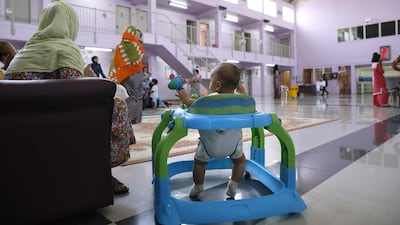
There are 29 mothers at the house, with 21 girls and 14 boys under the age of 13. The women, of various nationalities, are imprisoned for misdemeanours such as loitering and theft. The expatriates will be deported to their home countries after completing their sentences. -
The expatriates will be deported to their home countries after completing their sentences. -
Their sentences are usually very short,” Capt Rashid says. “It can be a month or four years but as long as she is in the house, her children will remain with her unless a family member comes forward and asks for the child. -
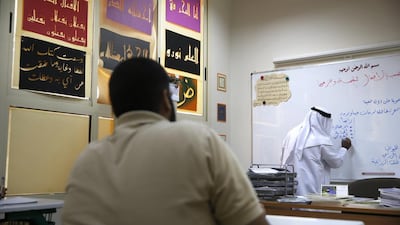
Over in the Juvenile centre, young prisoners attend an Arabic-language class. Most young people spend between three and 12 months at the centre. “It is very rare that they are here for more than a year,” said Col Dr Abdullah bu Hindi, director of the Juvenile Welfare Centre. “The majority have a court order to be placed in our custody for four months.” -
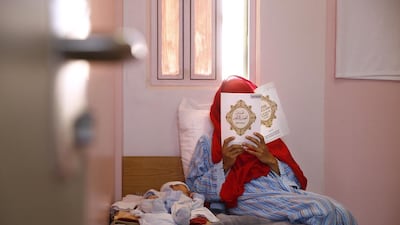
A mother reads the Quran while her baby sleeps. -

About 600-700 young people of various nationalities come through the centre every year. -

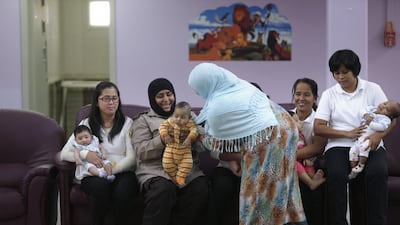
Five nannies from the Philippines help to take care of the children at Al Mafraq Juvenile Welfare Centre. -

The nannies, dressed in white uniforms, care for children whose mothers are attending court or have a doctor’s appointment. -
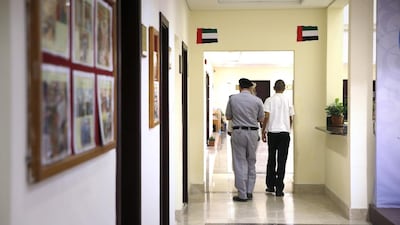
Exercise and education are regarded as the cornerstones of rehabilitation at the juvenile centre. -
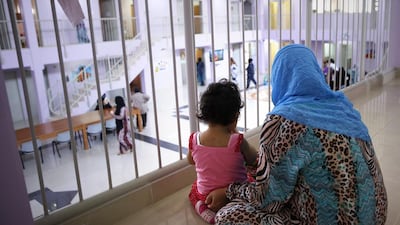
A mother and her child sit together. -

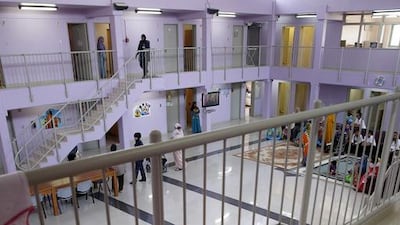
Women eat lunch in the main hal. -
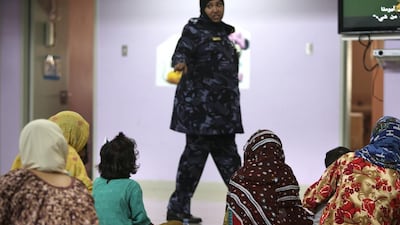
Women and their children eat lunch and spend their time together, as a correctional officer walks by.


Most popular today

