Thanksgiving - in pictures
-

A boat moored in Plymouth Harbour. Willy Lowry / The National -

A statue of William Bradford, governor of Plymouth Colony. Willy Lowry / The National -
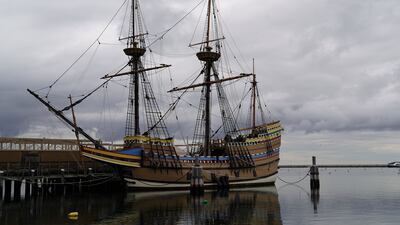
A replica of the ship 'The Mayflower', which carried the pilgrims to America in 1620. Willy Lowry / The National -

Steven Peters stands in a house in Mashpee, Massachusetts. Mr Peters is a member of the Mashpee Wampanoag tribe and creative director of SmokeSygnals, a marketing agency that focuses on creating exhibitions focused on the Mashpee Wompanoag. Willy Lowry / The National -

A view of Plymouth Harbour, the site of the landing of 'The Mayflower' in 1620. Willy Lowry / The National -

Whale tale pendants hang at the Mashpee Wampanoag Museum. Whaling was a major enterprise in New England for centuries. Willy Lowry / The National -

A sign for the Mashpee Wampanoag Museum. Willy Lowry / The National -

Mother Bear, a Mashpee Wampanoag elder, paints a design on Wampanoag regalia. Willy Lowry / The National -
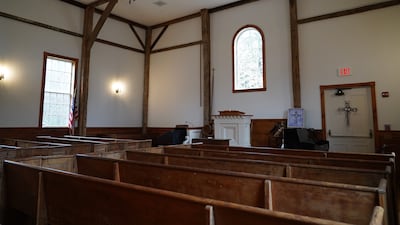
The interior of the Old Indian Meeting House in Mashpee, Massachusetts. The building dates back to the 1680s. Willy Lowry / The National -

Tribal Historical Preservation Officer David Weeden stands inside the Old Indian Meeting House in Mashpee, Massachusetts. Willy Lowry / The National -

David Weeden stands outside the Old Indian Meeting House in Mashpee, Massachusetts, which dates back to the 1680s. Willy Lowry / The National -

The interior of a Wampanoag wetu at the Mashpee Wampanoag Museum. Willy Lowry / The National -
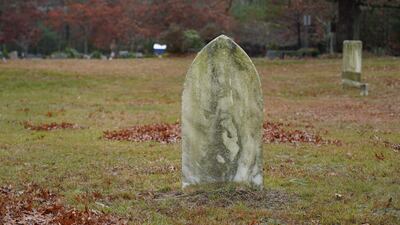
A tombstone at the Old Indian Cemetery in Mashpee, Massachusetts. The Wampanoag have been using the cemetery since the 1700s. Willy Lowry / The National -

Plymouth Rock, the site of where the pilgrims first landed on November 11, 1620. Willy Lowry / The National -
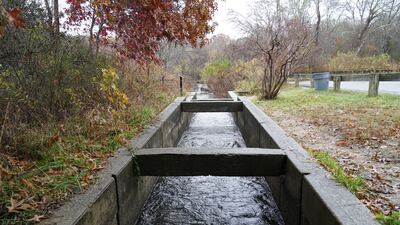
A herring ladder near the Mashpee Wampanoag Museum. Every spring, the tribe harvests herring from this area. Willy Lowry / The National -
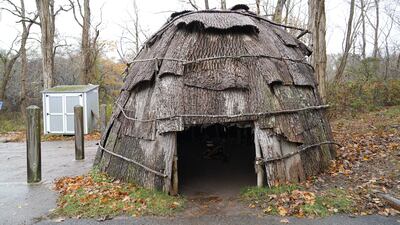
A Wampanoag wetu at the Mashpee Wampanoag Museum. Willy Lowry / The National


Most popular today

