


Nato leaders called on Iran to return to compliance with international law by ending its complicity in the war in Ukraine and halting malicious activity within the alliance's member states.
The Vilnius summit communique listed a series of concerns over Iran's hostile activity and its impact on the security of the entire alliance, which includes countries from North America to Eastern Europe.
“Iran’s support to the Russian war of aggression against Ukraine has an impact on Euro-Atlantic security,” it said.
“We call upon Iran to cease its military support to Russia, in particular its transfer of Uncrewed Aerial Vehicles (UAVs), which have been used to attack critical infrastructure, causing widespread civilian casualties.”
The UK has reported 15 incidents in which Iran plotted to kidnap or harm civilians. Germany has reported its concerns over underground activity reportedly carried out by Iranian agents, and high-profile figures in the US have also been targeted in assassination plots.
“We express our serious concern over Iran’s malicious activities within allied territory,” the communique said.
Nato leaders also warned Iran about the interception of vessels on the open waters of the Arabian Gulf, where incidents involving the seizure of tankers and other vessels have been reported in recent weeks.
“We also call upon Iran to refrain from destabilising actions, including seizures of maritime vessels, and to play a constructive role in fostering regional stability and peace,” they said in the communique.
With talks to review parts of the 2015 Iranian nuclear deal reportedly ongoing, the communique also called on Tehran to step back from activities banned by UN resolutions.
“We reiterate our clear determination that Iran must never develop a nuclear weapon,” it said. “We remain deeply concerned about Iran’s escalation of its nuclear programme.
“We call on Iran to fulfil its legal obligations under its Non-Proliferation Treaty-required safeguards agreement and political commitments regarding nuclear non-proliferation without further delay.
“The fulfilment by Iran of these obligations and commitments is crucial to allow the IAEA [International Atomic Energy Agency] to provide credible assurances of the peaceful nature of Iran’s nuclear programme. We also call on Iran to stop all ballistic missile activities inconsistent with UNSC Resolution 2231.”
The communique also underlined Nato commitment to its training mission in Iraq that supported the Iraqi army as it carried out its counter-offensive against ISIS.
Nato is looking into providing training for police and other security force units beyond the Iraqi army.
-
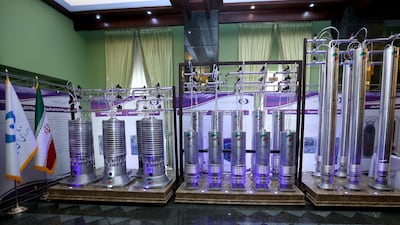
New generation Iranian centrifuges on display for Iran's National Nuclear Energy Day in Tehran, in April 2021. Iranian Presidency Office / Wana -

President Ebrahim Raisi, second right, is accompanied by Atomic Energy Organisation of Iran chief Mohammad Eslami, at Nuclear Technology Day in Tehran in April 2022. Iranian presidency / AFP -
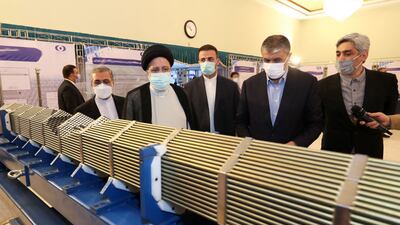
Mr Raisi and Mr Eslami at the April 2022 event. Iranian presidency / AFP -
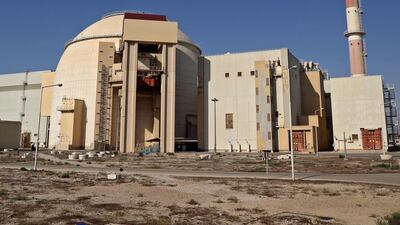
The Bushehr Nuclear Power Plant during a visit by Mr Raisi in October 2021. Iranian Presidency / AFP -
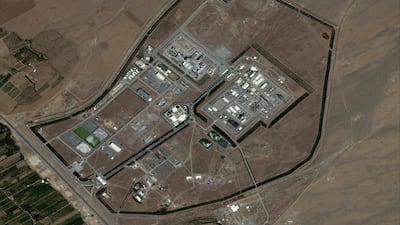
Iran's Arak Heavy Water Reactor complex, south of the capital Tehran in January 2020. Maxar Technologies / AFP -
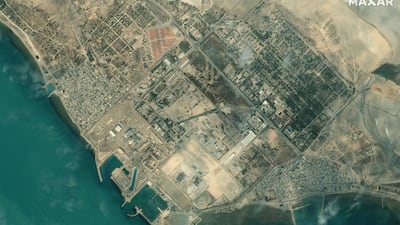
A satellite image of Iran's Bushehr Nuclear Power Plant in January 2020. Maxar Technologies / AFP -
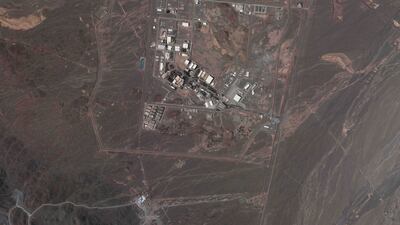
A satellite image of Iran's underground Natanz nuclear site in May 2022. Planet Labs PBC / AP -
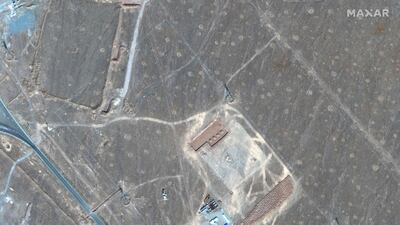
A satellite image in January 2020 of Iran's Fordow Fuel Enrichment Plant, north-east of the city of Qom. Maxar Technologies / AFP -
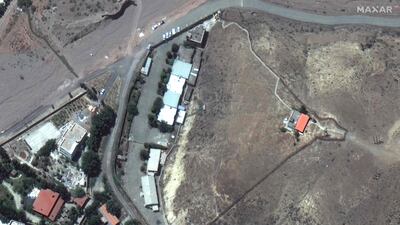
The Sanjarian nuclear centre, east of Tehran, in May 2021. Maxar Technologies / AFP


“Based on the request from the Iraqi government, we are considering broadening Nato Mission Iraq, by evolving it to provide advice to the Iraqi Ministry of Interior on its Federal Police,” it said.
“Nato Mission Iraq will continue to be demand-driven, and will be carried out with the full consent of the Iraqi authorities, in full respect of Iraq’s sovereignty and territorial integrity and in close co-ordination with relevant partners and international actors.
The communique continued: “We encourage further progress in Iraq’s fight against terrorism in all its forms and manifestations.
“Our Nato Mission Iraq continues to deliver non-combat advisory and capacity building support to the Iraqi security institutions in the greater Baghdad area, and has deepened collaboration with Iraq’s Ministry of Defence.”

